Dr.
B.
N. Sharga
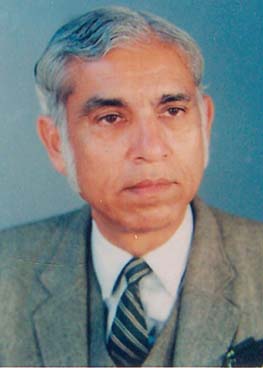
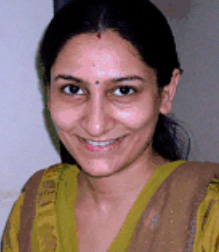
Dr. Baikunth Nath Sharga
Dr. Baikunth Nath Sharga was born on 21st December,
1938. He had his early education from Parker Inter
College, Moradabad and college education from
Govt. Jubilee Inter College and Shia Degree
College, Lucknow. He passed B.Sc in 1959. Later,
he did his M.Sc (1962) and Ph.D (1967) in
Chemistry from Lucknow University. He taught
Chemistry at his alma mater, Shia Degree College
(1967-1994). As a Reader in Chemistry, he taught
at Shia Post Graduate College (1994-1999).
Theatre
Dr. Sharga
has also been involved in the theatre movement. He
has so far produced over 400 plays, which have
been shown in different parts of the nation. Since
1965, Dr. Sharga has been involved in different
roles in the theatre – actor, director,
producer, etc. The themes of his plays have been
varied –social, mythological, comedies, etc. Dr.
Sharga is an institution builder. More than 100
new artistes had begun their career in Sharga’s
plays. Some of these artistes are now working in
films, TV serials. Dr. Sharga has remained
President, Panchsheel Kala Mandir (1970-73),
President, Sanket Theatre Group (1973--),
Vice-president Avadh Cultural Club
(1976-1980), Member Lucknow Film Association.
Dr. Sharga
is a prolific writer having published over 400
articles in different periodicals. Besides over
4000 ‘Letters to the Editor’ to his credit.
American Biographical Institute, North Carolina,
selected him for the ‘Man of the Year’ award
in 1998. Dr. Sir Tej Bahadur Sapru Memorial trust,
Allahabad, honoured him with a Silver plaque and a
citation in 2004. Besides this Dr. Sharga has
remained General Secretary, Yuvak Bharti
(1973-76), Vice-president, World Association of
World’s Federalists (1970-73), General
Secretary, Lucknow University Associated Colleges
Teachers’ Association (LUACTA) 1973-76.
As a proud
Kashmiri Pandit Dr. Sharga has been taking keen
interest in the welfare of the community. He has
remained President, Lucknow Kashmiri Association
(1996-99) and senior vice –president, AIKS
(1997-2000). His role during the past 15 years and
more towards the displaced Pandit community has
remained unique, identifying totally with the
exiled community.
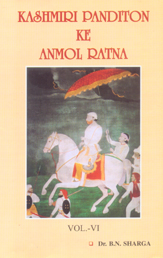
Dr. Sharga’s magnum opus “Kashmiri Panditon Ke
Anmol Ratna”, six volumes of which already stand
published, has assured a place for him in History.
Kashmiri Pandit community (whether old Kashmiri
families or ‘Taza Koshur’ newly migrated
families from the Valley) have remained
indifferent to the task of preserving their
history-achievements or saga of continued
persecution.
This pains
a sensitive man like Dr. B N Sharga. He undertook
the challenging task of recording and preserving
the history of families, which have brought pride
to India. In this effort some of the families
remained indifferent while some others cooperated
to an extent. His effort has been a solo endeavour.
He has been spending his meager savings in
accessing material and publishing his research
work. At times many make fun of his work. But that
is the way how all great people in history have
managed to do great things.
Dr. Sharga’s work and scholarship has made him
immortal. He has worked out his own methodology to
reach out to the families for recording their
family history. At times, he has to face
embarrassing questions.
Next time
when Dr. Sharga asks for your ‘Vanshavali’
(genealogy) don’t hesitate to co-operate with
him because he is the living Kalhan of our times.
He preserves your history for posterity. We wish
him good luck and a long healthy life.
 The origin of Shargas
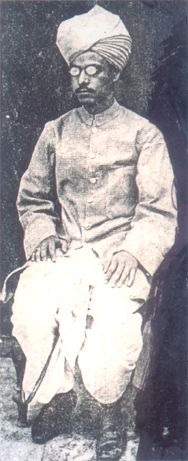
My grandfather Rai Bahadur Pandit Shyam Manohar Nath Sharga,
who was a voracious reader and a scholarly person with great command over
Sanskrit, Hindi, Urdu, Persian, Arabic and English language used to say quite
often during family discussions
...
>>>
|
|
Dr. B. N. Sharga
Lucknow, the home of Dr. Baikunth Nath Sharga holds key to Kashmir’s past.
Two centuries back many families from Kashmir, among Kashmiri Pandits, Shia
Muslims and Bhands-the folk theatre performers, moved to Lucknow and made it
their permanent home.
>>>
|
|
|
|
|
|
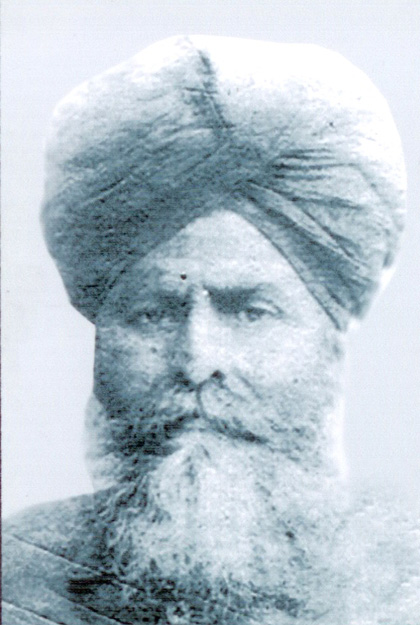 Pandit Bisheshwar Nath
Kathju Pandit Bisheshwar Nath
Kathju
All
our holy scriptures lay due emphasis on building up character by observing
certain moral values in life as per old saying that when money is lost nothing
is lost, when heath is lost something is lost and when character is lost
everything is lost. So naturally to develop this character we have to follow
certain rules and regulations to control our desires and behaviour in public
life to become a role model for others.
>>>
|
|
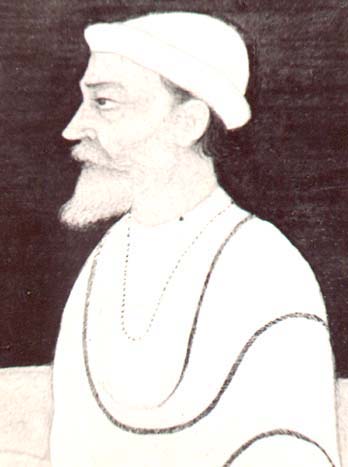 Shivala of Raja Dina Nath Madan Shivala of Raja Dina Nath Madan
Lahore now in Pakistan is a very old historic city. According to a legend this city on the bank of river Ravi was founded by Luv the son of Lord Ram the hero of Hindu epic Ramayana. But according to Cunningham the ruins of Amba Kapi indicate that Lahore city was probably founded around first century A.D. The Chinese traveller Hieun Tsiang who visited this place in 630 A.D. describes it as a large Brahmanical city.
>>>
|
|
|
|
|
|
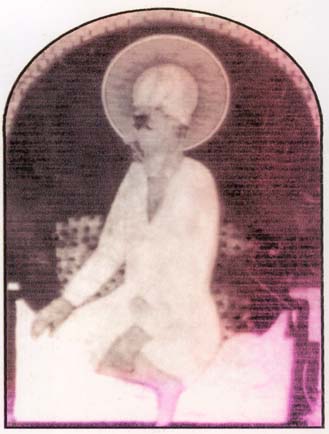 Rishi Peer
Padshah Rishi Peer
Padshah
Kashmir
has been regarded as the land of gods and goddesses from times immemorial.
Its rich natural resources of flora and fauna have always been a great
attraction for different people since ages. In the golden period of its
history it was considered to be an ideal place for meditation and for
spiritual pursuits to become one with the supreme being.
>>>
|
|
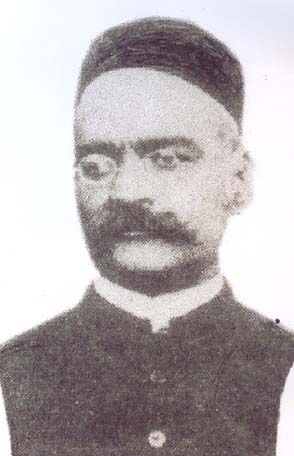 Barrister Bishan Narain Dar Barrister Bishan Narain Dar
Whenever
a person tries to break the existing social barriers of his times he has to pay
a heavy price for it. There are innumerable such instances in the history when
the great men had even to sacrifice their lives because the ideas propounded by
them were not acceptable to the people of their period.
>>>
|
|
|
|
|
|
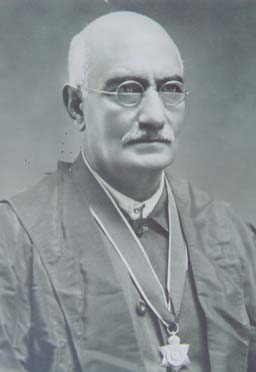 Rai Bahadur Pandit Sri Krishna Tikku Rai Bahadur Pandit Sri Krishna Tikku
Though we generally say that all men are equal in this world,
but the fact is that some men are more than equal simply because their level of
understanding things differentiates them from one another. A person who thinks
beyond his narrow self and works for the general good of the mankind naturally
carves out a special place for himself in the society at large and develops an
aura around his personality. >>>
|
|
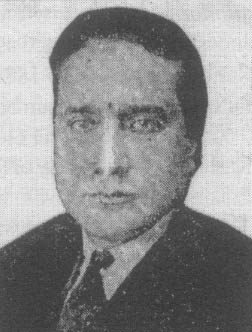 Pandit Shiv Narain Fotedar Pandit Shiv Narain Fotedar
The Bhagwad Gita depicts the essence of Hindu
philosophy which lays emphasis on the theory of Karma. It teaches us how
to over come our short comings and failures. As the salt makes the various food
preparations more delicious and palatable. So it is with life. The Gita
leads a taste to life like does salt to food. The philosophy of Gita plays
an effective role in the growth and development of both body and mind. It is an
important ingredient in one’s life.
>>>
|
|
|
|
|
|
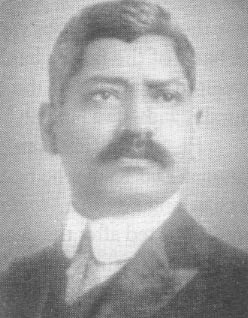 Rai Bahadur Pt. Shyam Manohar Nath Sharga “Saghir” Rai Bahadur Pt. Shyam Manohar Nath Sharga “Saghir”
Hinduism as we all know is no religion. It is actually a way
of life being governed by the Vedantic wisdom. It has been evolved over
thousands of years by different learned saints and sages through their
doctrines, who were actually the original thinkers and philosophers.
>>>
|
|
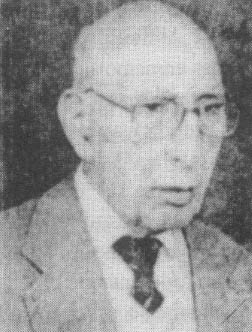 Prof. Prithvi Nath Kaula Prof. Prithvi Nath Kaula
In our country the tradition of maintaining big libraries as
a store house of knowledge was prevalent even in ancient times. These libraries
were considered to be the treasure of knowledge and wisdom.
>>>
|
|
|
|
|
|
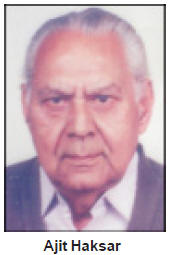 Pandit Ajit Narain Haksar Pandit Ajit Narain Haksar
To check the fast growing monopoly of the American Tobacco
Companies in the world
market especially of James
Buchanan Duke thirteen British
tobacco and cigarette companies
including the famous
W.D. & H.O. Wills of Bristol
merged together in 1901 to
form the Imperial Tobacco Company
to carry out their business
in the global market under this
new brand name. Mr. William
Henry Wills of the leading W.D.
& H.O. Wills group became the first chairman of the Imperial Tobacco
Company on 24th August 1910.
>>>
|
|
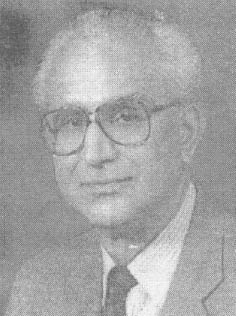 Dr. Triloki Nath Khoshoo Dr. Triloki Nath Khoshoo
The people have started now realizing the fact that the environment plays a key role
in maintaining the good health of any nation. The different forms of pollution
not only shorten one’s life span, but also bring various dreadful diseases.
That is why now various governments and other non-governmental and voluntary
agencies are striving hard to educate the people, about the importance of
maintaining a proper ecological balance in nature which is very important for
the survival of the mankind.
>>>
|
|
|
|
|
|
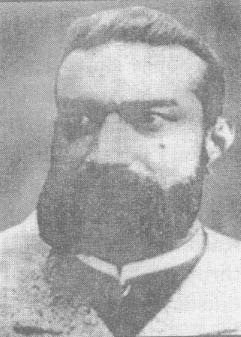 Prof. Iqbal Krishna
Sharga was a born Philosopher Prof. Iqbal Krishna
Sharga was a born Philosopher
Prof. Iqbal Krishna Sharga
was an original thinker and an outstanding philosopher. He elucidated the
Vedantic philosophy in an entirely new perspective correlating it with the
modern thought about the theory of evolution.
>>>
|
|
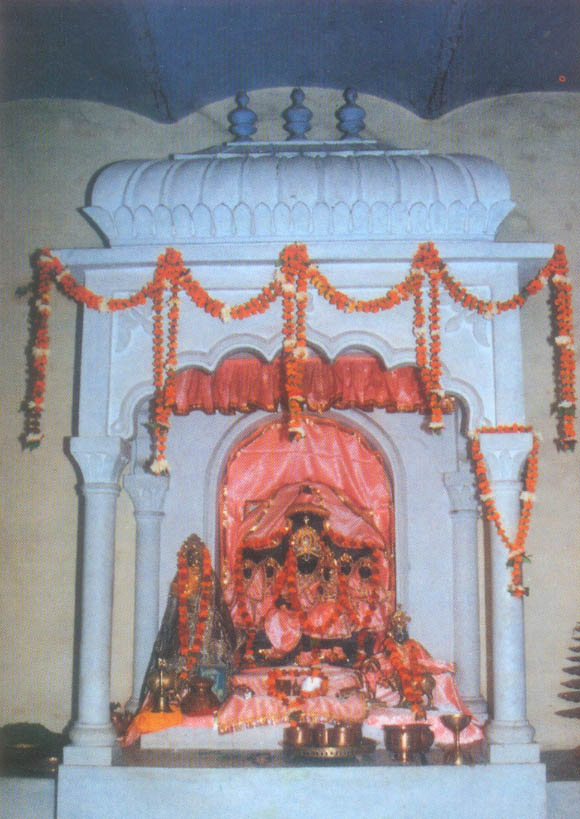 Chandrahari Mahadev Temple of Ayodhya Chandrahari Mahadev Temple of Ayodhya
History tells us that civilizations which once
flourished on this planet, the remnants of are now only preserved in the museums
of different countries. The pyramids of Egypt symbolise a part of that
civilization which existed during the days of Pharaohs there. We also some time
watch the traces of those civilizations on the discovery channel...
>>>
|
|
|
|
|
|
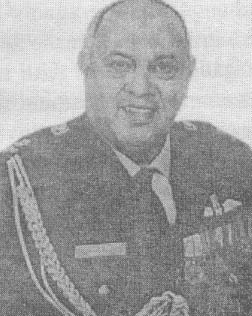 Air Chief Marshal Swaroop Kishna Kaul Air Chief Marshal Swaroop Kishna Kaul
Air
Chief Marshal S.K. Kaul’s ancestors were originally the residents of Habba Kadal
area of the Srinagar district of the Kashmir valley. His ancestor Pandit Maharaj
Kaul "Dattatreye" came out from the Kashmir valley in the beginning of the 19th
century during the rule of Mughal Emperor Shah alam-II (1759-1806) around 1804
via Mughal route and finally settled down in Bazaar Sita Ram of Delhi.
>>>
|
|
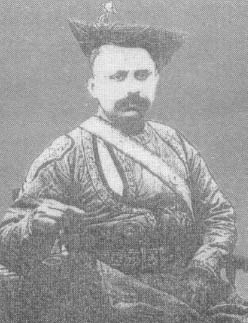 Pandit Sri Krishna Gurtu Pandit Sri Krishna Gurtu
Pt. Sri Krishna Gurtu’s ancestors used to write
Raina as their surname in the Kashmir Valley. They subsequently started writing
Raina Gurtu as their new surname. His ancestor Pt. Narain Das Raina Gurtu was
basically a resident of Habba Kadal in the Kashmir Valley. After completing his
traditional education in Urdu and Persian language he came to Oudh during the
rule of Nawab Asaf-ud-Daula (1775- 1797) probably at the fag end of the 18th
century.
>>>
|
|
|
|
|
|
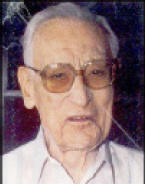 Pandit Rameshwar Nath Kao Pandit Rameshwar Nath Kao
In modern times, a well organised intelligence net
work is a must for any
country
for maintaining its
internal security
and for properly
protecting it from
foreign aggression. It
is now considered as
the back bone of the
administration to
maintain proper law
and order. The
intelligence
inputs help
the government of
the day to take effective
measures in time
for maintaining
peace and communal
harmony.
>>>
|
|
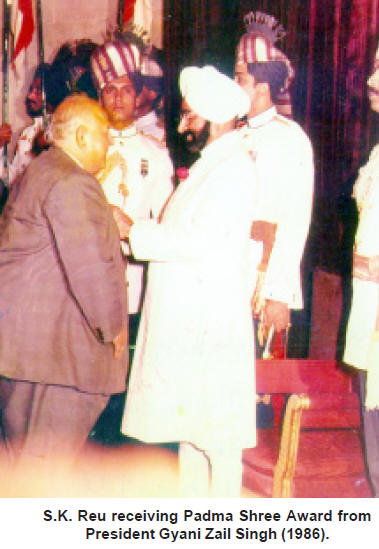 Pandit Swaroop Kishen Reu Pandit Swaroop Kishen Reu
IN our country the people have a
great fascination for the game of
cricket. They watch this game
with great passion that is why it is
being generally regarded as the second
religion of the country, All the
T.V. channels now regularly telecast
their programmes based on this
game in which experts express their
viewpoints on the finer aspects of this
game. It has now become a source of
earning big fortunes almost overnight.
>>>
|
|
|
|
|
|
Sanskrit is the mother of all the languages of
the world. It is being regarded as the divine language with perfect grammar.
According to the learned scholar Sir William James (1747-1794) Sanskrit is more
perfect than Greek, more copious than Latin and more exquisitely refined than
both of them. In the words of famous lexicographer Sir Monier Williams
(1819-1899) Sanskrit represents the Indian mind and India’s true national
character. Sanskrit was the medium of instructions in ancient India.
>>>
|
|
I
know a person called Dr. B.N. Sharga who is multitalented, vivid personality who
is so charismatic that if who speaks to him/read his articles, you will feel
fresh and rejuvenated.
got the opportunity to meet him (through
letters) way back in 2000-2001 when I was doing my engineering. One of my
Kashmiri friends’ uncle Mr. M.L. Dhar made me introduce to book called “Kashmiri
pandito ke anmol ratna” written by Dr. Sharga. When I got the fortune to read
them (some 2 volumes), I was amazed to see the way he has portrayed the
ideas/information about ancient Kashmiri families, their history.
>>>
|
|
|
|
|
|
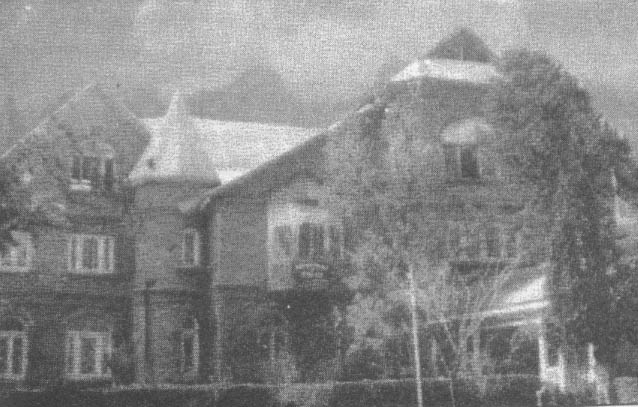 Sri Pratap College Sri Pratap College
The British came to India as the traders during the rule of
the Mughal emperor Jahangir (1605-1627). For this purpose the East India Company
was formed through a royal charter on 31st December 1600 at London duly signed
by Queen Elizebeth I (1553-1603) of England. >>>
|
|
 Bada
Shivala of Rani Katra Bada
Shivala of Rani Katra
Kashmiri Pandits re basically the worshippers of Lord Shiva, Kashmir is abode of Baba Amarnath.
Every year in the month of Sawan according to Hindu calendar lacs of
pilgrims from all over the country visit the holy cave of Amarnath ...
>>>
|
|
|
|
|
|
Sometimes in this mad world strange things happen which one cannot
imagine in his life. The British came to India as traders during the reign of
the Mughal emperor Jehangir, but after the battle of Plassey which took
place in 1757 in which Nawab Siraj-ud-Dula of Bengal was defeated by the
British they became a major political player in the country and gradually our
masters by adopting their well known policy of divide and rule.
>>>
|
|
There was no concept of
forming a caste based organization till the beginning of the 19th
century. There were three important centres of Kashmiri Pandits’ population
outside Kashmir at that time. They were Bazaar Sita Ram of Delhi,
which came into existence during the Mughal rule, Kashmiri Mohalla of Lucknow
which came into existence between 1775 and 1778 during the rule of Nawab
Asaf-ud-Daula in Oudh
and Vachchuwali of Lahore, which came into existence during the reign of
Maharaja Ranjeet Singh in Punjab.
>>>
|
|
|
|
|
|
The
Sharga family is one of the oldest families of Lucknow which is living in
Kashmiri Mohalla for the last 7 generations since 1775 when Nawab Asaf-ud-Daula
of Awadh made Lucknow as his seat of government instead of Faizabad and Kashmiri
Mohalla came into existence on a hill surrounded by beautiful gardens like
Kashmiri Bagh, Wazir Bagh, Angoori Bagh, Buniyad Bagh, etc and water bodies.
|
|
|
|
|
|
|
|
Pandit Shiv Prasad Chaudhari-Khatkhate Baba
India as we all know has been a land of spiritual pursuits of
a very high order from times immemorial, with the main aim to become one with
the Supreme Being to drink the nectar of eternal bliss. There are various paths
to reach that stage where the difference between the man and God cease to exist
and he develops supernatural powers to perform miracles. No doubt it is a
tedious path, which requires deep meditation and concentration of mind in
seclusion to attain that supreme state.
>>>
|
|
Raja Sir Daya Kishan Kaul
Politics we all know as per old saying is the last refuge of
scoundrels. But in the words of Paul Valery the politics is the art of
preventing people from taking part in affairs, which properly concerns them.
Paradoxically the politicians with no base and mass appeal have started taking
help from criminals, musclemen and mafia dons to win the elections. Now these
criminals and mafia dons dominate the political scene in our country.
>>>
|
|
|
|
|
|
Pandit Sheo Prasad Kak “Mahjoor”
It is generally said that the Kashmiri Pandits are
self-centred people with inflated egoes so they do not accept any body as their
leader. Here we should keep in mind that exceptions do not make a rule. It is a
general weakness that we all suffer from the importance bug even though we may
be important only in our own estimation.
>>>
|
|
In our holy scriptures two concepts about the
self (atman) are commonly mentioned. The first being the individual self which
is confined with in the manifested gross body known as sthul sharir and
the second being the modification of the body with the associated consciousness,
which is called as sukshma sharir and is experienced in the dream state.
>>>
|
|
|
|
|
|
Koshur And Our Identity
At the out set I would like to frankly admit
that I am not competent enough to write with an authority on this highly
emotional and sensitive issue. So, under these circumstances, I will only try to
express my views on this subject on the basis of the information which I have
collected from different sources over the years in connection with my exhaustive
research work on Kashmiriology vis-a-vis the Kashmiri Pandits.
>>>
|
|
Kashmiri Pandit Diaspora and Social
Reforms
History tells us that the migration of the
Kashmiri Pandits from the Kashmir Valley is not a new phenomenon. It has been
going on for the last so many centuries uninterrupted for one reason or the
other. The large scale migration of the Kashmiri Pandits from the Kashmir
Valley to the other parts of the country was mainly due to religious
persecution, but at times economic factors also played a major role in coaxing
the ambitious Kashmiri Pandits
...
>>>
|
|
|
|
|
|
Zutshis of Bazaar Sitaram, Delhi
We should always remember the fact that a
nation is known by its civilizational experiences, which are naturally
constructed through noble missions and by the hard work of a few extraordinary
persons, historically identified with age and century. Such people who live and
die for a cause have always been instrumental in the development of human values
and ethos both at the national as well as the international levels.
>>>
|
|
Whosoever
takes birth on this mother planet has to go one day, but some people are
remembered even after their death for their deeds and their valuable
contributions for the welfare of the mankind. Pandit Brij Narain Chakbast was
one such personality whose name is still taken in high esteem by the lovers of
Urdu literature all over the world for his soul-inspiring compositions. Some
Urdu critics even compare his poetic genius to that of Allama Iqbal and place
him on the same footing.
>>>
|
|
|
|
|
|
Municipal Girls Inter College
Inspired by the teachings of Swami Vivekanand and Vedantic philosophy Dr. Annie
Besant an Irish lady came to India in 1893 to study Vedas in depth. She was a
champion of women’s education and their empowerment. So, to propagate her
ideas and philosophy she formed the Theosophical Society of India and made Pt.
Suraj Narain Bahadur, a resident of Kashmiri Mohalla Lucknow and a sub judge, as
its secretary.
>>>
|
|
Sharga Park
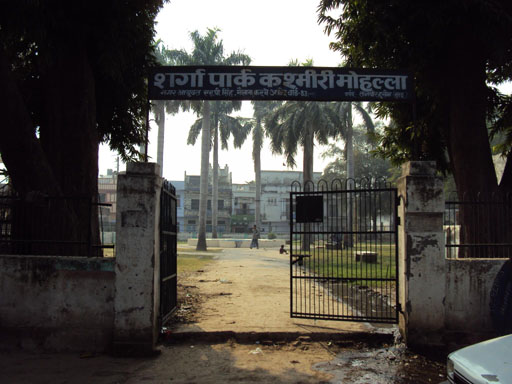
The Sharga family occupies an
important place in the history of Oudh. Shargas are the royal “Wasiqedars”.
They belong to a Marshal race and their ancestors were brave fighters. They
trace their origin from Mongolia, where a province, a river and a tribe exists
by that name.
>>>
|
|
|
|
|
|
Hindi Documents
 Bishen Narayan
Dar Bishen Narayan
Dar
Baikunth
Nath Sharma
Document
1
Document
2
Document
3
Document
4
Document
5
Sharga Purana
Oudh ke Wasikedar
Laxman ki Nagri - Lucknow
|
|
Miscellaneous Documents
Shargapuran
|
|
















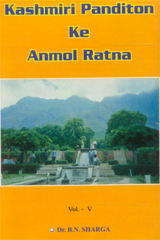 Kashmiri
Panditon Ke Anmol Ratna - Vol. V
Kashmiri
Panditon Ke Anmol Ratna - Vol. V