Chaman Lal Gadoo
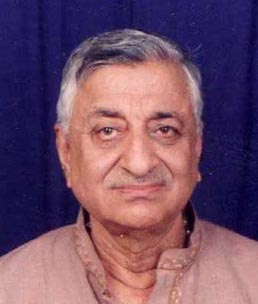
C.L.
Gadoo
CHAMAN LAL GADOO
Chairman
Smt. Vidya Gouri Gadoo Memorial
Trust
71, Sunder Block, Shakarpur,
Delhi - 110092
Tel : 011- 22547672, 9891297912
e-mail: cl.gadoo@gmail.com
|
 White Paper on Kashmir White Paper on Kashmir
The present crisis in the Jammu and
Kashmir State is a continuation of the Muslim struggle in India for an
independent Muslim homeland, which culminated in the separation of the
Muslim majority provinces of Sindh, North-West Frontier Province, ...
>>>
|
|
 Kashmir: Greater Autonomy
Terrorism in Jammu and Kashmir has almost
broken up the national consensus on major functional attributes of
Parliamentary government in Jammu and Kashmir. There is a deep difference
of opinion about the feasibility of a political package on 'greater autonomy' to
the State ... >>>
|
|
|
|
|
|
Human Rights Violations in Kashmir
The Kashmir Valley is in
grip of terrorist trauma engineered by Pakistan. In fact, it is
a low cost proxy war declared by Pakistan against India to grab Kashmir.
The grimmest fallout of this atrocious Pak operation is the total exodus of the
Hindu minority from Kashmir Valley. >>>
|
|
Kashmir - Militancy
and Human Rights
 Book |
Appendix
Book |
Appendix |
|
Featured
Collections |
|
Kashmir: The Bitter Truth
India That
the Princely States of India, including Jammu and Kashmir State, were on
the agenda of the partition of India in 1947, is a travesty of history and a part of the diplomatic offensive, Pakistan has launched to mislead
the international opinion about its claim to Jammu and Kashmir. >>>
|
|
Martyrdom of Guru Tegh Bahadur and
Kashmiri Pandits
The
martyrdom of Guru Tegh Bahadur has a multi-dimensional significance in the
annals of Kashmir, especially for the survival of Kashmiri Pandits. Aurangzeb
was very eager to convert India, “the land of the infidels into the land of
the faithfuls”.
>>>
|
|
|
|
|
|
Alternative
Strategies in Present Political Scenario
Kashmir is no more a normal
place now. It is facing a number of problems, the
most important is that it is a place that lives
without a huge part of people – Kashmiri Pandits
(Kashmiri Hindus). The valley is in the grip of
terrorist trauma engineered by Pakistan.
>>>
|
|
Autonomy
and Minority in Kashmir
In October, 1947, when Jammu
and Kashmir acceded to India., the ruler of the
State, Maharaja Hari Singh signed the same
standard form of the instrument of Accession,
which the other major Indian States signed. The
accession of the State to India was not subject to
any exceptions or pre-conditions to provide for
any separate and constitutional arrangements for
the state. >>>
|
|
|
|
|
|
Kashmir
Peace Initiatives and Realities
In early seventies, Ping-Pong diplomacy
brought the U.S. and China closer and recently
cricket diplomacy has brought India and Pakistan
closer together. Peace on the two sides of border,
which has suffered all these years, has now
generated deep and sincere goodwill and excitement
among the people of India and Pakistan.
>>>
|
|
Kashmir and
Religious Demography
The idea of population census
in India is very old. In ancient India from times
immemorial some estimates of population was recorded
in different manuscripts and scriptures. Rigveda
records a 'Low Density' population in and around
villages. Where as 3000 years BC, we had 'high
density' population during Harappa and Mohenjodaro
civilization.
>>>
|
|
|
|
|
|
Temples of Kashmir
According
to Hindu Dharma , time is divided into four ‘yugas’ namely
‘Satya Yuga’ ,’Treta Yuga ,’Dwapara Yuga’ ,and ‘Kali
Yuga’ .It is said in the ‘Puranas’ ‘Satya Yuga ’-- Age
of perfect virtue, there were no temples , for the Gods appeared
to the people and helped them directly.
>>>
|
|
Modern
history of Kashmir begins with the unification of
Ladakh
,
Jammu and Kashmir
valley into an integrated modern state of
Jammu and Kashmir
. Original inhabitants of
Kashmir
were Aryan Saraswat Brahmins also known as Kashmiri Hindus or Kashmiri Pandits.
>>>
|
|
|
|
|
|
Kashmir Hindu Shrines
A
Book By Shri C.L.Gadoo
A Review by
T.N. Dhar ‘Kundan'
At
the outset I must congratulate Shri Gadoo for writing this book
so painstakingly after a good lot of research. He has dedicated
it to his late father Shri Janki Nath Gadoo and rightly so
because heritage and history belongs to our fathers and
forefathers. The book has a very well written and analytical
foreword by our eminent historian, thinker and writer Shri
M.K.Teng. >>>
|
|
European scholars searched for histories of
India
, from eighteenth century onwards, but could not
find any that conformed to the familiar European
view of what a history should be. The only
exception, according to them, is history of
Kashmir-Rajatarangini, written by Pandit
Kalhana, a Kashmiri, in Sanskrit during
1149A.D.Rajatarangini-river of kings, ....
>>>
|
|