Lal Ded's Vakhs
Lal
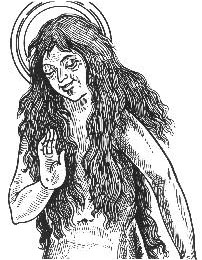
Ded was born in 1326 A.D.(approx.) 669
years ago daughter of a Kashmiri Brahman named
Cheta Bhat near Pampore, Kashmir, based on
majority of evidence. She is believed to be a
Parmahamsa by her devotees. Studying Her works one
is convinced that She is indeed a Parmahamsa.
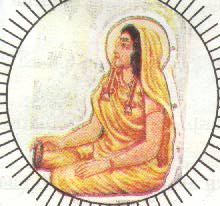
Lal Ded
Rupa Bhawani (1625-1721)
regarded her as a supreme guru: Lal man Lal
paramagwaram
Parmanand (1791-1879):
Unique in her yoga of dwadashanta mandala,
Realizing anahata, nada-bindu and Om, Lalleshwari
attained to the Supreme Ananda.
The books that will be
used are:
1. JK: Lal Ded by Jayalal
Kaul, Sahitya Akademi, Rabindra Bhavan, 35
Ferozeshah Road, New Delhi-1, and as reference,
2. BNP: The Ascent of
Self by B. N. Parimoo, Motilal Banarsidass,
Bungalow road, Jawahar Nagar, Delhi-7.
3. NKK: Lal Ded Her life
and sayings by Nil Kanth Kotru , Utpal
publications, Rainawari, Srinagar,
ISBN81-85217-02-5. He has the same number of vakhs
in the same order as JK. Also, his vakhs are in
Devnagri script which is then transliterated in
English by us.
The order of the Vakhs
are from Jayalal Kaul's (JK) book (1. above) and
only one line of the original 'Vakh' is given by
JK with the English translation of the entire
verse is what is written here. In few cases the
translation is from other authors, in which case
it will be pointed out. The rest of the Vakh is by
either BNP or transliterated from Devngri script
given by NKK.
There are three teams of
authors that JK gives which have verses that are
concordant with all his 138 verses:
AK: Lalla yogishwari,
Anand Kaul, reprint from the Indian Antiquary,
Vols. L, LIX, LX, LXI, LXII.
LV: Lalla-Vakyani, Sir
George Grierson and Dr. Lionel D. Barnett Litt.
D.(R. A. S. monograph, Vol. XVII, London 1920).
WC: Vaakh Lalla Ishwari,
Parts I and II (Urdu Edition by A. K. Wanchoo and
English by Sarwanand Chaaragi, 1939).
Lal Ded was far above the
realm of being a Realized Soul. This is why a
title of a Parmahamsa is just a word or a phrase
being used to understand where She is coming from.
For the pragmatic
thinkers among us please consider this question
for it will tells you about Lal Ded.
It is a fact that Lal Ded
did not say these Vakhs for the sake of preaching,
or taking the position of a teacher or one
sermonizing us. She would often speak to Herself
and teach Herself as will be clear from the Vakhs.
Applying the usual Vedantist reasoning Who is the
Speaker of the Vakh and to whom? In many ways She
answers this question Herself in Her last Vakh.
138. last vakh of JK (Kaul)
138. of NKK yi
yi karu'm suy artsun
yi rasini vichoarum thi
mantar
yihay lagamo dhahas
partsun
suy Parasivun tanthar
Whatever work I did
became worship of the Lord;
Whatever word I uttered
became a mantra;
Whatever this body of mine
experienced became
(*yih yath lagyam dehas
paritsay)
the sadhana-s of Saiva
Tantra
illumining my path to
Parmasiva.
* refers to the second
line in this Vakh (verse) with reference to
Lalleswari Vakyani, Rajanaka Bhaskara, 60 verses
translated into Sanskrit.
Also, this tells us that
people of her stature are born with Self awareness
only a little rubbing is needed for them to
manifest their Divinity. I believe that They are
Put in such a position for the benefit of humanity
at large.
Since I do not have as
yet these references please try to cross check the
Kashmiri with the translation and transliteration.
Note the sound A is equal to the stressed sound on
a is equal to aa, eg., naavi=nAvi=boat.
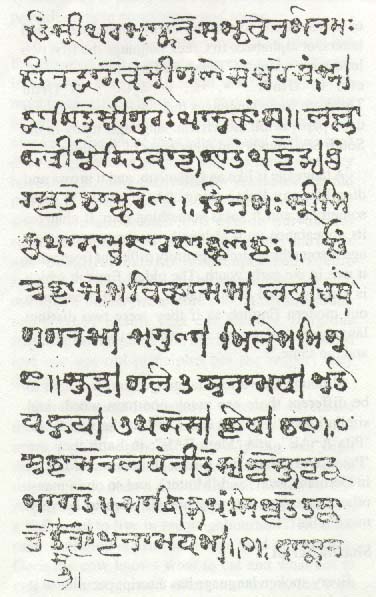
Lalla-Vakhs in Sharda
Script (old MS.)
Courtesy: Bhaskar
Razdan
1. of JK
4. or p.206 of BNP
Ami pana so'dras nAvi
ches lamAn
Kati bozi Day myon meyti
diyi tAr
Ameyn tAkeyn poniy zan
shemAn
Zuv chum bramAn gara
gatshaha.
With a rope of loose-spun
thread am I towing
my boat upon the sea.
Would that God heard my
prayer
and brought me safe across!
Like water in cups of
unbaked clay
I run to waste.
Would God I were to reach my
home!
Note: She compares
Herself with unbaked clay which slowly wastes away
all that one has earned, easily mixing with
material nature rather than being above it or in
control of it. Thus, She pleads with God with
pique in heart to take Her across the sea to Her
real home.
2. of JK
14. of BNP
La'lith-la'lith vaday
boh vAy(bo dAy*)
Tseyta muhac peyiy mAy
Roziy no pata
looh-laengarac tshAy
Niz-swarup kyAh mothuy
hAy * is
by JK
I will weep and weep for
you, O Mind;
(my Soul) The world hath
caught you in its spell.
Though you cling to them
with the anchor of steel,
Not even the shadow of the
things you love Will go with you when you are
dead.
Why then have you forgot
your own true Self ?
Many of the Buddhist
symbols and ideas will show up in these verses, 'Vakhs'.
The idea of Buddhist clinging appears here. Recall
that Kashmir was one of the major centers from
where Buddhism spread through out Asia.
Reminds me of a story I
read on the net some time ago. A Zen master is
asked what is the secret of his success. After
much persistence by the student, one day the
master asks him to get a thick long steel chain
and he demonstrates to his student by trying to
chain himself to a huge pillar. The student does
not understand, the master explains; stop clinging
to the world like this demonstration.
Note that the true Self
is the Reality only one has forgotten It. By not
clinging to the unreal or that which is not
permanent does the true Self dawn upon us.
3. of JK
tala chuy zyus ta
pyattha chukh natsaan
vanta mali man khit
pachan chuy
soruy sombrit yati chuy
machan
vanta mali anna khit
rotchan chuy
There is a yawning pit
underneath you,
and you are dancing
overhead.
Pray, Sir, how can you bring
yourself to dance ?
See, the riches you are
amassing here,
nothing of them will go with
you.
Pray, Sir, how can you
relish your food and drink ?
Parmahamsa RamaKrishna
says that God which has cast a net in the ocean of
the world is waiting to draw the net anytime, this
is how He Plays this Game of Maya. He says some
fishes by nature are so clever that they are never
caught in this net. They are the nitya siddhas.
Naradh is an example of this. The class which Lal
Ded is referring here is the worldly class who
hide deeper into worldliness, i.e., in the mud
with the net and all. To wake these people up Lal
Ded has really addressed this Vakh #3 to them. It
is not just enough to understand or be aware of
the problem we humans face but also to feel this
reality so much that it is difficult to swallow
any food or drink. This kind of renunciation can
be sensed in the next few versus as well.
4. of JK
4. of NKK and
17. of BNP
hacivi haa'rinji
pyatsuv kaan gom
abahak chaan pyom yath
raazdhaana
alanjz bhag bazaras
kuluph rous vaan gom
tirith rous paan goam kus
maali zaana
A wooden bow and rush
grass for an arrow:
A carpenter unskilled and a
palace to build:
A shop unlocked in a busy
bazaar:
A body uncleansed by waters
holy-
Oh dear ! who knows what
hath befallen me ?
5. of JK and NKK
16. of BNP
aayas vate gayas naa
vate
suman satha lusum dho
vuchum chandas har no
atha
ath nav taras dim kyha
bha
By the highway I came,
But by the highway I return
not.
And so I find me still on
the embarkment,
not having gone even half
the way,
And the day is done, the
light has failed.
I search my pockets but not
a cowrie find:
What shall I pay for the
ferry fee ?
Just as in any field of
study without putting effort one cannot expect to
get results. Vivekananda says it took Him a life
time of practice to gain the little he learnt. The
problem is to separate the real from the unreal,
who we truly are from what we are not, keeping the
inner peace and equanimity all the time. The
consciousness has as if got mixed with what one is
not. Parmahamsa RamaKrishna Says keep churning the
buttermilk until butter is formed and it floats
but does not get mixed with water. After reaching
this state does one see that what we are not is
also a part of that Self. This can be done either
through bhakti, jnana, raja, or karma yoga.
6. of JK
60. of BNP
Kyaah kara paantsan
dahan ta kaahan,
Vakhshun yath leyji yim
karith gay;
Saoriy samahan yeythi
razi lamahan,
Ada kyaazi raavhe kaahan
gaav
Ah me! the Five (Bhuta-s),
the ten (Indriya-s),
And the Eleventh, their lord
the mind,
scraped this pot* and went
away.
Had all together pulled on
the rope,
Why should the Eleventh have
lost the cow ?
(Why should the soul have
gone astray?)
* This me, this ghata (in
trika Saiva terminology, the individual person,
his living body.)
Lal Ded is showing us how
to control the mind. If one feels for the Lord by
all the senses (five of them) and by their five
activities (total 10) as well towards the Lord,
automatically giving the Lord control over the
11th the mind. This should remind you of Arjun and
Lord Krishna in the Chariot with five pair of
horses. I feel, the same is achieved by chanting
where one does not distinguish between the Lord
and His Name and also one ignores or weeds out all
other unnecessary thoughts (Teachings of Lord
Chaitanya Maha Prabhu 500 B.C.) Parmahamsa
RamaKrishna also says purify your mind and you
shall see God/Self as you see me but only more
intensely.
7. of JK
7. of NKK and
78. of BNP
atshyan+ aay ta
gatushun gatshe
pakun gatshe then kyho
raath
yor aya turiy gatshun
gatshe
khenata khenata kheneta
kyha
For ever we come, for
ever we go;
For ever, day and night, we
are on the move.
Whence we come, thither we
go,
For ever in the round of
birth and death,
From nothingness to
nothingness.
But sure, a mystery here
abides,
A Something is there for us
to know.
(It cannot all be
meaningless).
+Variation atshan ay (Bhaskara):
We have become emaciated with age and have to
depart. Nothing endures.
The nothingness in verse
7. is the concept of Shunya of Lord Buddha. Here,
Lal Ded tells us that God/Bhagvan/Self exists and
all this is not a meaningless journey.
8. of JK
19. of BNP
aayas kami dishi ta
kami vate
Gatsha kami deyshi kava
zaana vath;
antidaay lagimay tate,
Chanis phookas kanh ti no
sath.
Whence I have come and by
which way,
I do not know.
Wither I shall go and by
which way,
I do not know.
Were I to know the end of it
all
And gain the knowledge of
the truth,
(it would be well, for
otherwise)
Life here is but an empty
breath.
9. of JK
2. of BNP
gaattulah akh vuchum
bwachi suu'ty maraan
Pan zan haraan Pohani
vaava laah
Neyshibodh akh vuchum
vaazas maaraan
Tana Lalla bha praaraan
tseyneym-na praah.
I have seen a learned man
die of hunger,
A sere leaf drop in winter
wind;
I have seen an utter fool
beat his cook
(who could not make a
toothsome dish).
Since then I, Lalla,
anxiously await
The day when the lure of the
world will fall away.
10. of JK
10. of NKK da'mi
dithu'm nad vahavu'ni
da'mi dyuthum suum na'th
tar
da'mi dithu'm thr
fuwalwani
da'mi dyuthum gul na'th
khaar
Now I saw a stream
flowing;
Now neither bank nor bridge
was seen.
Now I saw a bush in bloom;
Now neither rose nor thorn
was seen.
11. of JK
11. of NKK da'mii
dhitthu'm ga'j dazu'vu'nii
da'mii dyuthum dh'ha
na'th naar
da'mii dhitthu'm Pandavan
hu'unz ma'ji
da'mii dhitthu'm kraji
mass
Now I saw the hearth
ablaze,
Now I saw not fire nor
smoke.
Now I saw the Pandava
Mother,
Now she was but a potters'
aunt
12. of JK and NKK
94. of BNP
tsAmar cha'tu'r rath
siihAsan
aahlad nAtiya-ras
tuula-paryankh,
KyAh mAnith yeti sthir
Aswani?
Kawa zana kAsiy maranann
shaenkh
A royal fly-whisk,
sunshade, chariot and throne, Merry revels,
pleasures of the theater, a
bed of cotton down-
Which of these, you think,
will go with you when you are dead ?
How then can you dispel the
fear of death ?
13. of JK and NKK
95. of BNP kyAh
bo'dhukh muha bhava-so'dri dare
Swoth lUrith peyiy tama
pankh;
Yama-bhAth karanay kali
choradAre,
Kawa zana kAsiy maranann
shenkh.
Why have you sunk deep in
the sea
of the illusory pleasures of
the world ?
Why have you pulled down the
high-banked road
which could have led you
safe across ?
The dense darkness of tamas
surrounds you now,
and, at the appointed time,
Yama's apparitors prepare to
drag
your body bleeding to death.
Who can dispel your fear of
death ?
14. of JK.
15. of BNP. haa
tsitta* kava chuy lo'gmut parmas**
Kava goy apazis pazyuk
broent,
Dushibooz vash kooranakh
par daramas
Yina gatshana
zyena-maranas kroent.
Why do you dote upon
someone, my Soul,
who is not your true love ?
Why have you taken the false
for the true?
Why can't you understand,
why can't you know?
It is ignorance that binds
you to the false,
To the ever-recurring wheel
of birth and death, this coming and going.
* & ** lit. citta,
individual consciousness, the self, drunk with
wine offered by another, not produced or brought
by oneself. Fig. used for man infatuated with
someone other than his wife or his true love; here
the unreal, not the true Self.
15. of JK.
haa manshi kyaazi
chukh vuthaan s'ki lavar
O man, why do you twist a
rope of sand?
You cannot tow your boat
with it.
What God has written
"in karma's line"#
Cannot be altered or
reversed.
#'Karma'is the word in
the original. God decrees reward or punishment not
arbitrarily as one's 'fate', but according to ones
karma. Ceremonial rites, pujas and yajnas and the
like are 'rope of sand' and will not avail to
change what God has decreed; for man must take the
consequence of karma.
However, if one is
repentant of ones mistakes and does not repeat
them then the prayers (japa) have the power of
reducing the effect of karma to a large extent.
The role of an umbrella (prayer) in the scorching
sun is an example and karma being reduced to a pin
prick instead of breaking a leg is another. A
Vedantin like Swami Vivekananda would say 'you are
It' nothing can touch you so be brave and face
your karma by watching the external as one watches
a movie.
16. of JK.
16. of NNK (to be filled)
tsarman tsa't.ith
ditith pa'ny paanas
What was it you had sown
which should have borne a rich harvest?
You had but tanned a carcass
hide,
shaped and stretched it taut
on pegs,
(Your only care your own
body which you pegged to the bonds of desire).
But counsel to a fool is
labour lost,
Like a ball thrown at a
big-sized pillar,
rebounding but not hitting
the mark;
Or fruitless as feeding a
tawny bullock on sweet molasses,
And expect a yield of milk
from him.
17. of JK
17. of NNK (to be filled)
niyam karyoth
garbaa
In your mother's womb you
vowed
not to be born again.*
When will you recall the vow
?
And die, even while alive
(to all desire, and be
released from birth and death)**;
Great honor will be yours in
this life and greater honor after death.
*. A common belief that a
child resolves thus in his mother's womb. **. cf.,
The Gita, V. 23.
18. of JK and 2nd
quatrain in 9. of BNP
muddas gyaanu'c kath
no va'ny-ze
Kharas gor dina raaviy
doah.
Yus yuth kare su tyuth
sware
Krere Karizina panun paan.
Impart not esoteric truth
to fools,
Nor on molasses feed an ass.
Do not sow seed in sandy
beds,
Nor waste your oil on cakes
of bran.
19.
19. of NNK (to be filled)
da'chinis o'bras
zaayun zaanahaa
I might disperse the
southern clouds,
I might drain out the sea,
I might cure the incurable
sick,
But I cannot convince a
fool.# #. In
this and other vaakhs, Lal Ded is remonstrating
with herself, her foolish mind, rather than
admonishing others.
Note that once a certain
habit has been formed it becomes a part of the
involuntary mind to make such a foolish mind to
change its bad habit is not easy. The mind loves
to travel in the channels it has already created.
How can such a mind reflect that his true self is
"God Himself"?.
20. of JK
20. of NNK (to be filled)
ttyotth mo'dur tay
myuutth zahar
What is bitter at first
is sweet in the end,
What is sweet at first is
poison in the end.*
(To everyone is given the
choice)
It all depends on the effort
put in,
and the unflagging
determined will;
For whoever strives must
soon arrive at the city of his choice.
*. cf., The Gita, VIII.
37-38.
21. of JK
27. of BNP
gwaran vo'nam kunuy
vatsum
Neybra doupanam anndaray
atsun;
Suy gav Lali mey vaakh ta
vatsun,
Tavay mey hyotum nagay
natsun.
My Guru gave me but one
percept :
"From without withdraw
your gaze within And fix it on the Inmost
Self."
Taking to heart this one
percept,
Naked I began to roam.**
**. natsun, pherun, to
wander, roam (see supra, p. 12). cf. LV,, 94, to
dance.
22. of JK
25. of BNP and NKK
raajas baa'j ye'my
kartal paa'j
Swargas baa'j chiy taph
tay daan;
Sahazas baa'j yami
gwarakath paaji
Paapa-pwanni baa'j chuy
pananuy paan.
He who wields the sword a
kingdom gains;
Paradise is gained by
penance and alms.
Follow the Guru's word and
gain
True knowledge of the Self
within.
Of his own virtue and his
sin
Man himself surely reaps the
fruits.
23. of JK
24. of BNP
naaba'dy baaras
attagand ddyo'l gom
Diha-kaan hol gom hyaka
kiho;
Gwara sundh vanun
raavan-tyuol pueom,
Pahali-rost khyuol gom
hyaka kiho.
The sling of my candy
load has gone loose, (and it galls my back);
My body has bent double
under its weight*;
how shall I carry the load ?
The word of my Guru (that I
must lose the world to gain my soul),
Has been a painful
''loss-blister''** for me.
I am become a shepherdless
flock, ah me !
* LV, 108. Var., My day's
work has gone awry. ** The loss has been painful,
as a blister.
24. of JK
26. of BNP
gwaras pritshom saasi
latte
Yas na ke'nh vanaan tas
kyaah naav:
Pritshaan pritshaan
thachis ta luusas,
Ke'nh nasa nishi
kyaahtaam draav.
A thousand times my Guru
I asked:
'How shall the Nameless be
defined?'
I asked and asked but all in
vain.
The Nameless Unknown, it
seems to me,
Is the source of the
something# that we see.
# This creation,
universe.
25. of JK
11. of BNP
zanam praa'vith
vyabhav no tsonddum
Luubhan bhuugan baram na
pray
Somuy Ahaar suetthaah
zonum,
Tsolum dwakha-vaav polum
Dai.
In life I sought neither
wealth nor power,
Nor ran after the pleasures
of sense.
Moderate in food and drink,
I lived a controlled life,
And loved my God.
26. of JK
3. of BNP Ayas
ti syo'duy gatsha ti syo'duy
Se'dis hol me karem kyaah
Bo'h tas aahsas Agarai
veyzay
Veydis ta veyndis kareym
kyaah.
I came straight,
And straight I shall return.
How can the crooked lead me
astray?
Surely, no harm can come to
me:
He knows me from the
beginning of time,
And loves me.
27. of JK
80. of BNP khyana
khyan karaan kun no vaatak
Na khyan gatshakh
ahannkari:
Saomuy khey maali saomuy
Asakh
Sami khyana mutsaranay
barnyan taari.
By pandering to your
appetites,
you get nowhere;
By penance and fasting,
you get conceit.
Be moderate in food and
drink
and live a moderate life,
The gates of Heaven will
surely be
thrown open wide for you.
28. of JK
5. of BNP
tsaalun chu vzmala ta
trattay
Tsaalun chu mandinyan
gattakaar
Tsaalun chu paan-panun
kaddun grattay
Heyti maali santuush
vaati paanay.
Patience to endure
lightning and thunder,
Patience to face darkness at
noon,
Patience to go through a
grinding-mill --
Be patient whatever befalls,
doubting not
that He will surely come to
you.*
* Var., He will provide
for all your wants.
29. of JK
22. of BNP
tsala tsitta vwandas
bayi mo bar
Chon tsinnth karaan paana
Anaad,
Tsey kawa zananiya khyod
hari kar
Kival tasunnday taaruk
naad.
Have no fear, O restless
mind,
The Eternal One takes
thought for you.
He knows how to fulfil your
wants.
Then cry to Him alone for
help,
His Name will lead you safe
across.
30. of JK
30. of NKK to be filled
khyath ga'nddith
shami naa maanas
The joys of palate and
fine apparel
bring man no lasting peace.
They who give up false hopes
and don't
put trust in the things of
the world,
Ascend, unafraid of Death's
terrors
by scriptures told;
For having lived contented
lives,
they are not debtors of
Desire.**
**And do not have to
settle accounts with the cruel debt-collector
Death.
31. of JK
31. of NKK to be filled
kandyav karak kandi
kande
O embodied One, dote not
upon your body thus, embellishing it, adorning it,
providing luxuries for it.
Even its ashes will not
endure.
32. of JK
32. of NNK to be filled
swamana gaarun
manz yath kande
Should you, in this body,
seek
The Supreme Self that dwells
within,
Greed and illusion soon
removed,
A halo of glory will
surround
this very body of yours.
33. of JK and NKK
81. of BNP yava
tuu'r tsali tim ambar he'taa
bwachi yava tshali tim
Ahaar ann;
Tseyta swa-par veytsaaras
peytaa,
Tsentan yi dih van-kaavan
This counsel to the body
give, O Soul*:
Wear only such clothes as
ward off cold;
Eat only to satisfy your
hunger;
Devote yourself with all
your heart
to the knowledge of the
Supreme Self.
Consider this body to be
food for the forest ravens.
* LVRB: tsitta dehas vaan
kyaa van. cf. Var. LV, 28: tsentan yih van-kaavan,
consider this body meat for jungle crows
(translation of this line in Vakh above by BNP).
34. of JK
34. of NNK to be filled
treshi bwachi mo
kreshinaavun
Let not your body suffer
from hunger and thirst,
Feed it whenever it feels
famished.
Fie on your fasts and
religious rites;
Do good: therein your duty
lies.
35.
35. of NNK to be filled
atha ma baa
traavun khar baa
Do not let loose your
donkey** lest
he damage others' saffron
fields;
For none will bare his back
to suffer
sword cuts and blows for
you.#
** Your mind.
# Punishment for the damage
done.
36. of JK
83. of BNP
ye'my luub manmath mad
tsuur morun
Vata-naash maerith ta
logun daas;
Tamiy sahaza Ishwar gorun,
Tamiy soruy vyendun saas.
Who slays the highway
robbers three,
Greed, Lust and Pride,
And yet, in utter humility,
serves
his fellow-men--
He truly seeks out the Lord,
disregarding as worthless
ashes
all other things.
37. of JK
82. of BNP maarukh
maarabuuth kaam kruud luub
Nata kaan barith maaranay
paan;
Manay kheyn dikh
swaveytsaara shamm,
Vishay tihunnd
kyaah-kyuth doar zaan.
Slay the murderous
demons,
Lust, Anger and Greed;
Or, aiming their arrows at
you, they will
surely shoot you dead.
Take care, feed them on
self-restraint
and discrimination of the
Self;
Thus starved these demons
will become
powerless and weak.
38. of JK and 7. of BNP
gaal ga'ndiy-nyam bol
pa'diy-nyam
Dapineym tiy yas yih
routse,
Sahaza-kusamav puuz
karineym,
Boh amalloun ta kas kyaah
mvotse
They may abuse me or jeer
at me,
They may say what pleases
them,
They may with flowers
worship me.
What profits them whatever
they do ?
I am indifferent to praise
and blame.
39. of JK and 6. of BNP
A'saa bol pa'ddiy-nyam
saasaa
Mey mani waasaa khiid na
heaye;
Boh youd sahaza
Shankar-bakts aasaa,
Makris saasaa mal kyaah
peyye
Let them mock at me and
call me names.
If a true devotee of Siva I
be,
I shall not feel distressed
nor hurt.
Can a few ashes a mirror
befoul* ?
* The ashes serve rather
as polish
40. of JK and 10. of BNP
muudh zaa'niith
pa'shith ta ko'r
koul shrutuvun zadd-ruupi
aas,
Yus yih dapiy tas tiy boz
Yuhoy tattvavidis chuy
abhyaas.
Though you are wise, be
as a fool;
Though you can see, be as
one blind+;
Though you can hear, be as
one deaf**;
Patiently bear with all you
meet,
and politely talk to eveyone.
This practice surely will
lead you
to the realisation of the
Truth.
+ lit. one-eyed.
** Var., dumb, but Bhaskar (LVRB)
"zo'r ta ko'l"
(deaf and dumb): "shrutvaa
sarvam shrotrahiinena bhaavyam."
41. of JK manasu'y
maan bhavasaras
Ocean and the mind of man
are both alike:
Under the ocean's bottom
lies
the destructive fire,
vadvaagni#;
And in the breast of man
doth rage
the fire of wrath.
When the fire breaks out,
its flames
of angry, abusive words,
sear and scorch and burn.
But if one ponders unruffled
and calm,
and weighs the words, though
angry they be,
They have no substance, no,
nor weight.
# Vadvaagni which,
according to legend, would destroy the whole world
if it were to burst forth from under the ocean.
42. of JK and 23. of BNP
rut ta krut soruy
pazyam
Karnan na bozun, achin na
baava,
Oruk dapun yeli vavaondi
vuzeym
Ratandip prazaleym
varzani vaava.
Ill or well, whatever
befalls,
let it come.
My ears will not hear,
My eyes will not see.
When the Voice calls from
within
the inmost mind,
The lamp of faith burns
steady and bright
even in the wind.
43. of JK and NKK (to be
filled) mandachi
haa'nkal kar tshe'nyam
When can I break the
bonds of shame ?
When I am indifferent to
jibes and jeers.
When can I discard the robe
of dignity ?
When desires cease to nag my
mind.
44. of JK and 10. of BNP
(to be filled from NKK)
muudh zaa'niith
pa'shith ta ko'r
I have worn out my palate
and tongue
reading the holy books,
But I have not learnt the
practices
that would please my Lord.
I have worn thin my finger
and thumb
telling the rosary beads,
But I have not been able to
dispel
duality from my mind.
45. of JK and 91. of BNP
avyastaa'ry
pothyan chii haa maali paraan
Yitha tota paraan 'Raama'
panjaras;
Gita paraan ta hiitha
labaan;
Param Gita to paraan
cheys.
It is easy to read and to
recite;
It is hard to practice what
one reads,
And, reading seek out the
Self within.
By constant practice, not by
books,
Conviction grew in my heart
Of God, Who is
Consciousness-Bliss.
47. of JK and 92. of BNP
Parun polum
apuruy po'rum
Kesara vana volum rattith
shaal,
Paras prounum ta paanas
polum,
Ada gom moluum ta zinim
haal.
I practiced what I read,
And learnt what was not
taught.
From its jungle abode
I brought the lion down
as I a jackal would;
(From pleasures of the world
I pulled my mind away).
I practiced what I preached,
and scored the goal.
48. of JK and 86. of BNP
hyath ka'rith
raaj pheri-naa
Dith karith trapti na
man;
Luub veyna ziiv marina,
Ziivanatay mari tay suy
chuy jnaan.
You will not know peace
of mind
if you a kingdom gain,
Nor will you gain content or
rest
if you give it away.
Only the man, free from
desire,
will never die.
Only he has true knowledge
Who, though alive, is as one
dead,
dead to all desire.
49. of JK and 85. of BNP
yi yi karu'm kara
pyatrum paanas
Arzun barzun beyyis kyut.
Antih laagi-roust
pusharun swaatmas,
Ada yuuri gatsha ta tuury
chum hyout.
I have to suffer the
consequence
of whatever I do,
even if I work for others'
gain.
But if, with mind from
attachment free,
I dedicate all works to God,
It will be well for me
wherever I be,
here and hereafter.
50. of JK and NKK (to be
filled) kava
chukh divaan anine ba'tash
Why do you grope thus
like the blind ?
Pray, doubt not what I say
to you:
If you are wise, enter
within
And see the Lord Himself is
there.
You need not search Him here
and there.
51. of JK and 84. of BNP
pavan puu'rith
yus ani vagi
Tas baovi na sparsh na
bwachi ta tresh
Ti yas karun anti tagi,
Samsaaras suy zeyyi nech.
He who can direct his
praana aright,
is not troubled by hunger or
thirst.
And he who can do this unto
the end
is born fortunate* in this
world.
* LVRB. "samsaare
saphalam asya jiivitam"
(His life here has been
fruitful).
52. of JK and 30. of BNP
tsitta twarug
gagana bramavon,
Nimishi aki tsandhi
yuuzan lach;
Tseitani vagi bavdhi
ratith zon
Praan-Apaan sondaarith
pakhach.
The steed of mind
speedeth over the sky,
And, in the twinkling of the
eye,
A hundred thousand leagues
traverseth he.
Yet a man of discrimination
can control
the curvetting steed,
And, on the wheels of praana
and apraana, guide
his chariot aright.
53. of JK and 79. of BNP
tsyath amarpathi
tha'vy-ze,
Ti tra'vith lagi zuure;
Tati tsa no shinkyzi
sannda'ri-ze
Dwadashur ti kwach no
muure.
Keep your mind intent
upon
the path that leads to
immortality.
Should it stray from the
path,
it will fall into evil ways.
Be firm with it and have no
fear;
For mind is like a suckling
baby,
which tosses restless even
in its mother's lap.
54. of JK
(to be filled from NKK 54.)
kus mari ta kasuu
maaran
Who dies? Who is slain ?
He who forsakes God's Name,
And gets involved in worldly
cares.
It's he who dies. It's he
who is slain.
55. of JK Gwarashabdas
yus yatsh patsh bare
He who has faith in
Guru's word,
And with true knowledge for
the rein
guides aright the seed of
mind,
And holds his senses in
control,
'Tis he enjoys the peace of
mind.
He will not die, nor be
slain.
56. of JK grratta
chu pheraan zere zere
Sure and steady the mill
will turn
once you propel the wheel.
Mind is the pivot, it should
know
how best to turn the mill.
And once it turns, it will
grind fine,
And grain will find its way
to the mill.
57. of JK, 57 of NKK and
page xviii of BNP Shiv
chuy thali thali rozaan
Mav zaan Hyound ta
Mussalmaan
Trukhay chukh ta pananuy
paan parzaan
Ada chay Saahibas zanni
zaan
Siva abides in all that
is, everywhere;
Then do not discriminate
between
a Hindu or a Mussalman.
If thou art wise, know
thyself;
That is true knowledge of
the Lord.
58. of JK mithyaa
kapatt asath trovum
I renounced fraud,
untruth, deceit;
I taught my mind to see the
One
in all my fellow-men.
How could I then
discriminate
between man and man,
And not accept the food
offered to me
by brother man ?
59. of JK muudddo
kray chay na dhaarun ta paarun
O fool, right action does
not lie
in observing fasts and
ceremonial rites.
O fool, right action does
not lie
in providing for bodily
comfort and ease.*
In contemplation of the Self
alone
is right action and right
counsel for you.
* Var., in observing the
Five Fires (Pancaagni).
60. of JK maa'rith
paants buuth tim phalha'ndy
First feed the Five
Bhuuta-s+ on the grain
and cates of self-awareness;
Thus fed, offer these fatted
rams
as sacrifice unto the Lord.
Then you will know, O
restless one,
the abode of the Supreme.
Ceremonial rites and pieties
will cease to be binding on
you;
And even the 'left-handed'#
practices
will bring no harm to you.
+ The five bhuuta-s,
mahaabhuuta-s, are the five factors constituting
the principles of experience of the sensible
universe, viz., solidity, liquidity, formativity,
aeriality and vacuity.
# Reference to
Vaamamaarga ritual.
61. of JK and 13 of BNP
vwath rainyaa
artsun sakhar
Athi al-pal vakhur heyth,
Youdvanay zaanakh parma-pad
aksher
Hishi Khaosh-khvor
keytha-kheyth.
Lady, arise and prepare
for worship
with wine and flesh and
cates.
If you know the changeless
Supreme State
(of Parmasiva),
Take and eat them in the
company of
fellow Tantric adepts.
(It matters not if,
violating custom,
you practice
"left-handed'' rites.*)
* The rites of Kaulacaar,
a Shaakta cult. The last line is not clear and two
variants are given with two different
interpretations. The one within brackets is given
by Grierson; the other, preceding it, is given by
Anand Kaul, and this I think is the better
interpretation. The last line (see AK, p.17) being
"he' shikhar
khe' shikhar hyath''.
Reference is to Cakrayaag of the Kaula-s. Wine
meat and cates were used in worship as symbolic
for man's passion, desires and sensual enjoyments;
and these too were offered as sacrifice to the
Divine Mother.
62. of JK and NKK and 63
of BNP gyaanamaarg
chay haakavaa'r
Dizeys shama-dama kreeyi
panni,
Lama chtrrak posh pranni
trakiy vaar
Kheyna-kheyna mwatsi
vaaray cheyn
The pathway of Jnana is a
kaiyard;
Fence it with self-restraint
and pious deeds.
Then let the goats of former
karma
browse in it and fattened be
as animals fit for sacrifice
at the altar of the Mother.
(Goats of past actions and
their fruits
slain in sacrifice,
leaving no karma behind),
The kailyard of karma thus
browsed away,
you gain release.
Many complain about bad
thoughts, effects of bad karma, etc. Elaborating
Mother Lal Ded's effective solution given above to
these problems, one can let the thoughts come and
go, you just stand back and laugh at it as it is
not a part of you. You are He. Don't act on these
thoughts. If a cloud of bad thoughts appear then
right action is needed to counter them. Get up and
do a pious deed, e.g. the least you can do is
starting writing on why these clouds of thoughts
are wrong and bad for you, i.e., applying the fire
of knowledge and discrimination and continue until
you would have overcome this dark cloud of
thoughts, other means of nullifying the dark
clouds such as getting your frustrations out,
e.g., by going for a long walk etc, are also
useful. The great Yogi Pathanjali says you need
right action to counter wrong action and mere
right thoughts wont do you any good to counter
wrong action. These counter effects have to take
place, each at their proper level of existence:
thoughts, words and deeds (action). Swami
Vivekananda ji has said watch your thoughts they
form your words, watch your words they form your
action, watch your action they form your
character.
63. of JK and 34 of BNP
shishiras vuth
kus ratte
Kus bavke ratti vaav
Yus pantsh yindray
tseylith tsatte
Suy ratte gatti rav
Who can stop the eaves'
drip during the frost ?
Who can hold wind in the
palm of his hand ?
Who can see the sun in the
darkness of night ?
He who holds his senses
under control,
Can in the dark catch hold
of the sun,
(Can see the Light in the
darkness of the soul).
64. of JK shiil
ta maan chuy pony kranje
Like water in a colander
are name and fame:
they do not last.
Whoever in his fist can
hold* a storm,
Or tether an elephant with a
hair of his head,
(Whoever controls the storms
in his breast,
Or tethers the wild elephant
of desire),
'Tis he whose name and fame
endure.
* lit., like a wrestler,
a strong man.
65. of JK and 93. of BNP
laz kaasii shiit
nivaarii
Trana zala karaan aahaar;
Yih kami vvopadiish
koaruy huutt batta,
Atsiitan vattas
satsiithan dyun aahaar.
It covers your shame,
Saves you from cold,
Its food and drink-
Mere water and grass.
Who counselled you, O
brahmin,
To slaughter a living sheep
as a sacrifice
Unto a lifeless stone ?
66. of JK and 55. of BNP
diiva vattaa divur
vattaa
Peythha bvona chuy
ikavaathh:
Puuz kas karakh huutt
bhattaa,
Kar manas ta pavanas
sangaatth.
The idol is but stone,
The temple is but stone,
From top to bottom all is
stone.
Whom will you worship, O
stubborn* Pandit ?
Let praana and the mind
unite
(as an offering to your
God).#
* huutta, adjective, is
probably from Sanskrit hatth, akin to Hindhi
hatthi and huudd. cf., LV, 17, learned.
# Reference to yogic
praanaagnihotra.
67. of JK and 56. of BNP
kush posh tel
diiph zal naa gatshe
Sadbhaava gwara kath yus
mani heye,
Shambhuhas swari neyth
panani yatshe,
Suy dapize sahaza akriyi,
na zeyye.
He does not need the kusa
grass,
nor sesame seed;
Flowers and water He does
not need.
He who, in honest faith,
accepts
his Guru's word,
On Siva meditates
constantly,
He, full of joy, from action
freed,
will not be born again.*
* Var., LVRB, 45: say
da'py-ze sahazaakriye (His is the true worship of
the Lord) is the better reading.
68. of JK and 71. of BNP
kus push ta kwasa
pushaa'nii ?
Kam kusam lagizeys puuze
?
Kami sara goadd dizeys
zaldani,
Kava sana mantra Shankara
swaatma vuze.
Who is the florist, who
the flower-girl ?
With what flowers should He
be worshipped ?
In what water should He be
bathed ?
With what mantra should we
awaken Shankara,
Who abides in the Self ?
69. of JK and 72 of BNP
man push tay
yatsh pushaa'nii
Bhaavaki kusam lagizeys
puuze,
Shisharas goadd dizeys
zaldaani,
Tshwapi mantra Shankara
swaatam-vuze.
Mind is the florist,
Devotion the flower-girl,
who bring flower-wreaths for
Him.
He should be worshipped with
the flowers
of faith,
And bathed in the nectar of
the Mystic Moon.
Silence is the mantra that
awakens Him;
(And, in the deep stillness
of the mind,
He wakes up in the inmost
Self).
70. of JK and 57 of BNP
gagan tsu'y
bhuutal tsu'y,
Tsu'y chukh deyn pavan ta
raath,
Arg tsanndun, posh poyni
tsu'y
Tsu'y chuk soruy ta
laagizi kyaah ?
Thou art the earth, Thou
art the sky,
Thou art the air, the day
and the night;
The sacrificial corn Thou,
And unction of the
sandal-paste.
Thou art the water, Thou art
the flowers,
Thou art all these and
everything.
What may I, in worship,
bring to Thee ?
71. of JK and NKK, and
54. of BNP dwaadashaanta
manddal yas diivas thaji
Naasikaa pavan Anaahatta
rav;
Swayam kalpan anti tsaji.
Paanay su Diiva; ta
artsun kas ?
He who knows the
Dvaadashaanta Manddala*
as the abode of God,
And knows the constant
Sound# that is borne upon
the praana rising from the
heart to the nose,
All vain imaginings flee
from his mind,
without effort, naturally;
He knows no God other than
the Self,
nor need he worship any
other god.
* 'mandal': orb, disc,
sphere, of 'dvaadashaanta' or locality of it; 'dvaadashaantah',
a measure of twelve fingers; literally, the end of
twelve fingers, here the distance found by
measuring. Cf. aadikotih: hrdayam, antakotih:
dvaadashaantah; tayoh
praanollaasavishhraantyavsare cittaniveshanena
parishiilanam- PR, pp. 88-89, 135. The praana
starts at the point of hrdaya (praanollaasa) and
ends (vishhraanti) at dvaadashaanta, i.e., at a
distance of twelve fingers from it. Also called
anatahdvaadashaanta, i.e., the heart, and
baahirdvaadashaanta, twelve fingers' distance from
it. See also Svacchanda Tantram (KSTS, 38) p. 65,
verse 111; and Vijnaana Bhairava (KSTS, 8) verse
49, 51.
# Sans. anaahata, the
eternal sound, self-created, the mystic syllable
OM.
72. of JK and 28. of BNP
akuy Omkaar yas
naabi* dhare
Kumbhay Brahmaannddas sum
gare;
Akh suy manthr tseytas
kare,
Tas saas manthr kyaah
kare.
He in whose navel
constantly abides
none other than the One
Omkaar,
Who builds a bridge between
his own
and Cosmic Consciousness#,
By making mind one with this
mighty spell-
What need has he for a
thousand other spells ?
* naabi: navel, cf.
"paraavaak mulacakrastha, pashyantii
naabhiisamsthitaa..."
# Brahmaanda, lit,
Brahma's egg, the universe, used also of
brahmarandhra in the crown of the head. Lit., a
bridge between the manipura cakra and
brahma-randhra, with Omkaar as the mantra; fig.,
between kumbha(ghatta, the individual) and
Brahmaanda, the Cosmic Whole. Var. LV, 34: For
whom the kumbhaka exercise formeth a bridge to the
Brahma-randhra.
It is said that no mantra
is complete without OM in it and the practice of
the mantra OM on your own without a Guru is
discouraged.
73. of JK and 12. of BNP
Shiv vaa Keshava
vaa Zin vaa
Kamalajanaath
naamadhaarin yuh,
Mey abali kaastan
bhavaraoz,
Su vaa su vaa su vaa suh.
Shiva or Keshva or Jina,*
Or Brahma, the lotus-born
Lord,
Whatever name He bear,
May He remove from me
the sickness of the world !
It may be He or He or He
(For He is One though called
variously).
* The Buddha. In later
Sanskrit literature "Jina" is used for
the Buddha.
74. of JK and NKK, and
32. of BNP Lal
bo luutshu's tshaanddaan ta gaaraan
Hal mey kormas
rasanishiti;
Vuchun hyotmas taari
diientthmas baran
Meyti kal ganeyam zi
zogmas tati.
I, Lalla, searched and
sought for Him,
And even beyond my strength
I strove.
Finding His doors bolted and
barred
I longed the more;
And firmly resolved, I stood
just there
with longing and love,
Fixing my gaze upon His
door.
75. of JK and NKK lolu'ki
vwakhli vaa'linj pishim
In the mortar of love I
ground my heart,
I parched and burnt and ate
it out.
Thus, all my evil passions
removed,
I sat serene and
unperturbed.
Yet still I doubt if I can
know
Whether I shall die or I
shall live
(and find release from birth
and death).
76. of JK and 36. of BNP
sahazas sham ta
dam na gatshi
Yatshi no praavakh
muktiidwaar:
Salilas lavan zan miilith
gatshe,
Toti chuy durlabh sahaza
veytsaar.
Not by ascetic practices
is the Self realized;
Nor by desire* can you gain
the Portals of Release.
In contemplation you may be
absorbed
as salt in water,
Yet hard it is for you to
gain
the true knowledge of the
Self.
77. of JK and NKK zanu'ni
zaayaay ru'ty tay ku'tiy
Plump and comely were
they born,
Causing their mother's womb
great pain;
Yet to the womb they come
again.
Siva indeed is hard to
reach;
Pray, heed the doctrine this
teaches you.*
* that is, take a lesson
from this and reflect upon it.
78. of JK and NKK ywasay
shiil piitthas ta pattas
Itself a part of the
rocky earth,
It is the self-same stone
that makes
A pavement, seat or
pedestal,
Or a mill-stone for a
grinding mill.
Siva indeed is hard to
reach;
Then heed the doctrine this
teaches you.
The obvious doctrine this
teaches us is that our true self is the spirit,
which is all pervading like the stone in earth
which has assumed various forms, shapes and sizes.
79. of JK and NKK rav
mata thali thali taa'pytan
Will the sun not shine on
all alike
But give heat only to holy
lands ?
Will Varuna* not visit all
homes alike
But visit only the homes of
the good ?
Siva indeed is hard to
reach;
Then heed the doctrine this
teaches you.
*The god of water.
80. of JK and 29. of BNP
zaanahaa'
naaddi-dal mana ra'ttith
Tsattith vattith kuttith
kaliish;
Zaanaha ada astah
rasaayan gattith,
Shivachuy kruutth ta tsen
vopadiish.
If I knew how to control
my naaddi-s,*
How to sever them from the
pull of desire,
How to bind them to the
inner Self,
How to cut the bonds of
sorrow,
I should have known how to
compound
the Elixir of Life.
Siva indeed is hard to
reach;
Then heed the doctrine this
teaches you.
* The tubes through which
the vital airs circulate of which the principal
ones are ten, cf. dashi naadi vaav, the vital airs
of ten naaddi-s, Infra No. 91.
81. of JK and NKK yihay
maaira-ruup pay diye
As mother a woman suckles
a baby,
As wife she dallies
amorously in love,
As maayaa she takes one's
life in the end-
And yet in all these forms a
woman she.
Siva indeed is hard to
reach;
Then heed the doctrine this
teaches you.
82. of JK and NKK Shiv
chury zaa'vyul zaal vaahraa'vith
Like a tenuous web Siva
spreads Himself,
Penetrating all frames of
all things.
If while alive, you cannot
see Him,
How can you see Him after
death ?
Think deep and sift the true
Self from the self.
83. of JK and 48. of BNP
tuu'r salil
kho'tt taa'y tuu're
Heymi trey gay byon-abyon
veymarsha;
Tsetani rav bhaati sab
same,
Shivamay tsraatsar zag
pashya.
When water freezes in the
cold,
it turns to snow and ice.*
Reflect, O man, that one
becomes
three different things#;
And when the sun of pure
Consciousness shines,
The world of living and
lifeless things,
the universe and whatever
exists,
are, in the Supreme, seen as
one.
*SSV, p.98, lines 4-5,
jala himan ca yo veda...
#byan: maayaa
(multiplicity); byanaabyan: vidyaa (unity in
multiplicity): abyan: Shakti (unity). Or,
respectively, idam idam, aham idam, aham.
84. of JK and 61 of BNP
ase pwande zwase
zaame
Neythay snaan kari
tiirthan;
Vahari vaharas no'nuy
aase,
Nishi chuy ta parzaantan.
Laughing sneezing,
coughing, yawning,
Bathing in sacred pools,
Going about unclothed
throughout the year*, He is about you all the
time-
In all these forms recognize
Him.
VAR. LVRB nonuy aase: He
is to be seen in all these activities all the year
round. He is close to you as yourself, "pashyaatmadevam
nijideha eva." Also see KSTS 8, sloka 118.
"kshutaadyante bhaye shoke ...
brahmasattamayii dashaa, taam tatra tatra avasare
vimarshya..."
85. of JK and 45. of BNP
baan go'l tay
prakash aav zuune
Tsaendr go'l tay mo'tuy
tseyth;
Tseyth go'l tay keynhti
na kune;
Gay Bhoor Bhwaah Swaah
veysarzith keyth.
The sun sets, the moon
begins to shine*;
The moon sets the mind alone
is left;
The mind dissolved, nothing
remains;
Earth, atmosphere and sky#
depart,
(And in the Supreme are
absorbed).
* Praanaa the sun moving
upwards, apaana the moon moving downwards. Cf.,
"praanaatmaa ravih uurdhva-mukhatvena caran;
taalvaadi-aatmani antare sthitah; candrah
apaanaatma adhomukhatvena..."- Tantraaloka (KSTS
36), Vol. IV, pp. 26-28.
# Bhuuh, Bhuvah, Svah.
86. of JK and 37. of BNP
mal vwandi zolum
jigar morum
Teli Lal naav draam
Yeli dali travimas tati.
I burnt the foulness of
my soul,
I slew my heart, its
passions all,
I spread my garment's hem,
and sat
just there, on bended knees,
in utter surrender unto Him.
My fame as Lalla spread
afar.
87. of JK latan
hund maaz laaryom vatan
The soles of my feet wore
off on the roads
while I wandered in search
of Him.
Then lo ! on a sudden, I saw
That He was all and
everywhere,
I had nowhere to go in
search of Him.
This was the Truth of a
hundred truths.
Whoever learn of it, will
they not wonder ?
Will they not be mad for joy
?
88. of JK and 35. of BNP
po't zuuni
vo'thith mo't bolanovum
Dag Lalanaovam Dayisannzi
prahe;
Lali Lali karaan lal
vuzunovum,
Miilith tas shrotsyom
dahe.
In the last watch of the
moonlit night,
remonstrating with my
wayward mind,
I soothed my pain with the
love of God.
Gently, gently, accosting
myself,
"O Lalla, Lalla, Lalla",
I woke my Love, my Lord and
Master,
In whom absorbed, my mind
was cleansed
of its defilement by the
Ten.*
* The ten indriya-s, dahe,
five organs of sense and five organs of action.
Var., dihe: Even my body was purified.
89. of JK and 41. of BNP
tanthu'r gali tay
manthu'r mwatse
Manthr go'l tay mwo'tuy
tseyth,
Tseyth go'l tay kehhti na
kune,
Shuunyas Shuunyaah
miilith gav.
Let go the sacred tantra
rites*,
Only the mantra sound
remains.
And when the mantra sound
departs,
Only the citta is left
behind.
Then lo ! the citta itself
is gone,
And there is nothing left
behind;
The void merges in the Void
(the silent citta in Pure
Consciousness.)#
* cf., LV 11, texts, holy
books.
# LVRB 11, drashttaa
shishyate citsvaruupam: For "shunya goes to
shunya", see chapter 5, supra, p.82; shunya
is not emptiness.
90. of JK and 43. of BNP
luub maarun sahaz
vyatsaarun
Dro'g zaanun kalpan traav;
Nishi chuy tay duur mo
gaarun;
Shuunyas Shuunyaah
miilith gav.
Realization is rare
indeed:
Seek not afar, it is near,
by you.
First slay Desire, then
still the mind,
giving up vain imaginings;
Then meditate on the Self
within,
And lo ! the void merges in
the Void.
(The citta merges in the
Cit.)
91. of JK and 42. of BNP
tsitta-twarug
vagi hyath ro'ttum
Tseylith milavith
dashinaaddi vaav,
Tavay Sheyshikal veyglith
vatsham;
Shuunyas Shuunyaah
miilith gav.
I reined in the steed of
the mind,
And, by constant practice,
brought together
the praana-s coursing the
ten naaddi-s.
Then the nectar of the
Mystic Moon
flowed down, suffusing my
whole being,
And the void merged in the
Void,
(The stilled mind merged in
Pure Consciousness).
92. of JK sa'ts-sas
na saatas pa'ts-sas na rumas
On nothing else I built
my hopes,
In nothing else I put my
trust-
My vaakh* brought me the
wine I drank,
My vaakh gave me the
strength to seize
The darkness that within me
lurked.
I rolled it up and knocked
it down,
And tore it to pieces
(dissipating
the darkness of my soul)
* Verse-sayings of Lalla.
93. of JK and NKK, and
38. of BNP she'
van tsa'ttith shashikal vuzu'm
Prakrat hu'zum pavana
saeti;
Lolaki naara vaolinj
buzam,
Shankar lobum tamiy saeti.
Cutting my way through
Six Forests*,
I came upon the Digit of the
Moon+.
By means of the practice of
praanaapaana#,
The world of matter shrank
for me.
Then roasting my heart in
the fire of love,
I found my God.
* LV: Cakra-s.
LVRB:''kaamaadikam kaanena shattkam etat'', i.e.,
kaama, krodha lobha, moha, mad and ahankaara.
+ Sahasraara (top of the
head)
#lit., pavan (vital airs);
but see LV: ''by controlling my vital airs...''
94. of JK and 53. of BNP
Omkaar ye'li layi
o'num
Vuhay ko'rum panun paan;
Shu-vt travith sath-marg
ro'tum,
Teyli Lal bo'h va'tsas
Prakaashasthan.
When I became one with
the Supreme Word*,
My body blazed as red-hot
coal+,
Then I gave up the Path of
the Six#,
and betook myself to the
straight true Path^,
Which led me to the Abode of
Light.
* Aum
+Such blazing is an actual
experience. It does not mean burning out impurity
or selfhood.
# ''SSaddadhva'' six paths
according to AAnavopaaya of Trika Darshana, viz
varna, mantra, pada, kalaa tatva and bhuvana.
^She has now taken to the
Shaambhavopaaya, the straight easy path which
requires no rigorous saadhana. PR, pp. 20 & 83
(sukhopaayameva), for Var., see LV. 82.
95. of JK and 67. of BNP
he gwaraa
parameshwaraa
Baavtam tseyyi chuy antar
vyo'd;
Dwashavay vo'padaan
kanda-puraa
Huh kava turun ta haah
kava to't ?
O Guru, you are as a god
to me,
Tell me, you know the secret
truth.
Both Praana-s rise from 'Kandapura',
the ''place of the Bulb'',
the navel region,
Why is haah hot, why is huh
cold ?
96. of JK and NKK, and
68. of BNP naabisthaana
chay prakrath zalavu'nii
Brahmasthaanas shishirun
mwakh,
Brahmaandas chay nad
vahavani,
Tavay turun 'huh','haah'
gav to't.
At the navel region is
the Place of the Sun,
Where Prakriti glows as hot
as fire;
From here hot breath rises
to the throat.
At the crown of the head is
the Place of the Moon,
From here cool nectar down
the naaddi-s flows,
Thus haah is hot, and huh is
cold.
97. of JK Lal
bo draayas lolare
For love that would not
let me be,
I, Lalla, set forth in
search of Him.
And toiled and toiled for
days and nights.
Then lo ! the most
auspicious moment of life-
I saw the Pandit in my own
home.
98. of JK and 33 & p.
204 2nd Vakh in BNP dama
dama ko'rmas daman aaye*
Prazalyom daph ta naneyam
zaath;
Andrium Prakaash neybar
tsho'ttum,
Gatti ro'tum ta karmas
thaph.
Gently, gently, I trained
my mind
to suspend its processes and
thoughts.#
Then (in the windless calm),
the flame of the Lamp,
shining steady and bright,
Revealed my true nature unto
me.
In the dark recesses of my
soul+
I seized upon Him and held
Him fast.
Then I diffused the inner
light,
(and within, without, all
was Light).
* & # Var., LV.
4"slowly, slowly, did I stop my breath in the
bellows-pipe (of the throat)'' damaadam ko'rmas
daman-haale.
+ Gatti,"in the
darkness itself.'' Better reading LVRB:
svasmindehe (in my ownself).
99. of JK and NKK, and
46. of BNP tshaanddaan
luutshu's paa'ny paanas
Tsheypith Jnaanas votum
na kuuntsh (kaanh);
Lay karmas ta vatsas
alsthaanas,
Bari bari baana ta
cheyvaan na kuunh (kaanh).
Searching the Self, I
wearied myself;
For none by searching ever
gained
The secret knowledge beyond
the mind.
I stopped searching, and
love led me
to the Tavern* door.
There I found wine jars
aplenty,
But none desiring to drink
from them.
* 'al-thaan', the abode
of amrita (nectar), of the Supreme, which is also
in the Self of man though he wearies himself
searching Him everywhere else.
100. of JK and 51. of BNP
makuris zan mal
tso'lum manas
Ada mey labam zanas zaan,
Suh yeli dyuuenthhum
nishi paanas
Soruy suy ta bo'h no
kea'h
Foulness from my mind was
cleared
as ashes from a mirror,
Then recognition of Him came
to me
unmistakable and clear.
And when I saw Him close by
me,
He was all and I was not,
(and there was nothing
else).
101. of JK and NKK, and
96. of BNP karu'm
zu' kaaran tre' ko'mbith*
Yava labakh paraluukas
annkh
Vo'th khas Surya-manndal
tso'mbith,
Tavay tsaliy maranun
sheynkh.
Do away with karma-s two#
and causes three+,
and you will be honored in
the world to come.
Arise, ascend and cut
through the Sun's orb^,
and you will overcome the
fear of death.
* Var., LV, 75:''by
practising kumbhaka yoga.''
# Good and bad.
+ The three mala-s,
impurities, that bring, viz., aanavamala, of
finitude; maayiyiimala, of multiplicity;
kaarmamala, of resultant pleasure
and pain from karma.
^Surya-maddala, through
which the soul has to pass on its way to the
Supreme; the Kundalini has to cut its way from
Muulaadhaara through Manipua, the seat of Agni, to
Sahasraara, the seat of the Moon, the abode of
Siva.
102. of JK and 97. of BNP
gyaanu'ky ambar
puu'rith tane
Yim pad Lali dapi tim
hreydi annkh;
Kaarana Prnavaki layi
ko'r Lalle
Tseyth-jyoti kaosan
maranun sheynkh
In the robe of Jnaana
clad,
On the tablet of her heart
engraved
the words that Lalla spoke,
And by means of the mystic
syllable OM,
Lalla merged in her 'Cit-Jyoti',
The luminous light of pure
Consciousness;
And thus dispelled the fear
of death.
103. of JK and 100. of
BNP shuun-yuk
maa'daan ko'ddum paanas,
Mey, Lalli, ruuzam na
bwad na hosh;
Veyzay sapanis paanay
paanas,
Ada kami hili+ phoal
Lalli pamposh !
I traversed the vastness
of the Void alone,
leaving behind me reason and
sense,
Then came upon* the secret
of the Self;
And, all on a sudden,
unexpectedly,
In mud+ the lotus bloomed
for me.
* lit.. I became a
confidante of my Self.
+ Kashmiri hyal, dirty
ground, covered with litter, mud, dirt used as
manure. Or, variant, hil, an aquatic weed
abundantly growing in Dal Lake. Figurative: What
was valueless (my body or myself) became precious
and a thing of beauty and joy.
104. of JK and NKK
samsaaras aayas
tapasii
A tapasvin into the world
came I,
And Bodha illumined my path
to the Self.*
Alike for me is life and
death:
Happy to ]ive and happy to
die,
I mourn for none, none
mourns for me.+
* Var., LV, 35. Also LVRB,
34. "praaptaa vishuddham sahajam prabodham",
where sahaja as an adjective qualifies prabodham.
+ lit., I die for none, none
dies for me. Cf., Utpala's Siva Strotavali, xiii.
3: ... tishttatah satatam arcitah prabhum jiivitam
mrataam athaanyath astu me".
105. of JK and NKK
Lal bo draayas
kapsi poshici sa'tsu'y (LV, 102 & 103)
Hoping to bloom like a
cotton flower,
I, Lalla, set forth in the
colourful world.
But soon the cleaner and the
carder came
and gave me hard knocks and
blows.
Spun into a gossamar yarn
by a woman spinner on her
spinning wheel,
I was helplessly hung upon a
loom,
and given more knocks from
the weaver's broom.
Now turned into cloth, I
was dashed and dashed
by the washerman on the
washing-stone.
Then into a large mortar
made of stone,
he threw me, and with his
grimy feet,
rubbed me with fuller's
earth and soap.
The tailor now worked his
scissors on me,
and cut me with care, piece
by piece.
Thus was it that I, Lalla,
at last
entered the High Estate of
God.
106. of JK and NKK
raaza-hams
aa'sith sapudukh ko'luy
Thou wert a royal swan
once,
now turned mute*.
Someone, it seems, has run
off with
something of thine.
When the mill-stone stopped,
the grain channel
was choked with grain,
And away ran the miller with
the grain.
Note a royal swan is also
a syomble of a parmahamsa: God in human form
having all human qualities and God
awareness.
* at seeing something that
has struck Lalla dumb. Lalla has seen, but she
cannot describe what she has seen. Has she had a
glimpse of vishvaruupaa, the Cosmic Form, its
indescribable splendour and awe, so that she, who
was vocal till now, cannot speak? That something
has taken away her powers of speech (SLK, p. 65).
cf., LV, 8
107. of JK and 62. of BNP
prathu'y tiirthan
gatshaan sa'ny-yaa'sy,
Gwaaraan Swadarshan myul;
Tseyta parith mo nishpath
aas,
Denshakh duure dramun
nyuul.
The pilgrim sannyasin
goes from shrine to shrine,
Seeking to meet Him who
abides within himself.
Knowing the truth, O soul,
be not misled;
It is distance that makes
the turf look green,
108. of JK and 76. of BNP
kandyav geh te'zy
kandyav vanvaas,
Veyphoal, man na rattith
ta vaas;
Deyn-raath gaenzarith
panun shwaas,
Yuthuy chukh ta tyuthuy
aas
Some leave their home,
some the hermitage,
But the restless mind knows
no rest.
Then watch your breath, day
and night,
And stay where you are.
109. of JK and 77. of BNP
kalan Kaalazaa'ly
yo'dvay tse go'l,
Veyndiv geyh vaa veyndiv
vanvaas;
Zanith sarvagath Prabhu
amol;
Yuthuy zaanakh tyuthuy
aas.
Should you destroy vain
imaginings, desires,
which form the very web of
time;
Should you realize the Lord,
all-pervading
and yet untouched and pure,
You may live the life of a
householder,
Or a hermit's life in a
hermitage,
living the truth that you
have known.
110. of JK and 75. of BNP
Shiv Shiv karaan
hamsa-gath so'rith
Ruuzith veywahari deyn
kyoha raath
Laagi-rost yus man karith
Tasi netyh prasan
Suura-Guruunaath.
Constantly invoking the
name of Siva,
Meditating on the Way of the
Swan*,
From attachment and duality
set free -
Such a one, even if busily
engaged
in the affairs of the world,
both day and night,
Wins the favour of the God
of gods.
* Mystic name for "Soham"
(I am He) which reversed, becomes "Hamsa"
(Swan), sometimes used to denote Paramasiva.
111. of JK and 87. of BNP
kenh chiy
ne'ndriha'tiy vudiy,
Keantsan vudeyn neysar
peyyiy,
Kenh chiy snasn karith
aputi,
Kenh geyh bazith ti
akryiy,
Some though asleep are
yet awake;
Some though awake are yet
asleep;
Despite ablutions some are
unclean;
Despite householders' active
life,
Some, by their actions, are
untouched.
112. of JK and 88-A. of
BNP zal
thamuno hutva turnavano
Uurda gamano par-varzeyt
carit
kaattha deni dwad
shramanaavano
Anti sakalo kapatth
careyth.
To stop a running stream,
to cool a raging fire,
To roam the skies on
sandalled feet,
To milk a wooden cow -
All this is fraud and
jugglery.
113. of JK and 59. of BNP
yath saras*
sarpho'l na ve'tsiy,
Tath sari sakalay poani
ceyn;
Mrag, sragaal, gannddi,
zalhasti,
Zeyn naa zeyn ta toutuy
peyn.
To the lake* too small
even for a mustard seed,
All living beings come to
quench their thirst;
And into it, as soon as
born,
keep falling, falling,
Deer, jackal, rhinoceros,
sea-elephants
and all.
* Of earthly existence,
as against the Eternal.
114. of JK and 58. of BNP
tre'yi ne'ngi
saraah sa'ry-saras,
Aki neyngi saras arshas
ja'ay;
Harmukha kaunsara* akh
sum saras,
Sati neyngi saras
Shunyaahkaar.
Three times the lake
overflowed its shore;
Once its waters and the sky
did meet
From Haramukh to Kaunsar* in
one vast sheet.
Seven times I saw the lake
vanishing in the void.
I remember having seen, in
former lives,
through aeons of time,
These dissolutions of the
worlds and their rebirth.
* From Haramukh mountain
in the north to Kausarnag in the south.
115. of JK and NKK
mad pyuvum
syanda-zalan yaitu
However many parts I
played upon the stage,
However often I quaffed that
wine,
the water of the Syand*,
However many lumps of human
flesh I ate,
Yet I am the same Lalla
still.
What profiteth it all to me
?
* A tributary of the
Jhelum in Kashmir.
Note that eating the human
flesh is a part of sixty-four main Tantric Sadhana.
The idea is to get rid of vritti's (habbits of the
mind) such as attachments to ones body, etc. I
have no practical experience with such eating but
see Sri Ramakrishna the great master by Swami
Saradananda, translated by Swami Jagadananda. Sri
Ramakrishna Math, Mayapore, Madras.
116. of JK and NKK
a'sii aa'sy ta
a'sii aasav
In time past, we were;
In time future, we shall be;
Throughout the ages, we have
been.
For ever the sun rises and
sets;
For ever Siva creates,
dissolves,
and creates again.
117. of JK and 49. of BNP
dyan tshe'zi ta
razan aase,
Bhuutal gaganas kun
vikaase,
Tsaendar Rahu-grras
maavase;
Shiva puuzun gav
cita-aatmase.
When the light of the day
is quenched
in the darkness of the
night,
The earth extends to meet
and dissolve
in the ethereal sky,
And (on amaavasya*) all is
blank and dark eclipse.
But (strange!) Raahu, the
Demon of eclipse,
is swallowed by the New-born
Moon.
The illumination of
Cit-Atman
is the true worship of Siva,
the Supreme.
* On the amaavasya of
solar eclipse, Raahu is supposed, by popular
tradition, to swallow the sun. But, says Lalla,
that the seeker who treads the path has the
experience of the manifested universe, the sun and
the sky and all the worlds, vanishing and becoming
one with the unmanifested all-pervading Akshara.
There, for the moment, it seems to be "dark,
irretrievably dark" in the great Void; but
soon it is lit up by the New-born Moon, the
Paraa-Samvit, which is the illumination of the
Higher Consciousness revealing the abode of the
Supreme Siva.
118. of JK and 52. of BNP
tsidaanandas
gyaanaprakaashas,
Yimav tsyuun tim
zivantay-mukt;
Veyshmas samsaaranis
paashas,
Abodhy gaenddaah
sheyth-sheyth dith.
They who have known the
Supreme Self,
Cidaananda Jnaanaprakaasha,
(compact of the Bliss of
Pure Consciousness
and Light of Knowledge
Absolute) -
They are the Jivan-mukta-s
(who,
while alive, have found
release
from ever-recurring birth
and death).
The ignorant add knot to
knot, in hundreds,
to the tangled web of
samsaara,
its recurrent birth,
its recurrent death.
119. of JK and 69. of BNP
kus dingi ta kus
zaagi ?
Kus sar vatri teliy ?
Kus Haras puuzi laagi ?
Kus Paramapad meliy ?
Who dozes off ? Who is
alert ?
What lake constantly oozeth
away ?
What should be offered in
worship to God ?
What supreme station should
one gain ?
120. of JK and 70. of BNP
man dingi ta akul*
zaagi,
Daddiy Sar pancayaendi
vatri teliy,
Svaveytsara poani Haras
puuzi laagi,
Paramapad tsiitnaa Shiva
meliy.
It is the mind that
dozeth off:
It is the Akula*
Transcendent that is ever alert.
The mighty senses are the
lake
constantly oozing out,
constantly filled again.
The constant awareness of
the Self
is worship befitting the
Lord,
And Sivahood the supreme
station
man should gain.
* Paramasiva beyond the
Kula, the thirty-six Tattva-s, the universe.
121. of JK and 65. of BNP
Shiva gur tay
Keshav palanas
Brahma paayreyn vavlaseys
Yuugi yuuga kali
parzaaneys
Kus Diiva ashwavaar
peytth ceyddeys ?
Siva is the horse,
Vishnu holds the saddle,
And Brahma the stirrups.
It is the yogi who,
in the light of his yoga,
knows
Which god can mount the
horse ?
122. of JK and 66. of BNP
anaahata
kha-swaruup shuunyaalay
Yas naav na varan na
guthr na ruup
Aham vimarsha
Naada-Binduy yas voan,
Suy Diiva ashwavaar
peytth ceyddeys (khotus).
He who is the eternal 'Anaahata',
The ever-unobstructed sound
of OM;
Whose is the all-permeating
form
of the etherial sky;
Whose dwelling* is the vast
transcendent Void;
Who has no name, caste,
gotra, nor form;
Who is Pure,
Undifferentiated Self-awareness;
Who is "Nada-Bindu",
the Logos and the Light+ -
He is the God Who mounts the
horse.
* Or, perhaps better, who
is the abode (ground, home) of ...
+ The Sound and the Dot,
mystically represented by the semicircle and the
bindu (dot) of the anunasika of the Syllable OM as
it is written. By an extension of meaning, nada-bindu
or, in the Agama-s, more precisely, Nada-Vindu
(Nada representing Shakti and Vindu, Siva)
represents the ultimate Supreme, Paramasiva.
123. of JK and NKK
kunyar-ay bozakh
kuni no rozakh
Would you understand what
Oneness* is ?
It has turned me into
nothingness.
Though He is One, Alone, and
All,
Yet I am caught in the War
of Two+.
Though He has neither colour
nor form,
Yet I am caught in His
wondrous forms#.
* Unity of Existence.
+ Duality.
# Multiplicity.
124. of JK and NKK
rangas manz chuy
byo'n byo'n labun
He is in myriad colours
and forms*,
Seek Him out.
Patiently suffer whatever
your lot,
And happy be.
Anger and hate and enmity,
You must destroy.
All this done, though hard
it be,
Behold thy God+.
lit., rangas manz, on the
stage of the world where the play is going on.
6. lit., Siva
125. of JK and 98. of BNP
dishi aayas dash
dish tiilith,
Tsalith tsottum shuunya
ada vaav,
Shivay dyuu'tthum
shaayi-shaayi miilith
Sheyh-ta-treyh traopimas
ta Shivay draav.
I roamed the ten
directions and
pierced the wind and the
void.
I closed the nine gates of
the body and
shut out the Thirty-six *.
Wherever I looked, I found
the Lord,
Within, without, and in the
Void+.
* The 36 tattva-s
(literally, thatnesses) the categories or
principles from Paramasiva to the earth, according
to the Trika Saiva cosmology.
+ Within the mind, in the
world outside, and in the Impersonal Transcendent.
126. of JK and NKK
tana mana gayas
bo tas kunuy
I turned to Him heart and
soul,
And heard the ringing of the
Bell of Truth.
There, in dhaarana, fixed in
thought,
I soared the Sky and the
Region of Light*.
* lit.. had the
experience of Aakashaand Prakaasha. Lalla heard
the ever-unobstructed (anahata) sound of OM (The
Bell of Truth); and, in her deep concentration.
became absorbed in the Impersonal Transcendent
(the Sky, the Void). But she went beyond,
ascending to the abode of Paramasiva who,
according to Trika Darshana, is both Prakaasha and
Vimarsha, Light and Self-Awareness.
127. of JK and 64. of BNP
a'ndariy aayas
tsa'ndru'y gaaraan,
Gaaraan aayas hiheyn hih;
Tsay hay Naaraan, tsay
hay Naaraan,
Tsay hay Naaraan, yim kam
vih ?
I searched within for the
Mystic Moon,
For like seeks out the like.
Thou art all this and this
and this;
There is none else but Thee.
What then is the meaning of
Thy sport,
Of Thy creation's wondrous
forms ?
128. of JK and 21. of BNP
yimay she' tse'
timay she' me',
Shyaamagala tse' byoan
taotthis,
Yuohay beynabhid tse' ta
me'
Tsa sheyn* svaami boah
sheyyi+ mashis.
O Lord of the Dark Blue
Throat,
I have the very same Six
Thou hast.
And yet, estranged from
Thee,
I suffer misery.
There surely is this
difference:
Thou art the master of the
Six*,
By the Six+ I have been
robbed.
* Sovereign power,
omnipotence, omniscience, All-inclusiveness,
eternality, All-pervasiveness (that is, in Trika:
maayaa shakti, sarvakar-tritva, sarvajnatva,
puurnatva, nityatva, and vyaapakatva
respectively).
+ The six kancuka-s,
coverings of limitation, viz., maya, kala, vidya,
raga, kal, niyati.
129. of JK and 20. of BNP
Naatha ! na pan
na par zonum,
Sadai buudum yi kwa dih;
Or (Sadai budum yiko dih);
Tsa boah, boah tsa myul
naa zonum,
Tsa kus boah kwasa chum
saendiih.
Lord, I did not know who
I was,
nor Thou, the Supreme Lord
of all.
I knew only this body of
mine always*.
The relation between Thou
and me,
That Thou art I and I am
Thou
and both are one, I did not
know.
(But now I know),
To ask: 'who art Thou, who
am I ?'
is doubt of doubts.
* sadaa'y bodum yiikuy
deha (LVRB, 7) but cf.,... yi kwadeha, LV, 7:
"Continually have I mortified this vile
body."
130. of JK and 44. of BNP
Lal bo tsaayas
swaman baagabaras,
Vuchum Shivas Shakht
miilith ta vaah !
Tati lay karmas
amritsaras,
Zinday maras ta me' kari
kyaah.
I, Lalla, entered by the
garden-gate
of mine own mind,
And there (O joy!) saw Siva
with Shakti
sealed in one;
And there itself I merged in
the Lake
of Immortal Bliss.
Now while alive I am
unchained
from the wheel of birth and
death,
What can the world do unto
me?
131. of JK and NKK
tsu'y diva gartas
ta dharthii srazakh
Thou dost pervade all
shapes and forms,
Though breathest life
into all frames,
The whole creation hums
with Thy silent sound*.
Who can measure the
Immeasurable, O Lord!
* The Anaahata naad, the
AUM.
132. of JK and 74. of BNP
par ta paan ye'my
so'muy mon,
Ye'my hyuuh mon deyn
kyoha raath,
Ye'mysay adway man saopun,
Tamiy dyuu'thuy
Sura-Gurunaath.
He who regards himself
and others alike,
He who regards alike both
day and night,
He whose mind is free from
duality -
He alone hath seen the God
of gods.
133. of JK and Vakh 1. p.
204 BNP abhyaa'sy
savikaa'sy layi vo'thuu,
Gaganas svagun myuul
samitsratta,
Shunya gol Anaamay motuu,
Yuhoy vopadiish chuy
bhatta.
By oft-repeated practice,
the wide expanse
of manifested universe is
lifted to absorption;
And the saguna world, of
forms and qualities,
merges in the vastness of
the Void
with a splash of water on
water falling;
Then the ethereal Void
dissolves,
and the Ineffable Supreme
alone remains.
This, O Bhatta*, is the
Truth to gain.
* The Kashmiri Pandit
(Brahmin) is often so called.
134. of JK and 40. of BNP
Vaakh, maanas,
kwal, akwal naa ate,
Tshwapi, Mudri ati na
praviish;
Rozaan Shiv-Shakt na ate,
Mvatiyay kuanh ta suy
vopadish.
Here there is neither
word nor thought,
Transcendent nor
non-Transcendent here.
Vows of silence and mystic
mudra-s
cannot gain you admittance
here.
Even Siva and Shakti (Tattva-s)
remain not here.
The Somewhat that remains is
the Truth
to know and realise.
135. of JK and p. 200
Vakh b. of BNP tsu'
naa bo naa dhey naa dhyaan,
Gay paanay Sarvakrya
mashith:
Anyav dyuu'thukh keyenhti
na anvay:
Gayi sath layi Par
pashith.
Here there is neither
thou and I,
No "postured
thought", nothing to contemplate,
Even the All-Creator is
forgot.
The ignorant blind* cannot
see
the Ineffable Supreme hard
to know.
But the pure, the wise,
having seen+
merge in the Supreme.
* Var., LVRB, 59: "anya
dyuthukh ..." (They) saw Other than all
these, the Absolute, the Relationless (Ananvaya)
"kentsh na anvay".
+ sat: the whole objective
universe. Var., LVRB: The good become absorbed in
Him.See LV, where sath is said to mean `the Seven
Worlds'.
136. of JK and 50. of BNP
paanas laa'gith
ruudukh me' tsu',
Me' tse' tshaaendaan
luustum doah;
Paanas maenz ye'ly
dyuu'thukh me' tsu'
Me' tsu' ta paanas dyutum
tshoah.
Thou wert absorbed in
Thine Own Self,
hidden from me;
I passed whole days in
seeking Thee out.
But when I saw Thee in mine
own Self,
O joy! then Thou and I
disported ourselves in
ecstasy*.
* cf., LV, 44: "The
second meaning" given there is what the words
cannot bear, however much their meaning may be
strained.
137. of JK and 101. of
BNP tsyath
no'vuy tsa'ndrama no'vuy,
Zalmay dyuu'thum navam
no'vuy
Yana peyttha Lalli me'
tan-man no'vuy,
Tana Lal boah navam navay
cheys!
The citta, the mind, is
ever new,
The ever-changing moon is
new,
And ever new the shoreless
expanse
of waters* that I have seen.
Since I, Lalla, have scoured
my body and mind,
(emptied it of dead
yesterdays
and tomorrows unborn),
I live in the ever-present
Now,
(and all things always are
to me)
for ever new and new.
* zalamay, Sans. jalamaya,
Grierson (LV. 93) explains it as a "waste of
waters" at the time of pralaya, destruction
of the Universe.
Therefore, "the
universe itself". It may rather be the
shoreless ocean of existence or of Reality.
Whatever the exact meaning, Lal Ded speaks of her
complete transformation and `renewal'.
Interestingly, the same
New Mind here when it is in its deluded form is
also referred to as water of a lake which
constantly oozes out, see JK Vakh 120. By constant
tapasya the same mind is transformed so as to be
able to see this new shoreless expanse of waters,
Parmahamsa Ramakrishna says
one sees the Reflection of Him in a Pure Mind.
138. of JK and NKK
yi yi karu'm
ko'rum suy artsun
yi rasini vichoarum thi
mantar
yihay lagamo dhahas
partsun
suy Parasivun tanthar
Whatever work I did
became worship of the Lord;
Whatever word I uttered
became a mantra*;
Whatever this body of mine
experienced became+
the saadhana-s of Saiva
Tantra
illumining my path to
Paramasiva
* cf. SSV, III, 25-36:
sharirvrttirvratam (26), kathaa japah (27). (For
such a one the normal daily routine of his becomes
a vrata, that is, religious vows, etc (26), and
whatever he says becomes the recitation of a
mantra).
+ LVRB, 58. "yih yath
lagyam dehas paritsay". For Var., LV, 58. See
KT, IX. 23, "...yatra yatra mano yaati tatra
tatra samaadhayah (wherever the mind goes there is
a samaadhi for it).
|