The
history of India has for its landmarks not
wars and emperors but saints and scriptures.
- Dr.
S. Radhakrishanan |
 The
nations have a history as well as geography. They
grow not by the sun and stars, the wind and rain
but by the creative Spirits who by precept and
practice, work toward the establishment of
universal brotherhood of man, overcoming the
artificial barriers of caste, creed or colour. The
nations have a history as well as geography. They
grow not by the sun and stars, the wind and rain
but by the creative Spirits who by precept and
practice, work toward the establishment of
universal brotherhood of man, overcoming the
artificial barriers of caste, creed or colour.
In the last millennium,
Kashmir, as also the rest of India, has produced a
galaxy of great saints, seers and savants who have
enriched, elevated and refined life and helped the
people at large in distress. In India, we have had
illustrious God-men like Kabir, Tulsi, Surdas,
Tuka Ram, Srikrishna Chaitanya, Eknath, Narsi Mehta,
Tyagaraja, Dhyaneshwar, Tiruvalluvar, Namdev,
Mirabai, Dayanand, Guru Nanak, Sri Ramakrishna
Paramahansa, Vivekananda, Swami Ram, Shri Sai Baba
of Shirdi, Ramana Maharishi, Sri Satya Sai Baba,
and Sri Aurobindo. In Kashmir, too, we have had
the great fortune of producing greatsaints like
Lalleshwari, Rupa Bhawani, Sheikh Nuruddin,
Parmanand, Rishipir, Jeewan Shah, Lassa Sahib,
Anandji, Ramji, Sahib Kaul, Manas Razdan, Zaikak,
Kakaji Mastana, Grata Bab, Ramjoo Tabardar, Vidya
Dar, Shankar Razdan, Bhagwaan Gopinath Ji, Kashkak,
Sona Kak, Nandlal Ji, Swami Lakshman Joo, Sati
Devi and Mathura Devi.
These saints belong
to all times and to all nations. They transcend
the bonds of communities and conventions, place
and time. They are born to serve God by serving
His creatures. A saint, a seer and a sage is,
indeed an universal phenomenon.
In the present
troubled times when the people of the Valley,
Kashmiri Pandits in particular, are passing
through untold miseries, the only solace comes
from our glorious philosophic and spiritual
traditions enriched by our saints and sufis. The
sayings of Lalla Arifa echo and re- echo to this
day. She sang in the language of the masses. A
mystic of the purest ray serene, Lalla urged the
people to rise above caste, creed and colour and
see the light within.
"SHIV CHHUY THALI
THALI ROZAN,
MO ZAAN HYUND TA MUSALMAN,
TRUK AY CHHAUK TA PAN
PANUN PARZANAV,
SOI CHHAY SAHIBAS SATI
ZANI ZAN"
(Siva is
all-pervading and present in each particle.
Never differentiate
between a Hindu and a Muslim.
If you are shrewd and
intelligent, know THY SELF.
There lies
acquaintance with god".)
Long after her,
Parmanand gave us a recipe for attaining peace of
mind.
"SANTOSHI BYALI
BHAVI ANAND PHAL"
(Contentment leads to
perennial joy and bliss.)
We have not been able to
collect details of most of our saints and seers.
But a good number of them are represented here and
most of these have been drawn from our special
numbers issued in the past. We are grateful to the
learned authors whose articles on various saints
have been reproduced here for the benefit of all,
particularly our youth, who, I am sure, will
derive inspiration and strength from the lives of
these Sages and Seers.
 Acharya
Abhinavagupta Acharya
Abhinavagupta
Abhinavagupta
was a great scholar and Shaiva
teacher, who possessed knowledge
in all matters relating to Kashmir
Shaivism. The versatility of this
genius was recognised in his own
time. He was one of the best
authorities on Shaiva philosophy
and various branches of Sanskrit
literature.
>>>
|
|
Utpaladeva
Very
little is known about Utpala, the
great mystic Saint of Kashmir,
except that he might have lived
somewhere in Nauhatta (Navyut) in
Srinagar. From some authors on
Kashmir Shaivism and his
contemporaries we find that he was
a Brahmin and lived a married life
around the middle of 900 A.D. He
was the son of Udayakar.
>>>
|
|
|
|
 Lal
Ded Lal
Ded
Kashmir
has produced many saints, poets
and mystics. Among them, Lal Ded
is very prominent. In Kashmir,
some people consider her a poet,
some consider her a holywoman and
some consider her a sufi, a yogi,
or a devotee of Shiva. Sume even
consider her an avtar.
>>>
|
|
 Nunda
Reshi Nunda
Reshi
Sheikh Nur-ud-din,
endearingly and in
veneration called Nunda Rishi, has
left an indelible mark on the
thinking and culture of all
Kashmiris. The great sage was one
of the twin stars of medieval
Kashmir along with Lalleshwari (Lal
Ded) with whom he shared the
intensity of mystic experience
whose profundity remains
unrivalled to this day.
>>>
|
|
|
|
 Rupa
Bhawani Rupa
Bhawani
Rupa
Bhawani was the second great
mystic poet of 17th century. She
had a great and deep experience of
ups and downs of life. The worldly
sufferings showed her the path of
spiritual life. Her spiritual
'Guru' was her father Pandit
Madhav Joo Dhar who initiated her
into the mysteries and practices
of yoga. She gave rich mystic
poetry to Kashmiri language. In
her poetry, we can find the
influence of both Kashmir Shaivism
and Islamic Sufism.
>>>
|
|
 Pir
Pandit Padshah (Rishi Pir) Pir
Pandit Padshah (Rishi Pir)
Reshi
Pir Pandit was one of the greatest
saints of Kashmir of the 17th
Century A.D. He was a Karmyogin
type of a Saint who helped people
both in spiritual and temporal
pursuits and he became famous as
"PIR PANDlT PADSHAH HARDU
JAHAN MUSHKIL ASAN" i.e.
Emperor of two worlds and answer
to difficulties of all kinds.
>>>
|
|
|
|
 Riche
Ded Riche
Ded
Riche
Ded, an eminent poetess, seer and
philosopher of Kashmir, who lived
through the twentieth century was
shrouded in mystery. It was only
twelve years after her death that
her literary compositions first
saw the light of the day. For a
while it seemed that the
illustrious Lal Ded of the
fourteenth century had taken yet
another birth.
>>>
|
|
 Swami
Jeewan Shah Swami
Jeewan Shah
Shah
Jeewan Shah, an outstanding Saint
of the 18th Century was born in
Motiyar Mohalla of Rainawari
Srinagar (Kashmir). A highly
evolved Saint with tremendous
spiritual power, his miracles are
legion.
>>>
|
|
|
|
 Swami
Parmanand Swami
Parmanand
Parmanand
rose to enviable eminence not only
as a saint, but also as a poet
articulating spiritual insights.
Born in the family of a village
Patwari he was named Nanda or
Nanda Ram, and his persistent
endeavour transformed him into
Parmanand (Parma Ananda, i.e.
Supreme Bliss).
>>>
|
|
 Swami
Ramji Swami
Ramji
In
the middle of the
19th century AD
there lived a Brahmin named
Shukdev at Chinkral Mohalla,
Srinagar. The Brahmin was a
Purohit and lived a pious life.
Around 1852 AD (1910 Bikrami), a
son was born to him. According to
his horoscope, it was predicted at
his birth that the baby would grow
to be a great saint.
>>>
|
|
|
|
 Swami
Vidyadhar Swami
Vidyadhar
Right
from his boyhood Vidyadhar
astounded everyone by his sharp
intellect and humility. He had a
sharp memory and a resolute
disposition. For his devout
behavior and ability, he was
deeply loved by his teachers and
others.
>>>
|
|
 Bhagwan
Gopinathji Bhagwan
Gopinathji
Bhagwaanji
was veritably God in the human
form. This became unmistakably
evident to the discerning among
his devotees who found him
ever-absorbed in the universal
consciousness. He would come
down to our plane of
consciousness only when prompted
to answer queries by the seekers
and would then instantly return
to his exalted state of divine
bliss.
>>>
|
|
|
|
 Swami
Kashkak Swami
Kashkak
Manigaam,
the silent sleepy village in the
north of Kashmir, produced in
the early part of this century a
gem of a Faqir, a Mastana, who
led a normal life of a Grahasta,
and, earned his bread by tilling
whatever little land he
possessed till the end of his
life.
>>>
|
|
 Swami
Nand Babh Swami
Nand Babh
Who
is there in Srinagar who has
not seen at one time or the
other, a quick-walking,
queer-looking nimble man with
a big hat on his head and a
tight belt round his waist,
taking long strides in quick
succession along the streets
of the city and elsewhere?
>>>
|
|
|
|
 Swami
Lakshman Joo Swami
Lakshman Joo
It
is only when you met him, as I
did for an interview in 1971,
that you would feel his
irresistible charm emanating
from that sweet child-like
innocence which hid from our
naked eye his spiritual and
philosophic attainments. As a
man, he was upright, humble
and very generous. Hundreds
and thousands flocked to him
for succor and he was not
found wanting in this respect.
Many an afflicted found solace
in his presence.
>>>
|
|
 Swami
Aftab Joo Wangnoo Swami
Aftab Joo Wangnoo
Swami,
was forthright in telling that
as the bird employs two wings
to fly, one has to practise
spirituality and undertake
worldly duties simultaneously,
i.e., "combine parmarth
and vevhar".
>>>
|
|
|
|
 Swami
Ashokananda Swami
Ashokananda
Swami
Ashokananda was a perfect
Sadhak but he never performed
any miracles. His sound advice
and kind look were the only
remedy he offered to those who
visited him. He was so simple
that even in the severe winter
he wore only a simple dhoti
and a chaddar which impressed
the visitors very much.
>>>
|
|
 Swami
Govind Kaul Swami
Govind Kaul
His
devotional lyrics reveal
that he was deeply
influenced by the
thought-current of
Mansurul-Halaj as well and
he freely used the popular
idiom of his own Kashmiri
dialect, being a blend of
Sanskrit, Persian and
Arabic. His songs are rich
in imagery, and the
vocabulary he employs to
convey his inner experiences
suggests, unmistakably, how
he too must have followed
the same spiritual path that
Lalleshwari had treaded
several centuries before
him.
>>>
|
|
|
|
 Shri
Sarada Devi Shri
Sarada Devi
The
Holy Mother, Shri Sarada
Devi, symbolizes the ideal
motherhood of women, ancient
and modern. Her life is an
enigma. On the surface, it
appears to be just the
homely life of a Bengali
Brahmin lady, mostly in a
rural setting. Yet her
deportment discloses
unmistakable marks of
dignity and love of an order
that may easily be called
superhuman.
>>>
|
|
 Swami
Govindananda Swami
Govindananda
Swami
Govindananda lived for many
years in Kashmir and
commanded great respect in
the Valley. He was a rare
saint, a yogi par excellent,
who was visibly discernible
as such to the thoughtful
among his devotees. He was a
fountainhead of inspiration
to many truth-seekers, who
included Kashmiri Pandits in
bulk.
>>>
|
|
|
|
 Krishna
Joo Razdan Krishna
Joo Razdan
Razdan
Sahib is proud of Kashmiri
language which is the
principal medium of his
poetic expression. He
regards it dearest to the
Mother Goddess. He is
convinced that salvation for
Kashmiris is attainable only
by singing praises of the
Mother Goddess in Kashmiri
language.
>>>
|
|
 Swami
Kish Bab Swami
Kish Bab
He
was a Siddha, a Mystic, a
man above rituals, ever
conscious, awake and alert.
A firm believer in the law
of Karma, he had seen his
previous births and would
not hesitate to tell that he
has been head of fishermen
in one of his previous
births.
>>>
|
|
|
|
 Mathra
Devi Mathra
Devi
Our
mystic-saint Mathra Devi,
came in the 19-20th century.
The Devi threw off her
mortal frame, after 106
years, at Verinag on January
5, 1985. An embodiment of
sadhana and tapasya, Mathra
was in many respects the
Lalla reborn.
>>>
|
|
 Swami
Anand Ji Maharaj of Villagam Swami
Anand Ji Maharaj of Villagam
The
life of Bab Sahib as wide
and deep as the infinite
ocean in which we can dive
deep so as to take precious
gems of Bhakti. The stories
are wonderful and give peace
and happiness to those who
are afflicted with distress
and heavy miseries of this
material world.
>>>
|
|
|
|
 Pandit
Satlal Siboo Pandit
Satlal Siboo
"Mysterious
are the ways of nature,
which produce vibrations for
accelerating the
psychophysical potential in
the embodied soul. Para-Prakrati
is evolutionary process
explained in the Kashmir-Shakta
school of thought. The 'Bhawani
Sahasranama' establishes
this fact, which brings
co-existence in 'Mood-Prakrati
and 'Mool-Prakrati,"
says a son of the soil of
Kashmir, Pandit Satlal Siboo.
>>>
|
|
 Pandit
Raghu Nath Kukiloo Pandit
Raghu Nath Kukiloo
While
he had fathomed the depths
of the Shakta philosophy of
Kashmir, which he would
interpret in his own unique
manner, Pandit Kukiloo's
understanding of the
Vedantic and Shaiva
philosophies was equally
profound.
>>>
|
|
|
|
 Swami
Mast Ram Ji Swami
Mast Ram Ji
Swami
Jee is full of siddhis, but
doe not believe in
performing miracles, except
where the need arises for
the benefit of his devotees
and humankind. It is not
possible to illustrate and
mention about his miracles.
These must be seen to be
believed.
>>>
|
|
 Swami
Neelkanth Sharma Ji Swami
Neelkanth Sharma Ji
Pt.
Nilakanth Sharma was born at Dab Wakoora, Shadipur
(Tehsil Ganderbal, Srinagar), on 21st June, 1888
to Pt. Shankar Joo and Sukhmal. His family
originally belonged to Ganpatyar locality of Srinagar.
Pt. Ramjoo, one of his ancestors, had gone in
adoption to a Sharma family of Dab Wakoora.
>>>
|
|
|
|
 Karunamai
Maa Karunamai
Maa
Karunamai
Maa believed in purity in
all phases of life. She
taught that cleanliness of
mind is as essential for the
spiritual growth as physical
one. She adored deities in
temple with choicest dresses
and ornaments and was
herself dressed well. She
lived by the principle of
"sound mind in a sound
body".
>>>
|
|
 Master
Zinda Kaul Master
Zinda Kaul
Masterji
built his personality brick
by brick. The foundation for
this was provided. by the
Hindu mystic lore especially
by the Kashmir Shaivism.
Vedanta and the Upanishads
also acted as the cementing
link to make it more
broad-based. Both are
portrayed most eloquently in
his 'Sumaran'.
>>>
|
|
|
|
 Swami
Nand Lal Ji Swami
Nand Lal Ji
Swami
Nand Lal Ji was a
brahmachari and was
incarnated with sainthood by
His Holiness Swami Lal Ji of
Banaras. Swami Lal Ji, a
great yogi, was so much
impressed with the deeds of
his shishya that at one
point of time, he would
offer his Aasana to him,
which the latter would not
accept as it is not right in
the Guru-Shishya
relationship.
>>>
|
|
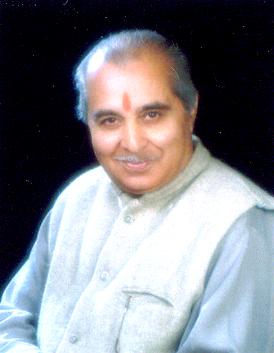 Posh Bub Posh Bub
“Posh Mot” hardly needs any introduction. A religious leader
of integrity and a spiritual guide imparts religious guidance to number less
devotees and disciples.
>>>
|
|
|
|
 Swami
Harkak Ji Swami
Harkak Ji
Param Gyani Shri Swami Har Kak ji Maharaj of Bamhama (Kupwara), Kashmir
alias Shri Swami Hari Ram ji Dhar also affectionately called as Swami Har
Bab Ji by the simple masses of Northern Kashmir. Swami ji was born in
village Bamhama, Kupwara in B. Samat 1960 on Asuj Krishna Pakshi
Triyadashi (1903) BC in a common Kashmiri Pandit Gharana of Dhar - a
farmer and served as an ordinary employee of P.W.D. as well.
>>>
|
|
 Swami
Nilkanth Ji Swami
Nilkanth Ji
His brother was Ramchand Janda, known in the vicinity of Drabiyar
popularly as Ramajanda. He was a shopkeeper selling all sorts of goods
besides healing people from various ailments. His eye drops were a guarded
secret. Over the age of 90, he wore a white T-shirt and Khaki shorts and
then you would see him riding his bicycle through the summer breeze of
Srinagar.
>>>
|
|
|
|
|
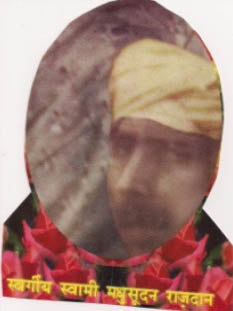 Saint
Poet Madsudhan Razdan Saint
Poet Madsudhan Razdan
Kashmir the abode of Shiva and Shakti has given birth to many saints,
seers, sofis and poets. In the field of literature, especially in
spiritual poetry, we have seen works of Lelded, Nund Reshi, Permanand
Krishan Joo Razdan, Shamas Faqir etc who maintained high values of
humanity among general masses through their poetry.
>>> |
|
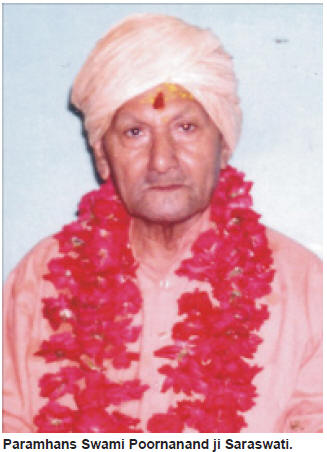
It was sometime in 1958 our family came in contact with a saint of great merit, Paramhans Swami Poornanand ji Saraswati. He was
staying at Shesharma, a village on the outskirts of Udaipur district. Hehailed
from Kashmir. It was on our intense persuasion he agreed to stay with us.
>>>
|
|
|
|
|
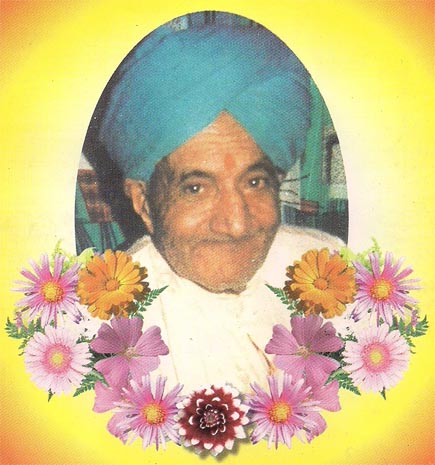 Janki
Nath Dhar Sahib Janki
Nath Dhar Sahib
A pious and religious minded man Sh Kanth Nath
Dhar of Dhar, Sahib family and Bhardwaj gotra
living at Khan-kahi-sokhta Safakadal Srinagar
Kashmir and married to Shrimati Kudmali of
Badeepora (Chadoora) from very renowned pious
Bhat family, were bestowed with four sons. The
eldest son born on 28-4-1902, was very lovely
charming and shining like a star. The boy was very
brilliant graceful,religious minded and well
devoted towards his parents and Krishn preima,
from his very child hood and named Nandlal.
>>> |
|
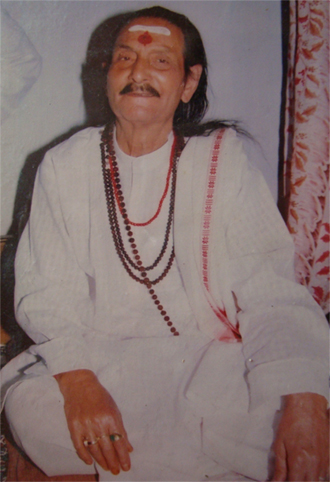 Swami
Syamanandji
Swami
Syamanandji Maaharaj was born at Ganpatyar,
Srinagar in the Jattu family with the Gotra Dev
Bardwaj. His original name was Som Nath. He lost
his father Sh. Mahadev Jattoo at a very young age.
Being the elder son of the family he took all the
responsibilities of his family and worked hard to
fulfill their needs.
>>> |
|
|
|
|
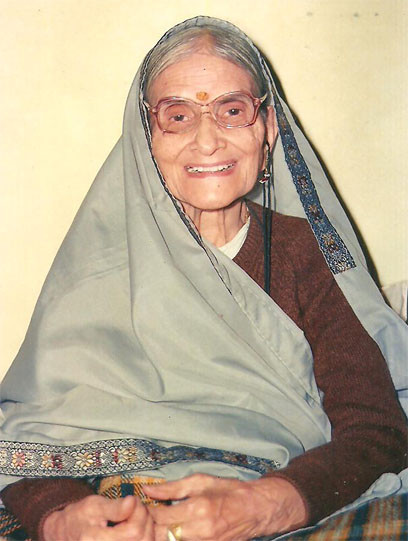 Kamlawati
Kachru Kamlawati
Kachru
Smt. Kamlawati Kachru (maiden name as Radha) was born in the family of Kouls (nicknamed as
Bonis), residents of Reshi Mohalla, Habbakadal
Srinagar. Her birthday as per tithi is Kartik Shukla Paksh Dwadashi and the birth year approximately around 1905. Her father namely Shri Gopi Nath Koul died at his tender age of 28 and the duty of bringing up the family fell on her mother Mader Dedi and others.
>>>
|
|
 Swami
Man Kak Swami
Man Kak
|
|
|
|
 Swami
Sidh Bab Swami
Sidh Bab
|
|
 Swami
Shyam Lal ji Swami
Shyam Lal ji
|
|
|
|
 Sharika
Ji Sharika
Ji
|
|
|
|
|
|
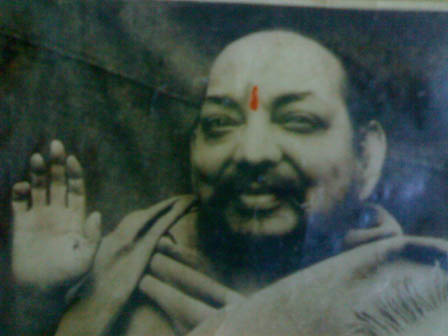 Swami
Hari Krishna Swami
Hari Krishna
|
|
 Swami
Maheshwar Nath Ji
Swami
Maheshwar Nath Ji
Swamiji was a devotee of Lord
Krishna. He would believe in Satsang. A Sarang would be always with him
and referring to that Sarang, he would say: "This is my true
companion".
>>>
|
|
|
|
Swami
Haldhar Ji
Swami Haldhar Ji was an
example of an ordinary man developing into a superman under very trying
circumstances. He was under the full control of an almighty Power without
any offer of resistance on his part. Out of the bounty of Lord’s grace,
he enlightened others.
>>>
|
|
Thakurjoo
Manwati
This humble teacher has
attained venerable status of a Guru and the aroma of his preaching had
mingled with the air of Kashmir.
>>>
|
|
|
|
Saint-Poet
Mirza Kak
After Lal Ded, Sahzanand and
Roopa Bhawani, the Valley was again blessed with the birth of one more
saint- poet Mirza Kak, who contined the Vakh parampara in Kashmir. Vakhs
are the quintessence of spiritual and religious sayings and utterances of
mystics and saints.
>>>
|
|
Swami
Himmat Kak
Swami Himmat Kak was born in
the year 1845 and attained Mahasamadhi in the year 1912. He hailed from
Goshi-a village in Kupwara District well known for being the abode of a
number of pious men and women.
>>>
|
|
|
|
Swami
Grata Bab
Kashmir has been rightly
referred to as 'Rishi Vaer.' All rishis and mystics have not been men or
women of scholarship and erudition. They were, however, human beings given
to renunciation, contemplation and compassion to attain spiritual heights.
They were either married persons or recluses. Swami Grata Bab was one such
recluse, whose actual name was Pandit Prasad Joo Koul.
>>>
|
|
This street stands witness to the
high learning and the spiritual traditions
of the Kashmiri Pandit
community. Kashmir's greatest
saint of the past 250 years - Pt. Mansa Ram Razdan lived here
during the Pathan rule. The street
commemorates the exalted spiritual
status of Saint Mansa Ram
Razdan, also known by the names
of Razdan Sab or Dooni Sahib.
>>> |
|
|
|
Swami
Shankar Razdan
Swamiji was not only a saint,
he had great literary attainments. One of his more important contributions
to the Kashmiri literature is his Ramayana in Kashmiri verse in Sharda
script. He has left behind many Vakyas which are a source of inspiration
to the faithful.
>>>
|
|
Swami
Sonakak Ji
Swami Sonakak, one of the
greatest mystic saints of Kashmir was known variously as Sona Bab
(father), Sona Bayu or Sona Matoo (spiritually possessed).
>>>
|
|
|
|
Khwaja
Lassa Sahib
In the first part of this
century, it was a common sight for the people of Kashmir to see a Muslim
Saint roaming on the streets of Srinagar, with a loose long gown (PHIRAN)
hanging down his shoulders. This was Khwaja Lassa Sahib of Nowhatta,
Srinagar.
>>>
|
|
Pandit
Radha Krishan Kaul Mohtsib
Few know him but those who
came in contact with him could not but feel deeply impressed by his
saintly nature, contentment and deep dispassion. He was a true Karma-Yogi.
To serve mankind as one's larger self was the hall-mark of his life.
>>>
|
|
|
|
|
|
|
|
|
Articles |
Mystic
Trends in Kashmiri Poetry
Kashmir has given a lot to the
Indian Poetics and Literature. Kashmir has produced many Sanskrit scholars
and mystics. The cultural life of Kashmir has had the impress of great
mystics.
>>>
|
|
In
the Abode of Saints
The land of Kashyap Rishi
standing aloft the northern periphery of the Punyabhumi, called Bharat,
has been described as the jewel in the crown of the Indian subcontinent.
No wonder then that this land of absorbing beauty has, of yore, been the
home of gods and goddesses and saints and seers.
>>>
|
|
|
|
Saints
And Sages of Kashmir
The saints of Kashmir are to
Kashmiri Pandits their ancestors and they represent their heritage. Each
Pandit has a 'gotra', a link to his clan, established by a Reshi, a saint
long ago. There are over a hundred gotras. Thus Kashmir is also called
Reshwar, meaning a habitat of reshis.
>>>
|
|
My
Association with Saints
I come from an orthodox family. My parents observed all Hindu festivals and
rituals-- fasting over a month at a time (Magh). My father taught me Sandhya
when I was only ten years old. When I completed the tenth year (Primary Classes)
in my native village school of Murran,
>>>
|
|
|
|
|
Shankar Ramayana by Swami Shankar Razdan
Over
the ages Kashmir has had its compliment of Rishi, Munis, Saints and Sufis who
helped common people discover the truth. Among them lived in the middle of the
last century, Swami Shankar Razdan, who was revered by all for his spiritual
attainments. Swamiji was not only a saint, but also had great literary
attainments. One of his more important contributions to the Kashmiri literature
is his Ramayana in Kashmiri verse which he wrote in Sharada script.
>>>
|
|
Adi
Shankracharya's Visit to Kashmir
Kashmir has been a sacred place a seat for learning. Swami Paramahansa
Yoganranda tells us in 'Autobiography of a Yogi'-"Mythological tales in Purana
say that the Himalayas are abodeof Shiva-King of Yogis". So does Kalidas
describes the Himalayas as"The massed laughter of Shiva". 'The Hindu Tradition' mentionsthat Kashmiri was a center of Shiva Worship and according to some
traditions, it was from here that the devotional Shaivism passed on to the rest
of India.
>>> |
|
|
|
|
Swami Vivekananda in Kashmir
Article1
Article2
|
|
|
|
A
LIST OF SAINTS |
| Jaman
Ded |
Lived
about 200 years ago. She was often found
roaming about in the mountains near the Amar
Nath cave. |
| Rishi
Pir |
Lived
in the time of Jehangir. |
| Zanana
Zui |
Resided
at Rainawari (Srinagar), was contemporary of
Rishi Pir. Lived about 1570 A.D. |
| Krishna
Pandit Taplu |
Resided
at Bhori Kadal (Srinagar). He discovered the
shrine of Khir Bhawani which had become
unknown during the Muhammadan rule. His
descendents practise fortune-telling by
looking into the Brihat-Katha. |
| Bhasker
Razdan |
Grandfather
of Manas Razdan. Wrote a commentary on 60
sayings of Lalleshwari in Sanskrit Verse.
Lived about 250 years ago. |
| Krishna
Kar |
Resided
at Rainawari (Srinagar); was contemporary of
Rishi Pir. |
| Manas
Razdan |
Resided
at Bana Mohalla. He practiced austerities at
Qiladar, Punjab, which has since become the
Mecca of the Kashmiri Pandits. |
| Sodi
Woni |
Had
darshan of Shiva at Shishram Nag. |
| Jiwan
Sahib |
Lived
about the middle of Eighteenth Century of
Christian era. Resided at Rainawari. |
| Zana
Sahib |
Was
the Guru of Chana Sahib. |
| Mirza
Kak |
Lived
at Hangalgund - a village above Achhabal,
about 100 years ago. His sayings in Kashmiri
verse are current among the people. |
| Nidhan
Sahib |
Lived
at the village of Moran (Avantipora Tehsil).
Died in Sambat 1925. |
| Chana
Sahib |
Lived
at Rainawari. Died in Sambat 1928. |
| Gopal
Sahib |
Lived
in a hut under a Chenar tree at Barbar Shah. |
| Isher
Sahib |
Died
in 1880, having lived to an old age. Lived
at Habba Kadal. |
| Govind
Baju |
Lived
at Rainawari. |
| Manas
Matu |
Died
in 1878 A.D. having lived to an old age. |
| Anand
Ji |
Died
at an advanced age at Jama Nagar, a village
near Shopyan in 1917 A.D. |
| Lal
Shah |
Died
at Rainawari in 1918 A.D. at an advanced
age. |
| Labi
Shah |
Lived
at the Tulmula village during the governship
of Colonel Miyan Singh. |
| Ganesh
Das |
Lived
at Gush, a village in Uttar Machipura. |
| Thakar
Prashad Choudhri alias Bawa Presidh
Nath |
This
ascetic's ashram is at Etawah. Bawa Braham
Nath was the Mahant of his ashram. |
Source:
The Kashmiri Pandit
by Pandit Anand Koul
Thacker, Spink
& Co.
Calcutta
|










 Swami Kral Bab