Chapter 4: The
Constituent Assembly
The National Conference
convened a meeting of its General Council on 27 October 1950. The Council was called into session to
consider the report of Sir Owen Dixon, the United
Nations mediator, appointed to negotiate a settlement
on the demilitarization of the State and the induction
of the plebiscite administrator into his office. The
General Council condemned the Dixon report and
characterized it opposed to the objectives for which
the people of the State had reposed their faith in the
United Nations. The General Council observed that the
"Dixon report, while admitting that the armed
intervention of Pakistan constitutes a flagrant breach
of international law, accords recognition to the
aggressor, firstly, as an equal party and then bestows
upon him title to possess the fruits of
aggression". The Council voiced its strong
disapproval of the suggestions made by Sir Dixon to
partition the State and declared that the "
territorial integrity of the State must remain
inviolate and that, in determining their future the
unity and the organic homogeneity of the people should
not be broken into artificial compartments." By
another resolution, the General Council issued a
mandate to the "Supreme National Executive",
to convene a Constituent Assembly in the State, based
upon adult franchise and embracing all constituents of
the State to determine the future shape and
affiliations of the Jammu and Kashmir State. The
resolution stipulated:
October 1950. The Council was called into session to
consider the report of Sir Owen Dixon, the United
Nations mediator, appointed to negotiate a settlement
on the demilitarization of the State and the induction
of the plebiscite administrator into his office. The
General Council condemned the Dixon report and
characterized it opposed to the objectives for which
the people of the State had reposed their faith in the
United Nations. The General Council observed that the
"Dixon report, while admitting that the armed
intervention of Pakistan constitutes a flagrant breach
of international law, accords recognition to the
aggressor, firstly, as an equal party and then bestows
upon him title to possess the fruits of
aggression". The Council voiced its strong
disapproval of the suggestions made by Sir Dixon to
partition the State and declared that the "
territorial integrity of the State must remain
inviolate and that, in determining their future the
unity and the organic homogeneity of the people should
not be broken into artificial compartments." By
another resolution, the General Council issued a
mandate to the "Supreme National Executive",
to convene a Constituent Assembly in the State, based
upon adult franchise and embracing all constituents of
the State to determine the future shape and
affiliations of the Jammu and Kashmir State. The
resolution stipulated:
The meeting of the General
Council of the All Jammu and Kashmir National
Conference views with great concern the wrongs of
aggression of which the people of the State continue
to be victims. The failure in its opinion is due to
the Continued concessions given to Pakistan by placing
a premium on her in transience.
The indecision and
unrealistic procedure adopted so far has condemned the
people of the State to a life of agonizing
uncertainty. The All Jammu and Kashmir National
Conference is gravely concerned and cannot any longer
afford to ignore the perpetration of these conditions
of doubt and frustration. In the opinion of the
General Council, time has come when the initiative
must be regained by the people to put an end to this
indeterminate state of drift and indecision. The
General Council recommends to the Supreme National
Executive of the people to take immediate steps for
convening a Constituent Assembly based upon adult
suffrage and embracing all sections of people and all
the constituents of the State for the purpose of
determining the future shape and affiliations of the
State of Jammu and Kashmir. In this sovereign Assembly
embodying the supreme will of the people of the State,
we shall give ourselves and our children a
constitution worthy of the tradition of our freedom
struggle and in accordance with the principles of New
Kashmir.
The resolution of the General
Council was apparently aimed to extend support to the
Government of India which had rejected the proposals,
made by Owen Dixon, the United Nations mediator.
However, the Conference leaders were motivated by
their own interests to seek the convocation of the
Constituent Assembly and vest it with powers to
determine the final disposition of the State. The
Conference leaders did not favor a plebiscite, for
they realized far two well that a vote for Pakistan
would spell their doom and if the plebiscite fumed in
favor of India, their endeavors to organize the State
into a separate political identity based on the Muslim
majority character of its population would fat!
through. Evidently, they aimed to use the Constituent
Assembly to extricate themselves from their
commitments to a plebiscite and at the same time
secure extra-constitutional guarantees for the
separate political identity they envisaged for the
State. The Conference leaders did not hide their
intentions. In its resolution the General Council of
the Conference, suddenly proclaimed the Interim
Government as the "Supreme National
Executive" of the people, calling upon it to
convene the Constituent Assembly and end the
uncertainty of the State. The Conference leaders
sought to liberate the Interim Government of its
provisional moorings and establish its pre-eminence
over all other political instruments in the State,
including those embodied by the Constitution Act of
1939, which governed its function. The Conference
leaders sought to vest in the Constituent Assembly,
powers which the Constitution of India did not
envisage for it and thus impart to it, precedence over
the constitutional instruments devised by Article 370
of the Constitution of India. They also attempted to
place themselves in between India and Pakistan, in
their dispute over the accession of the State and
secure the Interim Government a vote on any settlement
which the Government of India reached with the
Security Council or the Government of Pakistan.
The resolution of the
National Conference to Convene the Constituent
Assembly was not opposed by the Indian leaders;
perhaps they sought to use it to controvert the
various pressures which were building upon the
Government of India in the Security Council after it
had turned down the proposals made by Owen Dixon.
However, the inspiration to convene the Constituent
Assembly did not come from them. In fact, the
resolution caused a lot of concern to the Indian
leaders, who lost no time to seek a number of
clarifications from the Conference leaders with regard
to the exact powers the Conference leaders intended to
vest in the Constituent Assembly. The decision to vest
powers to determine the future disposition of the
State in the Constituent Assembly was formidable and
was bound to cast its shadows on the accession of the
State to India, which the Indian leaders consistently
claimed, had been finally accomplished by the
execution of the Instrument of Accession. The
Government of India had strongly resisted all attempts
to question the accession of the State to India and
open fresh options for the future disposition of the
State except that the act of the accession was subject
to a referendum by which, India was committed to
ascertain the wishes of the people of the State after
the invasion was ended. This was precisely the ground
on which the various Proposals made by Owen Dixon had
been rejected by the Government of India.
A long correspondence ensued
between the States' Ministry and the Interim
Government. The Conference leaders informed the
Minister of States, Gopalaswami Ayangar, that the
Constituent Assembly would function as a sovereign
body, and besides taking a decision on the final
disposition of the State, determine the future of the
Dogra rule and draw up a constitution for the
government of the State. The States' Ministry accepted
that the Constituent Assembly would be free to draw up
a Constitution for the State, but the decisions taken
by the Constituent Assembly would be subject to the
accession of the State to India and the commitments
which the Government of India had given in this
regard. Ayangar conveyed to the Conference leaders
that since the Constituent Assembly of the State would
draw up the Constitution of the State, it would be
necessary to bring about a measure of uniformity in
the constitutional provisions which governed the
relations between the Union and the State, with the
provisions of the Constitution of India which governed
the relations between the Union and the other Indian
States and the function of their governments. The
States' Minister proposed the application of the
Constitution of India to the State in regard to
citizenship, fundamental rights and related legal
guarantees, the principles of state policy, the
jurisdiction of the federal judiciary and the powers
of the Union Government to deal with emergencies
arising out of war and internal disturbance.
The Conference leaders did
not approve of the communication of the States
Minister. They insisted upon the right of the
Constituent Assembly of the State to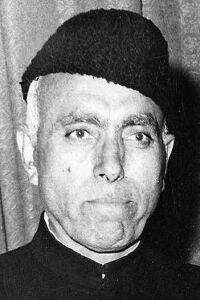 take whatever
decision it deemed appropriate, on the final
disposition of the State and claimed that both the
accession as well as the commitments the Government of
India had undertaken, were ultimately subject to the
verdict of the people of the State. The Conference
leaders reiterated their earlier stand that the
Constituent Assembly would draw up a constitution for
the government of the State, and incorporate in it the
constitutional provision for citizenship, fundamental
rights and the related constitutional guarantees,
directive principles of state policy and emergencies
arising out of threat of war and internal
disturbance. The Conference leaders emphasised that
the Constituent Assembly of the State alone was
empowered to determine, the final disposition of the
State. Ayangar was thrown off his feet and he along
with Maulana Abdul Kalam Azad and Rajgopalachari
hurried to assure the Conference leaders that they had
no disagreement with the views, the Conference leaders
held. Nehru, was in London where he had gone to attend
the conference of the Commonwealth Premiers. He also
wrote to Sheikh Mohamad Abdullah and assured him that
he did not dispute the right of the people to
determine the future shape of the State and its
government. "I have no doubt that the will of
Kashmiri people must prevail in regard to every maker
and it is they who will decide ultimately every
question affecting the State."
take whatever
decision it deemed appropriate, on the final
disposition of the State and claimed that both the
accession as well as the commitments the Government of
India had undertaken, were ultimately subject to the
verdict of the people of the State. The Conference
leaders reiterated their earlier stand that the
Constituent Assembly would draw up a constitution for
the government of the State, and incorporate in it the
constitutional provision for citizenship, fundamental
rights and the related constitutional guarantees,
directive principles of state policy and emergencies
arising out of threat of war and internal
disturbance. The Conference leaders emphasised that
the Constituent Assembly of the State alone was
empowered to determine, the final disposition of the
State. Ayangar was thrown off his feet and he along
with Maulana Abdul Kalam Azad and Rajgopalachari
hurried to assure the Conference leaders that they had
no disagreement with the views, the Conference leaders
held. Nehru, was in London where he had gone to attend
the conference of the Commonwealth Premiers. He also
wrote to Sheikh Mohamad Abdullah and assured him that
he did not dispute the right of the people to
determine the future shape of the State and its
government. "I have no doubt that the will of
Kashmiri people must prevail in regard to every maker
and it is they who will decide ultimately every
question affecting the State."
The resolution of the
National Conference evoked a sharp reaction from the
Hindu and the other minorities in the State. In the
Kashmir province, where the Hindus and the other
minorities, did not possess much numerical strength,
the reaction was subdued. But in the Jammu province,
the Hindus and other minorities voiced strong
disapproval of the Conference resolution to seek a
vote from the Constituent Assembly on the accession of
the State. The Praja Parishad and the Hindu Sahayak
Sabha condemned the resolution as destructive of the
accession of the State to India The Parishad adopted a
strongly worded resolution that the accession of the
State to India had been finally and irrevocably
accomplished and the convocation of the Constituent
Assembly would tantamount to its repudiation. The
Praja Parishad alleged that the convocation of the
Constituent Assembly in the State, to take a fresh
decision on accession, was another step towards the
independence of the State. Both He Parishad and the
Sahayak Sabha rejected the independence of the State
and claimed that they would not permit the dissolution
of the accession of the State and its separation from
India.
On 30 April 1951, Karan
Singh, the Regent of the State, issued a proclamation
to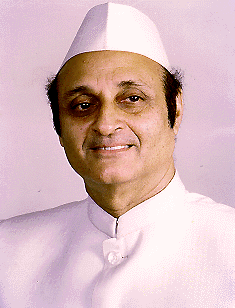 order the institution of the Constituent Assembly
in the State. The proclamation envisaged the
convocation of the Assembly on the basis of universal
adult franchise and the secrecy of the ballot. The
proclamation of the Regent ordered the State to be
divided into electoral districts, for the purposes of
election to the Constituent Assembly. The proclamation
envisaged the appointment of a Delimitation Committee,
which would be vested with the powers to delimit the
territorial extent of the electoral districts.
order the institution of the Constituent Assembly
in the State. The proclamation envisaged the
convocation of the Assembly on the basis of universal
adult franchise and the secrecy of the ballot. The
proclamation of the Regent ordered the State to be
divided into electoral districts, for the purposes of
election to the Constituent Assembly. The proclamation
envisaged the appointment of a Delimitation Committee,
which would be vested with the powers to delimit the
territorial extent of the electoral districts.
The Constituent Assembly was
empowered to make its own rules to govern its
procedure and the conduct of its business.
The Delimitation Committee
was constituted of five members: a judge of the High
Court, Justice M.A. Shahmiri who was also appointed
the Chairman of the Committee and four other members
of the rank of the Deputy Commissioners of the Revenue
Department of the State Government The Praja Parishad
demanded representation in the Delimitation
Commission, but the demand was not conceded.
For the purpose of delimiting
the electoral constituencies, the mitation Committee
was instructed to take a population of forty thousand
people, as nearly as possible, living in a compact
contiguous area with regard to the physical features
of the area and its means of communication. The
Kashmiri Pursharthi Sabha, which represented the
refugees from the occupied territories of the State,
demanded the reservation of three seats in the
Constituent Assembly for the refugees encamped in
Nagrota refugee camp in Jammu. The Sikhs also demanded
enhancement of representation in the Constituent
Assembly over that, they had in the old State
assembly, the Praja Sabha.
The Delimitation Committee
took instructions from the Conference leaders.
Shahmiri had served the Maharaja more faithfully than
many of his officers, but he had shifted his loyalties
to the Interim Government, after the change over in
the government in 1947. He was appointed the
Constitutional Advisor to the Interim Government and
was one of the collaborators of the Conference leaders
who favored a separate political identity of the State
on the basis of its Muslim majority character.
The total number of the
members of the Assembly was fixed at one hundred;
twenty-five of whom were to represent the people in
the occupied territories of the State. The Kashmir
province was divided into forty three constituencies,
the Jammu province into thirty constituencies and the
frontier divisions of Ladakh and Baltistan into two
constituencies. No delimitation of electoral
constituencies was made in regard to the territories
of the State occupied by Pakistan. The Delimitation
Committee rejected the demand of the Pursharthi Sabha
seeking representation for the displaced persons from
the territories of the State under the occupation of
Pakistan encamped in various refugee camps in Jammu.
The Committee also rejected the representation made by
the Sikhs for special weightage in the Assembly.
All State-subjects, who were
of twenty one years and more in age and who were not
subject to any disqualifications laid down by law, and
who were entitled to vote were registered in the
electoral rolls of the electoral area provided they
resided in the area for not less than one week during
the two years preceding 1951. Voters could register
themselves in any number of constituencies but they
could vote in only one electoral constituency. In case
a voter cast his vote in more than one constituency.
his votes cast in such constituencies were liable to
be declared void.
The preparation of the
provisional electoral rolls was commenced on 1
December 1950, end the electoral rolls were published
on 4 June 1951. The preparation of the electoral rolls
was entrusted to electoral Registrars. Forty-one
Revising Registrars were also appointed to hear and
decide claims in regard to the registration of the
voters.
The rules framed for the
election to the Constituent Assembly, provided that a
candidate could seek election to the Assembly if he
was a first class hereditary State-subject and was of
twenty-five years or more in age on 1, August 1951.
Candidates could not hold any of lice of profit in the
Jammu and Kashmir Government and the Government of
India or any local body in the State, except in a
cooperative society. People convicted of criminal
offences involving a punishment of two years or more
and people who had been dismissed from the Government
service for corruption were barred from voting unless
in both cases, a period of three years or such period
as was allowed by the Commissioners had elapsed, since
their release or dismissal respectively.
All the Electoral Registrars
were appointed from among the Special Tehsildars, who
were appointed by the State Government to implement
the land reforms. Forty one revising authorities,
twenty for the Jammu province, nineteen for the
Kashmir province and two for the district of Ladakhs
and Baltistan were appointed to receive and decide
claims and objections with regard to the provisional
rolls of the Constituent Assembly. All the Electoral
Registrars and Revising Registrars were the nominees
of the National Conference.
In accordance with the
election rules, no independent tribunals were provided
to settle the disputes arising out of the elections;
instead, all such disputes Me to be decided by the
Constituent Assembly itself. The rules envisaged
warning to the officers of the government against any
infringement of the election rules or any interference
in the elections. Restrictions were placed on parties
and candidates to use communal issues in the elections
and incitement of communal feelings and violence were
declared punishable offenses. The maximum expenditure
a candidate was permitted to incur in the elections,
was fixed at three thousand rupees. The election rules
envisaged provisions in accordance with which separate
polling booths were to be provided for the women
voters.
Right from the time, the
preparations for the elections to the Constituent
Assembly began, the parties and candidates, seeking
election to the Assembly in opposition to the official
candidates of the National Conference, complained of
intimidation and interference. They charged the
National Conference of using force and pressure to
drive them out of the elections and preventing them
from filing their nomination papers. The allegations
were largely true and the National Conference cadres,
backed up by the State administration, spared no
efforts, to scuttle the opposition and push out its
candidates from the elections and thus pave the way
for a total victory for the National Conference. For
the forty-one of the forty-three constituencies in the
Kashmir Province, not a single nomination paper was
filed by the candidates in the opposition. In the two,
remaining constituencies of Habbakadal in the city of
Srinagar and of Baramulla Township, nomination papers
were filed by Pandit Shiv Narayan Fotedar and Sardar
Sant Singh Tegh, an Akali Sikhs leader of the State.
However, the two leaders did not remain in the fray
for long and both withdrew in protest. Sant Singh Tegh
complained of official interference in the elections
and alleged that the color of his ballot boxes, was
changed in his absence and his voters were prevented
from attending his election meetings by unfair and
foul means.
In the Jammu province, Praja
Parishad nominated candidates for twenty-seven
constituencies of the provinces, generally filing
nomination papers of more than one candidate for each
constituency. Forty-one of the forty-six nominations
filed by the Parishad were rejected in twenty-seven
constituencies, leaving the Parishad to contest
elections in only three constituencies in the
province. On 22 September 1951, the Working Committee
of the Parishad adopted a resolution condemning the
rejection of the nomination papers of the Parishad
candidates and gave an ultimatum to the Government to
reverse the rejections, failing which the Parishad
threatened to boycott the elections. The President of
the Praja Parishad Pandit Prem Nath Dogra issued a
press statement in Delhi on 6 October 1951 in which he
alleged, that:
- The elections in the two
provinces of Jammu and Kashmir were scheduled to
be held on different dates to provide the
National Conference an advantage over the other
parties;
- The delimitation of the
constituencies was undertaken in a manner, which
used gerrymandering to turn many Hindu majority
constituencies into Muslim majority
constituencies;
- Fortune of the forty-six
nomination papers filed by the Praja Parishad
candidates were rejected on false and flimsy
grounds;
- Official interference in
the elections was widespread and the entire
official machinery was geared to help the
National Conference.
Prem Nath Dogra met Gopalaswami
Ayangar, the Minister of States in the Government of
India and urged upon him to take immediate steps) to
undo the wrong which the National Conference leaders
had done in the elections. He repeated the allegations
he had made against the Conference leaders and
appealed to the Government of India:
- To institute an
independent judicial enquiry into the rejection
of the nomination papers of the Praja Parishad
candidates in the twenty-seven constituencies in
which the Praja Parishad candidates had filed
their nominations;
- To appoint a Supreme
Court Judge to supervise the conduct of the
elections in Jammu in order to assure perfect
impartiality;
- To prevent the
Government of finials from openly working for
the National Conference candidates;
Ayangar could do little to put a
stop to what was happening in the State. Instead, the
Congress leaders joined the National Conference in its
condemnation of the Praja Parishad and blamed the
Parishad leaders of inciting communalism in the State
and helping the elements, which were inimical to the
Indian interests. Perhaps, the Indian Government
deliberately overlooked the dangerous parent of the
ruthlessness with which the Conference leaders sought
to pack the Constituent Assembly with their cadres and
supporters. After frantic but vain appeals to the
Indian leaders, the Praja Patishad finally decided to
boycott the elections. The Parishad leaders sent a
cable to Nehru, Gopataswami Ayangar and Maulana Sayeed
Masoodi, the General Secretary of the National
Conference, informing them of their decision to
boycott the elections. Maulana Massoodi refuted the
allegations; the Parishad made against the Interim
Government, and charged the Parishad leaders of
opposing the convocation of the Constituent Assembly.
He claimed that the Parishad did not enjoy the support
of the people in the State and the Parishad leaders
had abandoned the contest because they were unnerved
by the sweeping victory the Conference leaders had
registered in the province of Kashmir The Parishad
extended its support to the two independent candidates
against the National Conference, in the constituencies
of Kahnachak and Akhnoor in the Jammed province. The
independent candidates were< /DIV>
however, defeated and the
Conference nominees returned from both the
constituencies. With seventy-three of the Conference
nominees having been returned unopposed the victory of
its candidates in Akhnoor and Kahnachark, secured the
Conference all the seventy five seats in the Assembly.
Double Charge
The Constituent
Assembly met in Srinagar on 31 October 1951 Maulana
Masoodi, who was also returned unopposed to the
Assembly was unanimously elected the pro-tem Chairman
of the Assembly. The next day Gulam Mohamad Sadiq was
elected the President of the Assembly. The Assembly
was inaugurated by Sheikh Mohamad Abdullah on 5
November 1951. In his inaugural address Sheikh Mohamad
Abdullah said:
You are the sovereign
authority in this State of Jammu and Kashmir, what you
decide has the irrevocable force of law. The basic
democratic principle of sovereignty of the nation
embodied ably in the American and French Constitutions
is once again given shape in our midst. I shall quote
the famous words of Article 3 of the French
Constitution of 1719: "The source of all
sovereignty resides fundamentally is the nation;
sovereignty is one and indivisible and
imprescriptibly. It belongs to the nation.
We should be clear about the
responsibilities that this power invests us with. In
front of us lie decisions of the highest
nationalimportance, which we shall be called upon to
take. Upon the correctness of our decision depends not
only the happiness of our land and people now, but the
fate as well of generations to come.
Sheikh Mohamad Abdullah
enumerated the basic tasks, which the Constituent
Assembly would be called upon to undertake. The
foremost of the responsibilities which he claimed,
fell upon the Constituent Assembly, was to frame a
constitution for the government of the State
Sheikh Mohamad Abdullah said:
One great task before this
Assembly will be to devise a Constitutionfor the
future governance of the country. Constitution making
is a difficult and detailed matter. I shall only refer
to some of the broad aspects of the Constitution,
which should be the product of the labors of this
Assembly.
Referring to these broad
aspects of the Constitution, Sheikh Mohammad Abdullah
observed:
To take our first task, that
of constitution making, we shall naturally be guided
by the highest principles of democraticconstitutions
of the world. We shall base our work on theprinciple,
of equality, liberty and social justice, which are an
integral feature of all progressive constitutions. The
rule of law as understood in the democratic countries
of the world should be thecornerstone of our political
structure. Equality before the law and the
independence of judiciary from the influence of the
executiveare vital to us. The freedom of the
individual in the matter of speech, movement and
association should be guaranteed;freedom of the press
and of opinion would also be features of
ourconstitution. I need not refer in great detail to
all those rights andobligations, already embodied in
New Kashmir, which areintegral parts of democracy
which has been defined as "an apparatus of social
organization wherein people govern throughtheir chosen
representatives and are themselves guaranteed
political and civil liberties."
Referring toddle placement of
the State in the Indian federal organization and the
relations between the State and the Union, he said:
You are
no doubt aware of the scope of our present
constitutional ties with India. We are proud to have
our bonds with India, the goodwill of whose people and
Government is available to us in unstinted and
abundant measure. The Constitution of India has
provided for a federal Union add in the distribution
of sovereignpowers has treated us differently from
other constituent units. With the exception of the
items grouped under Defense, Foreign Affairs and
communications in the Instrument of Accession, we have
complete freedom to frame our Constitution in the
manner we like. In order to live and prosper as good
partners in a common endeavor for the advancement of
our peoples, I would advise that, while safeguarding
our autonomy to the fullest extent so as to enable us
to have the liberty to build our country according to
the best traditions and genius of our people, we may
also, by suitable constitutional arrangements with the
Union, establish our right to seek and compel federal
cooperation and assistance in this great task, as well
as offer our fullest cooperation and assistance to the
Union.
The second important issue,
which Sheikh Mohammad Abdullah called upon the
Constituent Assembly to deliberate upon was the future
of the Dogra rule. Abdullah pointed out that the
National Conference believed that the
"institution of monarchy was incompatible with
the spins and needs of modern times which demand an
egalitarian relationship between one citizen and
another." He said:
The supreme task of a
democracy is the measure of equality of opportunity
that it affords to its citizens to rise to the highest
point of authority and position. In consequence,
monarchies are fastdisappearing from the world
picture, as something in the nature of feudal
anachronisms. In India, too, where before the
partition six hundred and odd Princes exercised rights
and privileges of ruler ship, the process of
democratization has been taken up and atpresent hardly
ten of them exercise the limited authority of
constitutional heads of the States.
Another issue which Sheikh
Mohammad Abdullah said, the Constituent Assembly would
have to decide, was the nature of compensation which
would be paid to the landowners whose estates had been
resumed under the "land to the tiller,"
policy of the Interim Government. He told the
Assembly:
The third major issue
awaiting your deliberations arises out of the Land
Reforms, which the Government carried out with vigor
and determination. Our "land to the tiller"
policy brought light to the dark homes of the
peasantry; side-by-side, it has given rise to the
problem of the landowners demand for compensation. The
nation being the ultimate custodian of all wealth and
resources; there presentatives of the nation are truly
the best jury for giving a just and final verdict on
such claims.
The most important issue,
which Sheikh Mohammad Abdullah pointed out, the
Constituent Assembly of the State would have to
settle, was, that pertaining to the accession of the
State. Sheikh Mohammad Abdullah told the Assembly that
the Cabinet Mission had left three options open for
the States: accession to India, accession to Pakistan
and the assumption of independence. Sheikh Mohammad
Abdullah Said:
The Cabinet Mission Plan has
provided for three courses, which may be followed by
the Indian States when determining their future
affiliations. A State can either accede to India or
accede to Pakistan, but failing to do either, it still
can claim the right to remain independent. These three
alternatives are naturally open to our State. While
the intention of the British Government was to secure
the privileges of the Princes, the representatives of
the people must have the primary consideration of
promoting the greatest good of the common people.
Whatever steps they take must contribute to the growth
of a democratic social order wherein all invidious
distinctions between groups and creeds are absent.
Judged by this supreme consideration, what are the
advantages and disadvantages of our States'
accession to either India or Pakistan or of having
independent status?
Sheikh Mohammad Abdullah
dwelt in detail on the advantages and disadvantages,
the three alternatives had, and called upon the
Constituent Assembly to take a decision which would be
for the good of the State. "As a realist"
Sheikh Mohammad Abdullah said, "I am conscious
that nothing is all black or all white, and there are
many facets to each of the propositions before
us." Enumerating the "merits and demerits of
the States accession to India", Sheikh Mohammad
Abdullah told the Assembly that it was the
"kinship of ideals which determined that strength
of ties between two states": He said that the
Indian National Congress had consistently supported
the cause of "States People freedom", and
the Indian Constitution idealized the objectives of
secular democracy based upon justice, freedom and
equality which provided the Muslims of the State the
guarantee of their security in future." The
national movement in our State naturally gravitates
towards these principles of secular democracy".
Sheikh Mohammad Abdullah pointer out further that the
Interim Government had undertaken land reform' which
would not have been possible in the
"Landlord-ridden Pakistan' and the economic
prospects of the State were closely bound with India
"Potentially ", he told the Assembly, "
we are rich in minerals, and in the raw materials of
industry; we need help to develop our resources. India
being more highly industrialized than Pakistan, can
give us equipment technical services and materials.
She can help us too in marketing. Many goods also
which it would not be practical for us to produce
here--for instance, sugar, cotton cloth and other
essential commodities--can be got by us in large
quantities from India." Listing the merits of
accession to Pakistan, Sheikh Mohammad Abdullah told
the Assembly, that more dependable roads and waterways
of the State led to Pakistan not India which would
hamper trade and commerce of the State. He also
expressed his fears that communalism posed a threat to
the Muslims in India and if India turned into a
religious state in future, the interests of the
Muslims would be jeopardized. "Certain tendencies
have been asserting themselves in India" Sheikh
Mohammad Abdullah told the Assembly, "which may
in future convert it into a religious state wherein
the interests of the Muslims will be jeopardized.
"This would happen," he added, "if a
communal organization had a dominant hand in the
Government, and Congress ideals of the equality of all
communities were made to give way to religious
intolerance" He pointed out further that Pakistan
was a Muslim state and a large majority of the people
of the State were Muslims. Sheikh Mohammad Abdullah
ruled out accession to Pakistan on the ground that
Pakistan was a feudal state, economically backward and
politically retrograde and oppressive. Besides the
accession of the State to Pakistan would affect the
future of one million non-Muslims of the State as
there was no place for them in Pakistan. "Any
solution " he told the Assembly, "which will
result in the displacement or the total subjugation of
such a large number of people will not be just or
fair, and it is the responsibility of this House to
ensure that the decision that it takes on accession
does not militate against the interests of any
religious group."
Examining the alternative of
independence of the State, Sheikh Mohammad Abdullah
made certain interesting observations. He said:
The third course open to us
has still to be discussed. We have to consider the
alternative of making ourselves an Eastern
Switzerland, of keeping aloof from both states, but
having friendly relations with them. This might seem
attractive in that it would appear to pave the way out
of the present deadlock. To us, as a tourist country it
could also have certain obvious advantages. But in
considering independence we must not ignore practical
considerations. Firstly, it is not easy to protect
sovereignty and independence in a small country, which
has not sufficient strength to defend itself on our
long and difficult frontiers bordering so many
countries. Secondly, we must have the goodwill of all
our neighbors. Can we find powerful guarantors among
them to pull together always in assuring us freedom
from aggression? I would like to remind you that from
August 15 to October 22, 1947, our state was
independent and the result was that our weakness was
exploited by the neighbor with whom we had a valid
Stand-still Agreement. The State was invaded. Where is
the guarantee that in future too we may not be victims
of a similar aggression?
The inaugural address
delivered by Sheikh Mohammad Abdullah brought to
surface the divergently different views the Conference
leaders harbored about the accession of the State and
the constitutional relations between the State and the
Indian Dominion. The Government of India had offered
to hold a referendum in the State to ascertain the
wishes of the people of the State in regard to
accession, but it had consistently refused to accept
operatives for such a referendum, which repudiated the
accession of the State to India. The investiture of
any authority in the Constituent Assembly of the
State, which was independent of the Constitution of
India, virtually repudiated the accession of the State
to India and conflicted with the stand, India had
taken in the Security Council.
The Conference leaders read
the events, which had led to the partition of India in
their own way. The Cabinet Mission did not propose the
division of India and the creation of two dominions:
India and Pakistan; nor did it visualize any
alternatives to the accession of the States, which
recognized their independence. The Cabinet Mission
plan envisaged a United India, of which the Indian
States formed an integral part.
The partition of India,
envisaged by the Mount batten Declaration of June 3,
1946, did not envisage independence of the Indian
States. The partition plan, later embodied in the
Indian Independence Act, provided for the withdrawal
of the British Paramountcy. The dissolution of the
Paramountcy liberated the Indian States from the
protection of the British Crown, but it did not vest
them with any more powers than the exercised under the
Paramountcy.
The Jammu and Kashmir States
acceded to India in accordance with the processes
underlined by the partition. Maharaja Hari Singh had
exhausted the alternatives available to him under the
provision of the Indian Independence Act. The
commitments made by the Government of India at the
Security Council were not pronounced on behalf of the
State of Kashmir; at least, Pakistan and the Security
Council did not recognize them to be so. The attempts
made by the Conference leaders to vest in the
Constituent Assembly of the State, powers that did not
rightfully belong to it, convicted with the claims of
both India as well as Pakistan.
The problem of the Indian
State was not confined to the rights and obligations
of the Paramountcy alone and the alternatives, which
the British sought to secure them. The future of the
States was of crucial importance to the unity of
India. The partition separated the Muslims from India
but the partition did not envisage the division of the
princely India or its separation from India The All
India Congress Committee unequivocally repudiated the
claim of any State to assume independence. The
Committee emphasized that the relationship between the
Government of India and the States would not be
exhausted by the lapse of the British Paramountcy.
The Muslim League took the
stand that Paramountcy reverted to the States after
the transfer of power, leaving them free to take any
course of action they preferred in their relations
with the two dominions. However, both, the Viceroy and
British Government refused to accept the position the
League adopted. Mount batten gave a rebuff to the
League, when he addressed the Princes on 25 July 1947,
and told them plainly that they could not escape
integration with the rest of India and the British
Government would neither be prepared to offer aid nor
accept the independence of any Stated "My
scheme" Mount batten told the Princes,
"leaves you with all practical independence you
can possibly use and makes you free of all those
subjects which you cannot possibly manage on your own.
You cannot run away from the Dominion government which
Is your neighbor any more than you can run away from
subjects for whose welfare you are responsible."
The
National Conference, virtually reiterated the demands
of the Muslim League in respect of the States and
sought to take the position in respect of Kashmir,
which Mohammad Ali Jinnah had taken with regard to the
Indian Princely States. Indeed, by virtue of the
partition, the Indian States had been vested with
technical independence, but they were all the same, a
part of India, politically, administratively,
economically and geographically Introducing the Indian
Independence Bill in the House of Lords, Pathic
Lawrence, the Secretary of the State for India
admitted that the States were not an integral part of
India but they could not afford to remain out of it.
"But, apart from the political relationship
between the States and British India", He told
the House of Lords," there have grown up a vast
number of economic and financial agreements, matters
of common concern - posts and telegraphs, customs,
transit, railways - and it would be disastrous to
India if these arrangements were terminated on the
transfer of power". The decision about the States
was not, therefore, solely in the hands of the
British, as perhaps the National Conference leaders
visualized. The future of the States depended upon
their history and their political relations with the
rest of the country, which had evolved with the
Paramountcy.
The Government of India too
was an important factor to determine the future of the
States. The rulers of the States could not visualize
their future in isolation from India and that was
precisely what the experience in Junagarh and Hyderabad proved. The Indian States were not subject
to partition; neither the Muslim Rulers not the Muslim
subjects of any Indian State were enjoined to opt for
Pakistan by the partition plan or the Indian
Independence Act. Princes were given the choice to
join either of the two dominions without any
preconditions and on the basis they chose. It was on
that basis Mohammad All Jinnah offered the most
favored treatment to some Rajput States in Western
India if they chose to accede to Pakistan. The
Conference leaders, therefore, attempted to add a
fresh dimension to the accession of the Indian States.
The fact that Muslims formed a majority of the
population of Jammu and Kashmir, did not create any
special conditions, for which they could claim the
right under the partition plan or the procedures laid
down by the Indian Independence Act, to accede to
Pakistan or assume independence.
Hyderabad proved. The Indian States were not subject
to partition; neither the Muslim Rulers not the Muslim
subjects of any Indian State were enjoined to opt for
Pakistan by the partition plan or the Indian
Independence Act. Princes were given the choice to
join either of the two dominions without any
preconditions and on the basis they chose. It was on
that basis Mohammad All Jinnah offered the most
favored treatment to some Rajput States in Western
India if they chose to accede to Pakistan. The
Conference leaders, therefore, attempted to add a
fresh dimension to the accession of the Indian States.
The fact that Muslims formed a majority of the
population of Jammu and Kashmir, did not create any
special conditions, for which they could claim the
right under the partition plan or the procedures laid
down by the Indian Independence Act, to accede to
Pakistan or assume independence.
The more involved feature of
the claims made by Sheikh Mohammad Abdullah was his
assertion to vest the Constituent Assembly, with
powers to revoke the accession of the State to India,
and to accede in Pakistan or assume independence. The
Conference leaders, perhaps, refused to countenance
the fact that the Constituent Assembly had been
instituted by an instrument created by the
Constitution of India. They claimed that the Assembly
was brought into being by the Interim Government, with
inherent and original powers derived from the people
of the State, who did not form a part of the people of
India. The Conference leaders, in effect, sought to
vest in the Constituent Assembly of the State, a
separate charge, which was independent of the
Constitution of India.
The doctrine of double
charge, Sheikh Mohammad Abdullah evolved, had two
serious implications:
- The Constituent Assembly
was independent of the Constitution of India and
exercised inherent powers, which it did not
derive from the Constitution of India.
- The claim that the
Constituent Assembly possessed the right to
determine the finality of the accession of the
State virtually amounted to the repudiation of
the accession of the State to India.
The doctrine of double charge
accosted the Government of India with another
situation, which was more anomalous. In case a
separate charge was recognized in the Constituent
Assembly of the State, the competence of the Union and
the applicability of the Constitution of India would
be simultaneously limited to the terms specified by
the Constituent Assembly of the State, a position that
the Conference leaders were seeking to establish. Any
such position would not only exclude the jurisdiction
of the Union in regard to the State, but also close
forever the possibility of modifying the provisions of
the Constitution of India in regard to the State. The
recognition of inherent powers in the Constituent
Assembly of the State was also bound to destroy the
precedence of the Constitution of India and reduce all
federal instrumentalities to utter helplessness. The
Federal Government would eventually be left with no
remedies in case the Constituent Assembly of the State
transgressed its limits and violated the Constitution
of India. In view of the fact that the original
jurisdiction of the Supreme Court of India was not
applicable to the State, the conflicts which involved
constitutional procedure, were bound to arise and
prove catastrophic and ultimately lead either to the
termination of the special provisions envisaged for
the State or the disintegration of the federal
relations between the State and the Union. The
denouement came sooner than expected and the Interim
Government in the State was dismissed and the special
provisions for the State modified to clearly define
the scope of the powers, the Constituent Assembly
exercised, subordinating it completely to the
instrumentalities created by the Constitution of India
On 7 November 1951, the
Constituent Assembly set up several committees to
examine various aspects of the constitutional
organization of the State and report to the Assembly.
In the committees were included the Basic Principles
Committee and the Drafting Committee of the
Constitution of the State and the Advisory Committee
on Citizenship and Fundamental Rights. Mirza Afzal
Beg, who moved the resolution for the appointment of
the Advisory Committee on Citizenship and Fundamental
Rights, told the Assembly that the proposed Committee
would report on the qualifications of the citizens of
the State and the fundamental rights they would be
guaranteed. Beg said that the fundamental rights
incorporated in the Constitution of the State would be
designed in accordance with the rights, which were
incorporated in the constitutions of the democratic
states.
Jammu Agitation
The convocation of the
Constituent Assembly and the pronouncements, the
National Conference made, in and outside the Assembly,
estranged the Hindus and the other minorities further.
In the Jammu province, the distrust sunk deeper and
the Praja Parishad movement gathered wide support
among the Hindus in the province. The policies, the
Conference leaders followed, narrowed their support
base among the Hindus and the other minorities,
driving the Conference to depend solely upon the
Muslims, mainly those of the Kashmir province. The
Praja Parishad movement drove the wedge deeper and in
the course of time, the communal conflict inherent in
the commitments to Muslim precedence came to surface.
On 15 January, the students
of the Prince of Walces College in Jammu staged a
demonstration protesting against the hoisting of the
National Conference flag on the college building. They
complained that the flag of the Conference was a party
flag and therefore, it could not take the place of the
national flag or the flag of the State. The
demonstrations infuriated the National Conference
leaders, who ordered severe punitive action against
the students of the college. The students retaliated
by proceeding on an indefinite hunger strike. The
situation worsened and the protest demonstrations
organized against the action of the government turned
violent. The State Government came down upon the
students with a heavy hand and the police resorted to
firing at a number of places in the Jammu city. The
situation deteriorated further and the army had to be
called out to quell the disturbances. A seventy-two
hour curfew was clamped on the Jammu city. The Interim
Government blamed the Praja Parishad of having
instigated the agitation. The Parishad denied having
any hand in the demonstrations and demanded the
institution of an independent enquiry into the causes
of the disturbances. Several leaders of the Parishad,
including the President of the Parishad, Pandit Prem
Nath Dogra, were arrested.
While the conflagration in
Jammu was still smoldering, the Head Lama of Ladakh,
Kaushak Bakula, a member of the Constituent Assembly
of the State presented a long memorandum to the Prime
Minister of the State, Sheikh Mohammad Abdullah.
Kaushak Bakula demanded the inclusion of statutory
provisions in the Constitution of the State by virtue
of which Ladakh would become a federating unit of the
State so long Jammu and Kashmir remained in India. He
urged upon the Premier that a separate Legislative
Assembly of fifteen members, with an executive council
responsible to it, should be set up to conduct the
government and administration of Ladakh. Kaushak
Bakula demanded that Ladakh should bear the same
relation to the State that the State bore to India. He
pointed out that the Buddhists of Ladakh were
different from the rest of the people of the State in
race, culture, religion and language and being
represented by one member in the Assembly, they had
little or no voice in the shaping of their future. The
Head Lama demanded that in case the proposals to
reorganize Ladakh into a federating province of the
State were not accepted, a statutory advisory
committee of ten members should be elected on the
basis of joint electorates to advise the State
Government in regard to Ladakh. Kaushak Bakula
emphasized that no measures should tee taken by the
Constituent Assembly of the State which affected the
economic, political and religious life of the people
of the province without the approval of the statutory
advisory committee which be had proposed for Ladakh.
The communal polarization
caused the Indian leaders considerable anxiety. They
realised the dangers in the alienation of the major
communities in the State and the advantage Pakistan
could take of any Muslim distrust, which grew in
consequence. However, their efforts to deal with the
crisis were feeble. They denounced the Praja Parishad
agitation but did not muster courage to tell the
Conference leaders that they could not carry the
Hindus and the other minorities with them so long they
followed the policy of communal precedence. Obviously
the Hindus and the other minorities were not prepared
to accept a separate political identity of the State
which was placed outside the constitutional
organization of India and which was based upon the
communal precedence of the Muslims. They had fought
for the freedom of India, shoulder to shoulder with
their fellow countrymen, opposed the partition with
all their might and paid for their professions more
heavily than their Muslim compatriots. Many of them
entertained fears that the communal precedence was
bound to conflict with the secular integration of
India and ultimately lead to the secession of the
State from India.
On 24 March 1952, Mirza Afzal
Beg, the Chairman of the Basic Principles Committee
unfolded in the Constituent Assembly the scheme of
autonomy, the National Conference visualized for the
Jammu and Kashmir State. He said that Jammu and
Kashmir would be constituted into an "autonomous
republic within the Indian Union, with a separate
President, National Assembly, Judiciary, Regional
Autonomy and separate citizenship". Beg's
exhortations draw sharper reaction from the minorities
in the State, and deepened the distrust in the Jammu
province further.
In April 1952, Nehru sent
Gopalaswami Ayangar to Jammu to make an assessment of
the situation on the spot and help in the restoration
of normalcy there. In Jammu, a number of delegations
met Gopalaswami. Delegations, representing Hindus and
the Sikhs of both the provinces, and the Buddhists of
Ladakh also met Nehru's emissary. The Hindus
delegations told Gopalaswami that:
- The Hindus did not
approve of the autonomous constitutional
position, which the National Conference sought
for the State, because such a loose relationship
between the State and the Union would eventually
lead to the cessation of the State from the
Indian Union;
- The National Conference
was working to establish dominance over the
Muslim majority over the government and the
politics of the States, which was bound to
relegate the Hindus and the other minorities in
the State, a million and quarter of people,
constituting almost half of the population of
the State, to a second rate citizenship and a
life of servillance;
- The Interim Government
had, right from its inception, vigoursly
reorganized property relations in the State to
ensure Muslim dominance over its economic
organization;
- The Interim Government
had followed a persistent policy of excluding
the Hindus from the administrative organization
of the States;
- The Interim Government
had imposed an embargo on the admission of
Hindus to educational institutions, grant of
scholarships to them and their nomination to
technical colleges inside and outside the State;
and
- The
Hindus and the other minorities favored the
application of the Constitution of India to the
State in its entirety.
Ayangar apprised the Conference
leaders of the concern of the Government of India
about the developments in the State. He told them that
the Government of India would not be able to support
the demand of the autonomy of the State, which was
based upon communal preferences. Ayangar advised the
Conference leaders not to get committed to theocratic
ideals and instead adopt policies, which aimed at the
integration of the various communities in the State on
the basis of equality and justice. Ayangar further
asked the Conference leaders to take a more
considerate view of the student agitation in Jammu and
release the Parishad leaders and other students to
restore normalcy in the province.
The State Government released
the Praja Parishad leaders and the Students who had
been imprisoned during the agitation. The release of
the leaders had a soothing effect on the ruffled
tempers in the province and the student agitation
subsided gradually. However, Ayangar mission
administered a jolt to the Conference leaders, who had
received unquestioned support from the Government of
India in whatever action they had taken in the State.
The Muslim leaders of the Conference expressed strong
resentment against Ayangar's visit to the State and
charged the Government of India of interference with
the internal affairs of the State. They claimed that
the people o the State, who they unmistakably
identified with the Muslims, would not accept the
secular integration of the State with India, which
would effect the Muslim majority character of the
Stated They also claimed that the Constituent Assembly
of the State, was not subject to any operatives which
were not devised by the Interim Government and
therefore, the Assembly was free to determine the
institutional basis of the future constitution of the
State. Some of the Conference leaders claimed that the
Muslims in the State had supported the accession of
the State to India on the condition that Jammu and
Kashmir would be preserved its separate political
identity and the Muslim majority character of its
population. Several Muslim leaders of the Conference,
including Sheikh Mohammad Abdullah claimed, further,
that the Muslims of the State had repudiated Pakistan,
mainly because the Muslim League had refused to
recognize the separate political identity of the State
and opted to join India on the assurance that the
State would not be integrated with the rest of India.
In truth, the assertions made by the Conference
leaders were untenable. The League leaders had refused
to meet the Conference emissaries, which were sent by
Sheikh Mohammad Abdullah to negotiate reconciliation
with the League shortly before the armies of Pakistan
invaded the State.
In a few days after Ayangar
left the State, the Conference leaders struck back. On
10 April 1952, Sheikh Mohammad Abdullah, addressing a
public meeting at Ranbir Singh Pora, a small township
in the Jammu province, situated on the borders of
Pakistan, launched a scathing attack on the demand for
the integration of the State into the political
organization of India. He characterized the demand for
the application of the Constitution of India to the
State as "unrealistic, juvenile and insane"
and pointed out that the people who sought the
integration of the State with India and the
termination of its separate political identity,
"did not appreciate the realities of the
situation which faced them in the State." Sheikh
Mohammad Abdullah claimed that the Muslims were
apprehensive of communalism, which was still rife in
India. "No one can deny" he said "that
communal feeling still persists in India. Many
Kashmiris are apprehensive about what will happen to
them and their position, if, for instance, something
happens to Pandit Nehru." He said further,
"If a special position was not secured for
Kashmir in the Indian Constitution, how can we
convince the Muslims in Kashmir that India does not
interfere in the internal affairs of Kashmir?"
Sheikh Mohammad Abdullah emphasized, "We have
acceded to India in regard to defense, foreign affairs
and communications in order to have a sort of internal
autonomy."
Sheikh Mohammad Abdullah
emphasized that if there was resurgence of communalism
in India and if the people in the State were denied
the right to shape their destiny, the accession of the
State to India would end In an address to a huge
congregation of Muslims at the famous Muslim shrine at
Hazartbal in Srinagar he said, that the people of
Kashmir were not prepared to renounce their cherished
goal of freedom and the Ideology of the National
Conference, the furtherance of which they had offered
their blood and sweat during the last two decades. He
told the congregation that Kashmir had acceded to
India in respect of only defense, foreign affairs and
communications and the people of the State possessed
complete freedom in their internal affairs and enjoyed
absolute rights to shape their own destiny in
accordance with their will. Sheikh Mohammad Abdullah
said "Those who are raising the slogan of full
application of Indian Constitution to Kashmir are
weakening the accession of the State. They are the
same people who massacred Muslims in Jammu. These
slogans naturally cause suspicion in the minds of the
Muslims of the State". Sheikh Mohammad Abdullah
emphasized that he had not surrendered to the Muslim
communalism of Pakistan and he would not surrender to
Hindu communalism in India.
A more clear exposition of
the National Conference outlook was made by Sheikh
Mohammad Abdullah in the Constituent Assembly on 25
April 1952. He said that the Constituent Assembly had
the unfettered right to:
1. Determine the final
disposition of the State in regard to accession;
2. Determine the future of
the rule of the Dogra dynasty;
3. Frame the constitution
of the State on all matters not transferred to the
Union by virtue of the Instrument of Accession;
4. Determine the
relationship between the State and the Union of
India.
On 10 June 1952, the Basic
Principles Committee submitted an interim report,
which recommended the abolition of the Dogra rule and
the replacement of the Ruler by a chief executive, who
was appointed from among the people for a fixed
tenure. In its report the Committee observed:
It is the considered view of
the Committee that sovereignty does and must reside in
the people and that all power and authority must flow
from the expression of their free will. The State and
itshead, respectively symbolize this sovereignty and
its center of gravity. The Head of the State
represents the authority vested inhim by the people
for the maintenance of their rights. The promotion of
the vital principle of constitutional progress makes
it imperative that this symbol of state power should
be subject to the vote of the people. The Committee
therefore, strongly feels that consistent with the
democratic aspirations of the people of the State the
of rice of the Head of the State should be based upon
the elective principle and not upon the principle of
heredity. This would afford opportunities to all
citizens to rise to the highest point of authority and
position, with the support and confidence of the
people. The spirit of equality and fraternity required
by democracy, demands that in no sphere of state
activity should a citizen be debarred from
participating in the progress of his country and the
advancement of its ideals and traditions. It is clear
that the hereditary principle in the appointment to
any of fire of powercurtails the peoples choice and to
that extent, restricts their rightto elect a suitable
person of outstanding merit and personal qualities to
that position. The process of democratization will not
be complete till the highest of rice of the State is
thrown open to the humblest of the land and in this
manner, the Head of the State will be repository of
the unbound respect, confidence and esteem of the
people.
The Committee concluded that
there must be a sense of finality about the decision
in regard to the issue of the Head of the State and
accordingly recommended that the hereditary rule of
the Dogras be terminated end the Head of the State be
elected by the people of the State. Sheikh Mohammad
Abdullah told the Assembly that the hereditary rule of
the Dogras was incompatible with democratic principles
as well as the Aspirations of the people of the State.
He told the Assembly that the National Conference had
decided to replace the Ruler by a chief executive, who
was elected by the people of the State. Abdullah made
certain Interesting observations in the Assembly in
regard to the proposals to end the Dogra rule. He
said:
However, the Committee has
made the recommendation for thetermination of this
hereditary rule in the light of the desires of the
people, who under the guidance of National Conference,
havesacrificed their lives, have gone to jails and put
up in narrow cellsinhabited by serpents and scorpions.
Hundreds of women folkhave been dishonored, hundreds
made to crawl on their bellies and thousands martyred
by shedding their blood. It is the sayingof the
leaders that freedom cannot be achieved by requesting
butby struggle. Only that nation attains freedom,
which sheds its blood for this cause. This again
cannot be achieved by begging. Freedom can be obtained
only when the people of JammuKashmir and Ladakh, nay
of the whole State, make sacrifices in the manner in
which lakhs of people like Luther have struggled for
their liberation. I want to make it clear to you that
this issue has not cropped up under some sentiment of
vengeance or because the Raja Red at a time when
catastrophe came. It is noteven because we were
imprisoned and now we have gained power so we should
wreak vengeance on him. I want to say to the worldthat
sovereignty belongs to the people and not to an
individual.
On 12 June 1952, the report
of the Basic Principles Committee was unanimously
adopted by the Constituent Assembly. The resolution of
the Assembly stipulated that:
1. The Head of the State would
be elected bit the Legislative Assembly and after
having been elected recognized by the President of
India;
2. The Head of the State
would hold office for a period of five years;
3. The Head of the State
would be designated as the Sadar-i-Riyasat;
4. The method of election,
qualifications and other matters pertaining to the
office of the Head of the State would be prescribed
in the State Constitution;
5. The Sadar-i-Riyasat
would exercise such powers as were vested in him by
the State Constitution;
6. The Constituent Assembly
would in due course provide a suitable remedy in
respect of violation of the Constitution or gross
misconduct by the person for the time being holding
the of lice of Sadari-Riysat.
After the report of the Basic
Principles Committee was adopted by the Assembly,
Durga Prashad Dhar, who also was returned to the
Constituent Assembly unopposed, moved a resolution in
the Assembly, praying that instructions be issued to
the Drafting Committee to draw up appropriate
proposals for the implementation of the
recommendations of the Basic Principles Committee. The
resolution stipulated:
This Assembly resolves that
the recommendations contained inthe Interim Report of
the Basic Principles Committee, as adopted by the
Assembly, be implemented and for this purpose
theDrafting Committee be directed to place before this
Assembly appropriate proposals in the form of a
resolution, within a period of one month from the date
of the passing of this resolution.
The Government of India did
not approve of the proposal the Constituent Assembly
of the State made with regard to the replacement of
the Ruler of the State by a President of the State who
was elected in a manner the Conference leaders
prescribed. The Conference leaders were accordingly
informed that changes in the constitutional
organization of the State, the Conference leaders
proposed, would be inconsistent with the provisions of
the Constitution of India They were also told that any
changes in the constitutional organization of the
State, which the Constituent Assembly proposed, would
inevitably involve the integration of the State In the
constitutional structure of India, in order that the
instruments treated by the Constituent Assembly did
not conflict with the imperatives, the Constitution of
India envisaged. Nehru stated in the Indian
parliament:
Now this position might well
have lasted some time longer, butfor the fact that the
Constituent Assembly of Kashmir came into existence
and came into existence with our goodwill and with
ourconsent. Now it is sitting to draw up its
constitution. When it is drawing up its constitution
it has to be in some precise terms; it cannot be
fluid. Therefore, the question arose that nothing
shouldbe done by the Constituent Assembly of Jammu and
Kashmir State, which does not fit in with our
Constitution, which in no sense is contrary to it or
conflicts with any part of it. That is why this
question now arose to consider.
A delegation of the
Conference leaders was dispatched to Delhi to clarify
the Conference stand on the constitutional issues,
which the Government of India had raised. The
delegation was headed by Mirza Afzal Beg and included
Syed Mir Qasim, the Secretary of the Basic Principles
Committee and M.A. Shahimiri, the Constitutional
Advisor to the Constituent Assembly of the State. The
delegation was later joined by the other senior
leaders of the National Conference, including Sheikh
Mohammad Abdullah, Maulana Masoodi, Bakhshi Gulam
Mohammad and Gulam Mohammad Sadiq.
The Conference leaders had
many reasons to propose the removal of Maharaja Hari
Singh and his Regent Yuvraj Karan Singh and provide
for an executive instrument in place of the Maharaja,
which was instituted by the Interim Government.
Obviously, they sought to eliminate the sole factor in
the Government of the State, which was still outside
their reach. The Conference leaders were aware of the
fact that both Hari Singh and the Government of India
did not favor the reorganization of the State into a
separate and independent political identity based upon
the Muslim majority character of its population. They
intended to install one of their ranks in place of the
Maharaja, as the President of the State, and remove
from the Government of the State, a vital instrument,
which the Government of India could use to smother the
Interim Government, in an eventuality in which the
National Conference attempted to force issues on it.
By now Nehru was
disillusioned about the United Nations and had
abandoned his hope to get the invading armies of
Pakistan evacuated from the parts of the State
occupied by them. He had painfully realized that the
negotiations for truce and demilitarization had
ultimately led to the consolidation of the Pakistan's
hold on the territories of the State which fell on the
other side of he cease-fire line. He had also realized
that the delicately poised balance, which formed the
basis of the Indian position in the State, had been
considerably debilitated by the United Nations
mediation, which had been deliberately protracted by
Pakistan to demolish the Indian influence in the
State. Nehru was also aware of the deep distrust in
the State, which the policies followed by the
Conference leaders had generated and the efforts,
which were being made by a section of the Conference
leadership to take advantage of the political
instability in the State to convert it into a second
Muslim republic.
In the deliberations between
the Conference leaders and the representatives of the
Government of India, the Conference leaders were told
by the central leaders that:
1. Any changes in the
constitutional organization of the State would
necessitate the integration of the State into the
constitutional organization of India and the
application of the provisions of the Constitution of
India to the State except in regard to the State
Government, for which the constitutional provisions
would be drawn up by the Constituent Assembly of the
State;
2. The constitutional
provisions drawn up by the Constituent Assembly of
the State for the State Government should not tee
inconsistent with the basic structure of the
Constitution of India".
The Conference leaders were also
told that piecemeal decisions could not be taken on
isolated constitutional issues, as they came up for
consideration from time to time and it would be
necessary to consider the entire constitutional
organization of the State, in order that the
constitutional arrangements inside the State as well
as between the State and the Union of India were given
some form of uniformity and finality. It was agreed
upon to evolve a broad structure of the future
constitutional organization of the State, which could
form the basis of a constitutional settlement between
the State and the Government of India.
The special provisions of the
Constitution of India envisaged by Article 370, were
of temporary and provisional nature. The decisions
taken by the Constituent Assembly of the State,
involved the reorganization of the entire framework of
the constitutional provisions of Article 370. The very
act of replacing the Maharaja by a President of the
State, who was installed into his of lice by the
Interim Government, impinged upon the provisions of
Article 370 and necessitated amendments in it. By
virtue of Article 370, the State Government was
construed to mean, "The Maharaja of Jammu and
Kashmir, acting on the advice of the Council of
Ministers for the time being In of rice under the
Maharaja's proclamation dated the fifth day of March
1948." The Conference leaders virtually sought to
change the provisions of Article 370, to secure a
constitutional organization of the State, which would
not be subject to any provisions of the Constitution
of India, including the provisions of Article 370.
This was exactly what the Indian leaders were not
ready to accept. They had, though to their
disadvantage, accepted the constitutional arrangements
envisaged by Article 370, as a transitional measure.
But they were not prepared to allow the Interim
Government to formalize the exclusion of the State
from the constitutional organization of India,
permanently. The Government of India was committed to
replace the temporary provisions envisaged by Article
370 by permanent constitutional arrangements after
normalcy was restored in the State and the State was
integrated with the best of the nation like the other
Indian States.
The Conference leaders
disapproved of the proposals the representatives of
the Government of India made. Sheikh Mohammad Abdullah
insisted upon the settlement of the various
constitutional issues, one after the other, as they
came up for the consideration of the Constituent
Assembly of the State. He told the Indian leaders that
the Interim Government would prefer to finalize a
settlement with regard to the abolition of the Dogra
rule first and then take up the matter with regard to
the payment of compensation to landowners, who were
expropriated from their estates. After the two issues
were settled, he told them, the Interim Government
would take up the other constitutional issues for a
settlement one after the other.
The Indian leaders agreed to
accept the abolition of the Dogra rule and the
replacement of the Maharaja by a President of the
State, who would be elected for such term and in such
manner, as would be determined by the Constituent
Assembly. They also agreed to allow the State to have
a separate national flag and the Constituent Assembly,
free to draw up a constitution for the residium of
authority vested with the State. However, they
proposed the application of the Constitution of India
to the State in respect of citizenship of India,
fundamental rights and related constitutional
guarantees, jurisdiction of the Supreme Court of
India, emergency powers of the President of India, and
the financial relations between the Union and the
States.
The Conference leaders
refused to accept the application of any provisions of
the Constitution of India to the State. They contended
that the State had acceded to India in respect of
three subjects only viz; defense, foreign affairs and
communications, leaving the residuary sovereignty with
the State, which could not be subject to any
constitutional instruments, except those devised by
the State itself. They claimed that the Constituent
Assembly of the State had plenary powers to draw up a
Constitution for the entire residium of sovereignty
vested with the State and determine the form and
nature of the constitutional instruments it sought to
create, independent of the imperatives, the
Constitution of India envisaged. They emphasized that
except for the delegation of powers with regard to
which the State had acceded to the Dominion of India
the State retained its separate and independent
political identity, and it could not be included in
the constitutional organization of India. The
Conference leaders stressed that the Jammu and Kashmir
did not form a part of the republic of India, and
consequently it was not subject to the jurisdiction of
the Union Government.
Nehru pleaded with Sheikh
Mohammad Abdullah and Beg to accept the application of
the provisions of the Constitution of India to the
State with regard to citizenship, fundamental rights,
the jurisdiction of the Supreme Court and the
financial organization of the Union. He assured them
that the application of the provisions would provide
the people of the State the benefit of the rights and
liberties and the legal protection the Constitution of
India envisaged and eliminate the psychological
barriers which divided the people of the State from
the people of the rest of India. He also pointed out
to them that the inclusion of the State in the
financial organization of the Union would enable the
Interim Government to stabilize the dilapidated
economy of the State and ensure it a course of future
development.
The Conference leaders agreed
to accept that the President of the State, would be
recognized by the President of India after he was
elected, but they refused to accept the application of
any other provisions of the Constitution of India to
the State. They told the Indian leaders that the
application of the common Indian citizenship to the
State, would adversely effect the domiciliary rules
embodied by the State-subject Regulations, the Dogra
rulers had promulgated in the State. They expressed
the fears that the infringement of the State-subject
rules would damage the economic and political
prospects of the people of the State who were still
economically and educationally backward. They further
told the Indian leaders that the application of the
fundamental rights and the jurisdiction of the Supreme
Court would prejudice the economic reforms, mainly the
land legislation, which involved the acquisition and
transfer of land and property land, and conflicted
with the fundamental rights embodied in the
Constitution of India. Beg, who was deadly opposed to
the application of the fundamental rights to the
State, stunned the Indian leaders, when he told them
that the extension of the jurisdiction of the Supreme
Court of India would impinge upon the personal law of
the Muslims in the State. Nehru assured the Conference
leaders that the provisions of the Constitution of
India in respect of citizenship and fundamental rights
would be extended to the State with such exceptions as
would save the State-subject Regulations and the land
reforms from their effect. He also assured them that
the competence of the Supreme Court would be extended
to the State only in respect of its original
jurisdiction.
Ultimately an agreement was
reached between the Conference leaders and the Central
leaders, which stipulated that the Maharaja would be
replaced by a President of the State, who would be
elected in the manner prescribed by the Constituent
Assembly of the State and recognized by the President
of India It was agreed upon that the State would have
its own flag which the Constituent Assembly of the
State adopted. It was also agreed upon that the
residuary powers would continue to be vested with the
State and the Constituent Assembly of the State would
frame the Constitution for the government of the
State.
Agreement was also reached
with regard to the application of the provisions of
the Constitution of India in respect of citizenship to
the State with two exception
- the State Legislature
would be reserved the power to define the
Permanent Residents of the State and determine
and regulate their special rights and duties
"in regard to the acquisition of immovable
property, appointments to services and like
matters."
- special provisions would
be made for the State-subjects who had migrated
to Pakistan in 1947, and sought to return to the
State for permanent settlement.
Nehru told the Parliament:
The point was raised by the
representatives from Kashmir that certain old
privileges dating from several generations past
attached to what used to be the State-subjects. These
are specially in regard to the acquisition and holding
of immovable property appointment to services,
scholarships and the like. Now, honorable members know
that Kashmir is supposed to be one of thebeauty spots
of the world, and apart from being a beauty spot,
there are many other things which attract people
there. And fromolden times the Maharajas, who
succumbed to many things that came from the then
British government, did not succumb to one thing. They
were afraid that the climate of Kashmir and its
otherattractive features being what they are, that
Kashmir mightbecome a kind of colony of the British if
they came and settled down there in large numbers.
They were afraid of that. So theystuck to one thing
that no foreigner could acquire property in Kashmir
and they did keep them out. They made rules to the
effect that only State-subjects could acquire
property. In fact,they have made four different
classes of State-subjects for thatpurpose. Property
was given to Class I and Class II. The rules in regard
to property still subsist. These are the rules in
regard to theproperty in Kashmir, and everybody in
Kashmir, to whatevergroup or community or region he
belongs, wants to uphold these rules; naturally
because they are for the benefit of residents
ofKashmir, whether Hindus or Muslims. They are afraid
that peoplefrom India or elsewhere, rich people and
others might come andbuy up property there and thereby
gradually all kinds of vestedinterests would grow up
in property in Kashmir on behalf of the people from
outside. We thought that this was also the existinglaw
there and the existing law prevails under Article 370
of theConstitution which I have just read. We thought
it was perfectly justifiable feeling on their part,
and that acquisition of propertyin Kashmir State
should be protected on behalf of people there.
Agreement was also reached in
regard to the application of the fundamental rights
and the related legal safeguards to the State. It was
agreed upon that the fundamental rights would be made
applicable to the State with exceptions so that the
land reforms undertaken by the Interim Government were
not effected.
A settlement was also reached
with regard to the extension of the original
Jurisdiction of the Supreme Court of India to the
State. It was agreed upon that the jurisdiction of the
Supreme Count in regard to the enforcement of the
fundamental rights would also be extended to the
State. In the process of the negotiations the
Government of India had proposed that the board of
Judicial Advisors would be abolished and the appellate
jurisdiction of the Supreme Court should be extended
to the State. The Board of Judicial Advisors was
Constituted by Maharaja Hari Singh in 1939, and the
Board exercised highest appellate jurisdiction in the
State and heard cases in appeal in both civil and
criminal matters. The Conference leaders however,
expressed their inability to accept the proposals the
Government of India made and preferred to retain the
Board of Judicial Advisors for the time being.
In regard to the existing
division of powers between the Union and the State,
the two Governments agreed that the residuary powers
would vest with the State. But in regard to the
financial relations between the Union and the State,
the two Governments agreed that a measure of financial
integration of the State was necessary. It was agreed,
that modalities of the financial integration would be
determined after more detailed deliberations in the
subject were undertaken.
Agreement was also reached in
respect of the extension of the powers of the
President of India to grant reprieve and commutation
of punishments. During the deliberations, the
Government of India proposed the extension of the
powers of the President of India to the State with
regard to emergencies arising out of war, aggression
and internal disturbance. The Government of India
offered to make an exception with regard to
emergencies arising out of the internal disturbance,
to the effect that a state of emergency on account of
internal disturbance could be imposed in the State,
"at the request or with the concurrence of the
Government of the State." The Conference leaders
agreed to accept the modified position but asked for
some more time to consider the issue further.
Nehru sought an assurance
from the Conference leaders that before the
constitutional changes embodied by the Delhi Agreement
were implemented the Constituent Assembly of the State
would adopt a resolution which reaffirmed the
accession of the State. Nehru stressed that a
ratification of the accession of the State by the
Constituent Assembly would put many controversies
about the Constituent Assembly and its powers to
determine the future disposition of the State at rest.
An understanding was also reached that the changes in
the constitutional organization of State and He
constitutional changes between the Union and the State
underlined by the Agreement, would be implemented
simultaneously. Understanding was also reached that
though the rule of the Maharaja and the Regency of his
son, Karan Singh, would be abolished and replaced by a
President of the State, Karan Singh would be elected
the first President of the Jammu and Kashmir.
Sheikh Mohammad Abdullah
placed the Delhi Agreement on the table of the
Constituent Assembly on 11th August 1952. In his long
address to the Assembly he gave a version of the
agreement which varied from the actual agreement in
several of its stipulations. He told the members of
the Assembly that the agreement envisaged tentative
decisions and broad principles of a settlement between
the two governments; the Government of India and the
Government of the State. He said:
Since the changes proposed by
this Assembly involved corresponding adjustments in
the Indian Constitution, the Government of India
desired that it should have time to discuss with our
representatives other matters pertaining to the
constitutional relationship of our State with the
Union. During the last stage of thesediscussions, it
became necessary for me and some of my othercolleagues
in the Government, to participate in the talks. I am
now in a position to inform the House that certain
broad principles have been laid down and certain
decisions have been tentatively arrived at between the
two Governments.
Sheikh Mohammad Abdullah
further said:
Here I
would like to point out the fact that Article 370 has
beenmentioned as temporary provision in the
Constitution does not mean that it is capable of being
abrogated, modified or replaced unilaterally. In
actual effect the temporary nature of this Article
arises merely from the fact that the power to finalize
the constitutional relationship between the State and
the Union of India has been specially vested in the
Jammu and Kashmir ConstituentAssembly. It follows that
whatever modifications, amendments, or exceptions,
that may become necessary either to Article 370 orany
Article in the Constitution of India in their
application to the Jammu and Kashmir State, are
subject to the decisions or this sovereign body.
An inconclusive debate
followed Sheikhs' address to the Constituent Assembly.
Many of the members of the Constituent Assembly
expressed serious misgivings about the stipulations of
the Delhi Agreement, which they feared would
ultimately pave the way for the abrogation of Article
370 and the integration of the State into the
constitutional organization of India. Though in
muffled words, they voiced strong disapproval of the
application of the provisions of the Constitution of
India to the State in regard to citizenship,
fundamental rights, the powers and jurisdiction of the
Supreme Court and the division of powers between the
Union and the State.
Beg
assured the members of the Assembly that Article 370
of the Constitution of India was provisional in nature
mainly because a final constitutional settlement
between the State and the Union of India depended upon
the decision of the Assembly about the future
constitutional organization of the State. In view of
the fact that the Conference leaders claimed for the
Constituent Assembly, the right to determine the final
disposition of the State, Beg overtly suggested that
the provisions nature of Article 370 emanated from the
provisional nature of the accession of the State to
India and the special constitutional provisions
envisaged by Article 370 were subject to the veto of
the Constituent Assembly of the State. Beg said:
Nobody here could entertain
the idea that Kashmir will be dragged to the position
of Part B States. I may make it clear on the floor of
the House that Kashmir will never come to the position
of Part B States. We have good reasons for that.
Within days after the Delhi
Agreement was placed before the Constituent Assembly,
a widespread campaign against the Agreement was
unleashed in the rank and file of the National
Conference. The campaign was mainly inspired by the
senior leaders of the Conference, among them
particularly those who had concluded the Delhi
Agreement. Most of them expressed their
dissatisfaction with the stipulations of the agreement
and alleged that the application of the provisions of
the Constitution of India with regard to Indian
citizenship. Fundamental rights and the related legal
guarantees and the jurisdiction of the Supreme Court
of India, would affect the Muslim majority character
of the State.
On 19th August 1952, the
Drafting Committee of the Constituent Assembly of the
State presented its report to the Assembly on the
future of the Dogra rule and the replacement of the
Maharaja by a President of the State, designated
Sadar-i-Riyasat."
A resolution, which embodied
the proposed changes and amendments in the Jammu and
Kashmir Constitution Act of 1939, was appended to the
report of the Drafting Committee. The report of the
Committee along with the resolution was approved by
the Constituent Assembly on 21 August 1952. The
resolution stipulated that:
1. The Head of the State would
be a person so recognized by the President of India
on the recommendation of the Legislative Assembly of
the State;
2. The Head of the State
would hold of flee during the pleasure of the
President of India;
3. The recommendation of
the Legislative Assembly would be made by election;
4. The Head of the State
would remain in of rice for a term of five years;
5. The Head of the State
would exercise the powers and undertake functions
that were exercised by the Maharaja of the State.
Uneasy days passed by and the Interim Government did
not initiate any move in the Constituent Assembly to
adopt measures to implement changes in the
constitutional relations between the State and the
Union, envisaged by the Delhi Agreement. Instead,
fresh intelligence reached the Government of India
that Sheikh Mohammed Abdullah was no longer inclined
to propose Karan Singh, as the first President of the
State, but he was fast preparing to install a Harijan
Hindu, a member of the Constituent Assembly, who also
had been elected uncontested, the Sadar-i-Riyasat of
the State. Nehru, who felt severely sore over the
developments in the State, conveyed to the Conference
leaders that the Government of India would recognize
no one else except Karan Singh, the Sadar-i-Riyasat or
the President of the State and if the Conference
leaders were not prepared to accept that, the
Government of India Would not allow the termination of
the Regency of Karan Singh.
Silence fell on the scene for
sometime.
Praja Parishad Agitation
The reaction of the Hindus of
Jammu to the Delhi Agreement was actively hostile. The
Praja Parishad condemned the Delhi Agreement and
alleged that the constitutional arrangements envisaged
by the Agreement would add to the uncertainty, which
prevailed in the State. The Parishad leaders further
alleged that the Delhi Agreement would perpetuate the
provincial dominance of the Kashmir over the regions
of Jammu and Ladakh and aggravate the communal
imbalances, which the Interim Government had fostered
in the State. The Praja Parishad listed eight demands
for which, the Parishad declared, it would launch a
civil disobedience movement in the province. The
demands stipulated that:
- The Jammu and Kashmir
State should be fully integrated in the Indian
Union,
- The State should be
brought within the constitutional organization
of the Indian Union and the application of the
Constitution of India should be extended to the
State in its entirety;
- The jurisdiction of the
Supreme Court of India should be extended to the
State without any reservations;
- The customs barriers
between the State and the Indian Union should be
abolished.
- The division of powers
between the State and the Union should be
determined by the Seventh Schedule of the
Constitution of India;
- Free and fair elections
should be held to the Constituent Assembly of
the State;
- An impartial tribunal of
enquiry should be instituted to investigate into
the corruption charges against the Interim
Government;
- In case the State was
not fully integrated into the Indian Union and
its constitutional relations with the Union
continued to be based upon limited accession,
Jammu province and Ladakh should be fully
integrated with the Indian Union.
The Praja Parishad movement
evoked widespread response in India. The major Hindu
political organizations, the most powerful among them,
the Bhartiya Jana Sangh pledged their support to the
demand, the Parishad made. Most of the Hindu
organizations in India supported the demand of the
Parishad for the integration of the State into the
Indian Union and expressed fears that the exclusion of
the State from the political organization of India,
would ultimately lead to disastrous consequences for
the State. They charged the Interim Government and the
Government of India of seeking to add to the deep
political instability prevailing in the State, which
the exclusion of the State from the mainstream of
Indian political life had engendered.
The Interim Government came
down upon the Praja Parishad Movement with a heavy
hand. The Conference leaders condemned the agitation
as an expression of Hindu communalism and a part of
the wider resurgence of Hindu reaction in India. They
alleged that the Praja Parishad was opposed to the
autonomy of the State, and sought to end the separate
political identity of the State by integrating it with
the rest of India. The Conference leaders further
alleged that the Parishad movement was aimed to
forestall the decision of the Interim Government to
abolish the Dogra rule and undo the political and
economic reforms the Interim Government had
undertaken.
On 8 November 1952, two Praja
Parishad leaders, Prem Nath Dogra and Sham Lal Sharma
were put under arrest. Their arrest sparked off a
virulent agitation against the Interim Government all
over the Jammu province.
In November 1952, the
Constituent Assembly terminated the Regency of Karan
Singh and elected him the Sadar-i-Riyasat of the
State. When Karan Singh arrived in Jammu, after having
been installed the Sadar-i-Rjyasat, he was greeted
with black flags by the Praja Parishad demonstrators,
who charged him of having betrayed the trust, which
had been reposed in him as the Regent of the State.
Having accomplished the
removal of Maharaja Hari Singh from the scene, the
Conference leaders took no steps to implement the
other stipulations of the Delhi Agreement. Sheikh
Mohammad Abdullah instructed the Drafting Committee of
the Constituent Assembly to go ahead with its work,
without giving it any direction to incorporate the
stipulations of the Delhi Agreement in the draft
proposals, the Commit tee evolved. Instead Sheikh
Mohammad Abdullah advised the Drafting Committee to
reexamine the political issues about which a
settlement had been reached at Delhi and then report
to the working Committee of the National Conference.
To neutralize the political arrangements arrived at
Delhi further, Sheikh Mohammad Abdullah sent several
drafts, which he had asked his close associates, both
inside and outside the National Conference to prepare,
to the Drafting Committee for its consideration. Most
of the drafts, underlined the repudiation of the Delhi
Agreement, total exclusion of the State from the
political and constitutional organization of India and
the reduction of the constitutional relations between
the State and the Union to the terms of a bilateral
political commitment between the Interim Government
and the Government of India, which would not be
subject to any instrumentalities created of the
Constitution of India. Mir Qasim wrote later:
Sheikh Sahib instructed us to
prepare drafts of the Constitution of the State. After
a great deal of cutting and pruning several drafts
were drawn up. Beg Sahib drew up a separate draft.
Professor Bhan also prepared a draft. Sheikh Sahib
asked us to place all the drafts before the Working
Committee (of the National Conference), Before the
drafts were presented in the Working Committee we went
to Jammu to meet Bakhshi Sahib and showed him the
drafts. Bakhshi Sahib said that the drafts would set
India ablaze, because the Indian people would clearly
see that Kashmir wanted to leave India. A crisis would
follow.
The Drafting Committee placed
the various draft Constitutions before the Working
Committee. After an inconclusive debate in the Working
Committee, Sheikh Mohamad Abdullah appointed a Legal
Expert Committee of the Working Committee, to examine
the drafts. The Committee was Constituted of Mirza
Afzal Beg, Gulam Mohammad Sadiq, Syed Mir Qasim, Abdul
Gani Goni and Gulam Mohiudin Hamdani. None of the
Hindu or the Sikh members of the Working Committee of
the Conference were appointed to the Committee.
The work of the Committee was
far from smooth. It was wound up before it was able to
evolve any framework of the Constitution of the stated
In
May 1953, Nehru arrived in Srinagar. He had a long
meeting with Sheikh Mohammad Abdullah. The Indian
Prime Minister expressed his disapproval of the many
pronouncements which the Conference leaders had made
on the constitutional organization of the State. He
told Sheikh Mohammad Abdullah that the Government of
India had no intention of interfering with the
internal affairs of the State so long the State was a
part and parcel of India. However, he emphasized that
the Government of India did not approve of the
separatist trends, which had grown in the National
Conference and the State Government. Nehru gave a note
to Sheikh Mohammad Abdullah on the future
constitutional organization of the State. In his
communication, Nehru re-emphasized the need to
integrate the State into the constitutional
organization of the State and extend the application
of the Constitution of India to the State in respect
of citizenship, fundamental rights, the jurisdiction
of the Supreme Court of India and the division of
powers between the Union and the State on the basis of
Delhi Agreement. Nehru conveyed to the Conference
leaders that the Government of India strongly
disapproved of the fissiparous and separatist trends,
which had made their appearance in the State. Nehru
chastised the Conference leaders for having severed
from their commitment to Indian unity and promoting
ideas about the independence of the State. Nehru
condemned the independence of the State as an
extremely dangerous proposition. He conveyed to Sheikh
Mohammad Abdullah that he would prefer to handover the
State to Pakistan on a platter rather than support its
independence and allow it to be turned into a center
of international intrigue, and endanger both India and
Pakistan.
Later Nehru met the Working
Committee of the National Conference. Bakhshi Gulam
Mohammad and Gulam Mohammad Sadiq apprised Nehru of
the deep division in the Conference leadership on a
number of basic issues involved in the constitutional
relationship between the State and the Union. They
informed Nehru that they, on their part, supported a
more integral relationship between the State and the
Union and readjustment in the State-Center relations.
Nehru informed both Bakhshi and Gulam Mohammad Sadiq
of what had transpired between him and Abdullah and
acquainted them with the contents of the note he had
delivered to the latter.
After Nehru's departure, the
distance between the Conference leaders and the
Government of India widened rapidly. Sheikh Mohammad
Abdullah and his associates in the Conference made no
secret of their bitterness against the central
leadership. The Conference leaders suffered from an
incredible sense of self-righteousness and believed
that they had justifiably fought Hindu communal forces
in India, which sought to subject the Muslims in the
State to the dominance of the Hindus. They did not
hide their feelings that the support the Praja
Parishad movement had received was aimed to destroy
the autonomy of the State, which they claimed was the
guarantee of secularism in the State. They were also
convinced that the accession of the State was
ultimately subject to their vote and if and when they
chose, they could walk out of India, and since the
Government of India had committed itself to a
referendum, it could not stand in their way.
An insight into the
Conference outlook can he had from a statement, which
Maulana Sayeed Masoodi, General Secretary of the
National Conference, issued to the press on 6 August
1953, three days before the Interim Government headed
by Sheikh Mohammad Abdullah was dismissed. He stated:
The fact of the matter is
that there is a deliberate attempt on the part of
those who do not view Kashmir's present position with
favor, to cloud the real issue seas to escape
responsibility for the harm that has been caused to
the Indo-Kashmir relationship by the support given to
the recent agitation for Kashmir's merger with India.
The real issue, it should be realized, is that there
are people in India, who are not prepared to see
Kashmir maintain its existing position. They are angry
that Kashmiris should remain aloof both from India as
well as Pakistan; one should not work one self up
necessarily to see this view being expressed. Instead,
it should be examined dispassionately. Then only can
there be possible a correct appraisal of the situation
in Kashmir. If Kashmiris rose as one man against
Pakistan, it was because they saw that, that country
wanted to force them into a position which they were
not prepared to accept. If today demands are made in
India which endanger the present autonomous position
of the State and realizing this danger, the people of
Kashmir feel inclined towards a third alternative, it
is not they who should be blamed for it but those who
are the root cause of it. It will not do to point out
the defects of this or that alternative. What is
required is to remove the causes which have led to
this line of thinking. All those people in India, who
are honestly interested in Kashmir and India thrive
together on the basis of a willing, not forced
association should come into the field and organize
the Indian public opinion against this movement for
the merger of the State. The communal and reactionary
forces, within the state who have made Sheikh
Abdullah's task difficult should be exposed and no
quarter given to them. The 1ltficulties referred to by
Sheikh Sahib in his recent speeches should be
appreciated clearly and honest efforts made to remove
them. Above everything else those who are thinking in
terms of solving the difficulties by creating
dissension within the National Conference should
realize that the people of Kashmir, who the National
Conference has the privilege to represent, would not
countenance any such move from any quarter. Such
tactics as these are not going to help a solution of
the problems confronting India and Kashmir. Never
before has there been a greater need for a clear
understanding of the Kashmir problem as it is today.
Evidently, Masoodi exhorted
the Indian people to organize Indian opinion against
the integration of the State in the Indian Union, and
to provide an opportunity to the people of the Stale
to search fresh alternatives to the accession of the
State to India. Masoodi claimed that the people of the
State were inclined to keep aloof from both India and
Pakistan and their views deserved to be examined
dispassionately. He alleged that the reactionary
forces in the State had made the task of the National
Conference difficult and demanded that such forces
should be exposed and given no quarter. Masoodi urged
upon the people of India, who were honestly interested
in a willing and not forced association between India
and the State to remove the difficulties the National
Conference faced in its endeavor to secure the State a
position of equidistance from India and Pakistan.
In the early hours of the
morning on 9 August 1953, Karan Singh dismissed Sheikh
Mohammad Abdullah from his of rice. A second Interim
Government was instituted in the State under the
leadership of Bakhshi Gulam Mohammad. Sheikh Mohammad
Abdullah, Mirza Afzal Beg and several of their close
associates were promptly put under arrest.
Second Interim Government
Bakhshi did not take long to
consolidate his hold over the National Conference. In
September, the General Council of the Conference
approved the change in the Conference leadership and
pledged its support to Bakhshi, and elected him the
President of the National Conference in place of
Sheikh Mohammad Abdullah. On 5 October, the
Constituent Assembly adopted a vote of confidence in
the Interim Government headed by Bakhshi. Five members
of the Assembly, including Sheikh Mohammad Abdullah
and Mirza Afzal Beg, who were in jail, did not
participate in the deliberations of the Assembly.
On 20 October 1953, two
months after the second Interim Government was
instituted, the Constituent Assembly of the State
reconstituted the Basic Principles Committee, the
Advisory Committee on Citizenship and Fundamental
Rights, the Steering Committee and the Drafting
Committee. The Delhi Agreement, concluded between the
Conference leaders and the Central Government in July
1952, was referred to the reconstituted Committee for
their reconsideration. A Joint Sub-Committee of the
two Committees, the Basic Principles Committee and the
Advisory Committee on Citizenship and Fundamental
Rights, was constituted on 4 January 1954, to examine
the stipulations of the Delhi Agreement and submit to
the Constituent Assembly, proposals for its
implementation. The joint Sub-Committee presented its
report to a joint session of the Basic Principles
Committee and the Advisory Committee on Citizenship
and Fundamental Rights on 22 January 1954. On 3
February 1954, Syed Mir Qasim presented the reports of
the Basic Principles Committee and the Advisory
Committee on Citizenship and the Fundamental Rights to
the Constituent Assembly. The report of the Basic
Principles Committee stipulated the broad principles
on which the constitutional organization of the State
would be based. The report of the Advisory Committee
on Citizenship and Fundamental Rights envisaged
specific recommendations for the implementation of the
Delhi Agreement in regard to the constitutional
relations between the State and the Union. The report
of the Basic Principles Committee stipulated that:
1. The Constitution of the
State would enshrine sovereignty of the people,
equality, democracy and social justice.
2. The people of the State
would be secured the right to develop their
respective languages, culture and script and
fraternal understanding among them would be
promoted;
3. The Government of the
State would be based upon executive responsibility
and the Council of Ministers charged to aid and
advise the Sadar-i-Riyasat would severally and
jointly be responsible to the State Legislature.
4. The State Legislature
would be elected on the basis of universal adult
franchise;
5. The Constitution would
provide for one independent judiciary and a Public
Service Commission; and
6. The official language of
the State would be Urdu, and English would continue
to be used for official purposes.
The Committee further
recommended the application of such provisions of the
Constitution of India to the State, as were ancillary
to the accession of the State to the Indian Dominion
and such other provisions as were specifically
envisaged by the Delhi Agreement. The Committee
observed:
When the dominion of India
became a republic, the relationship of the State with
the Union was embodied in Article 370 of the Union
Constitution. The States' accession to the Union
entails certain responsibilities on the center for
protecting the interests of the State and also for its
social and economic development. In order to enable
the center to discharge its responsibilities which
devolve upon it under the Constitution, those
provisions of the Constitution of India which may be
necessary for this purpose should be made applicable
to the State in an appropriate manner. While
preserving the internal autonomy of the State all the
obligations which flow from the fact of accession and
also its elaboration as contained in the Delhi
Agreement should find an appropriate place in the
Constitution. The Committee is of the opinion that it
is high time the finality in this respect should be
reached and the relationship of the State with the
Union should be expressed in clear and precise terms.
The Advisory Committee on
Citizenship and Fundamental Rights proposed the
extension of the provisions of the Constitution of
India to the State, with regard to citizenship. The
Committee recommended that the extension of Indian
citizenship to the State would be subject to the
conditions that the domiciliary State-subject rules,
in force in the State, would not be prejudiced.
The Advisory Committee
recommended the application of the fundamental rights
envisaged by the Constitution of India, to the State,
with such modifications and reservations as would suit
the requirements of the State. The Committee
recommended the extension of the provisions of the
Constitution of India with regard to the fundamental
rights and related constitutional guarantees subject
to the condition that the rights and privileges of the
State-subjects embodied by existing State subject
rules and the rights and privileges conferred upon
them by the State Legislature in regard to acquisition
and ownership of property, employment in the State
government as well as the restrictions imposed on
Indian citizens, other than State-subjects by the
State Legislature to acquire and own property in the
State and claim employment, would not be affected and
abridged on the ground that such reservations and
rules were inconsistent with the fundamental rights
envisaged by the Constitution of India.
One member of the Basic
Principles Committee and the Advisory Committee on
Citizenship and Fundamental Rights, Abdul Gani Goni,
presented a dissenting report to the Constituent
Assembly.
Goni was a close associate of
Sheikh Mohammad Abdullah and Beg and hailing from the
Muslim majority district of Doda in the Jammu
province, he was a strong proponent of the separate
Muslim identity of the State. In his note of dissent
Goni proposed:
1. The State of Jammu and
Kashmir should be reserved the right to secede from
the Union of India;
2. The jurisdiction of the
Supreme Court should not be extended to the State
and the Board of Judicial Advisors should be
retained as the highest court of appeal in the
State;
3. The people be vested
with the rights to recall their representatives from
the State Legislature.
The reports of the Basic
Principles Committee and the Advisory Committee were
approved by the Constituent Assembly on 6 February
1954. Abdul Gani Goni walked out of the Assembly in
protest.
Subsequently, the Drafting
Committee was instructed by the Constituent Assembly
to formulate proposals for the implementation of the
recommendations of the Basic Principles Committee and
the Advisory Committee on Citizenship and Fundamental
Rights. The Drafting Committee presented its report to
the Constituent Assembly on 11 February 1954.
The Committee made
comprehensive recommendations for the application of
the provisions of the Constitution of India to the
State, with reservations and exceptions. The Committee
proposed the application of the Constitution of India
to the State in respect of its preamble; citizenship;
fundamental rights and the related constitutional
remedies; elections to the Parliament; executive
powers of the President of India and his powers in
regard to war and internal disturbance; legislative
relations between the Union and the States and the
official language of the Union.
The recommendations of the
Drafting Committee were approved by the Constituent
Assembly, and communicated to the President of India.
On 14 May 1954, the President of India incorporated
the recommendations of the Constituent Assembly in
Article 370 of the Constitution of India by a special
proclamation.
The provisions of the
Constitution of India pertaining to the territories of
the Union were extended to the State with the
exception that no bill could be introduced in the
Parliament to reorganize the territories of the State,
increase or diminish its area or alter its name
without the consent of the State Government. Indian
citizenship was extended to the people of the State,
who after having migrated to Pakistan, returned to the
State on a permit for settlement or a "permanent
return", issued by authority of law made by the
State legislature. The fundamental rights to equality
before law, protection against discrimination on the
basis of casts, creed, race, and place of birth, and
the rights embodying the equality of opportunity in
regard to public employments were extended to the
State without any reservations. The right to freedom
and right to liberty were extended to the State,
subject to stringent restrictions. The State
Legislature was reserved powers to impose restriction
on the right to Liberty and freedom on grounds, which
otherwise were not specified in the Constitution of
India. The fundamental rights envisaging protection
against exploitation and prohibition of all forms of
forced labor, traffic in human beings, and employment
of children in factories and hazardous occupations,
were also extended to the State without any
reservations. The right to property was extended to
the State, subject to a number of limitations. The
application of the provisions envisaging the right to
property did not affect any existing laws pertaining
to property in the State nor did these provision
affect the right of the State to impose any levy or
tax or penalty or make any law for the promotion of
public health or prevention of danger to life or
property or regulate evacuee property. The laws
already made by the State Legislature were also saved
from the effect of the fundamental rights to property,
for a period of five years. Rights envisaging freedom
of conscience and religion were also made applicable
to the State. Provisions with regard to protection of
the minorities and their rights to manage educational
institutions were also extended to the State.
Provisions of the
Constitution of India with regard to the Government of
India were made applicable to the State with the
following exceptions:
1. The representatives of the
State to the House of the People would be nominated
by the President of India on the recommendations of
the State Legislature;
2. The power of the
Parliament, to extend the appellate jurisdiction of
the Supreme Court, would be limited to the extent
that any such extension could only be made on the
request of the State Legislature;
3. The Supreme Court was
not vested with powers in regard to the State to
issue directions, orders and writs for purposes not
pertaining to the enforcement of the fundamental
rights;
4. The powers of the
Auditor and Comptroller General would not be made
applicable to the State.
The scheme of the division of
powers between the State and the Union was not altered
by the Presidential order and the State continued to
retain the residuary powers of legislation. However,
the Union Parliament was empowered to legislate in
regard to the state on almost all the subjects
enumerated in the Union List except Central Bureau of
Intelligence, Preventive Detention, Court of Wards,
High Count and the extension of its jurisdiction,
Corporations, weights and measures, mines and
mineralogy, labor, oil fields, Census, Ancient
monuments, inter-State migration, elections to the
Parliament of India, Audit and Accounts. In respect of
the administrative relations between the Union and the
States, the provisions of the Constitution of India,
which imposed administrative obligations on the
States, were extended to the State with certain
reservation. The States were required to exercise
their administrative power to ensure compliance with
directions given by the Government of India and give
full faith and credit to the public acts records and
proceedings of the Union including judicial
proceedings. The Jammu and Kashmir State was, however
reserved the right to determine the manner in which
and the conditions under which the acts, records and
the proceedings of the Union would be proved. An
additional obligation was assumed by the State in so
far as it undertook to acquire and requisition land
and property on behalf of the Union.
Provisions of the
Constitution of India with regard to the official
language of the Union were extended to the State in
regard to:
1. Official language for
communication;
2. Official language for
communication between one State and another State
and between the States and the Union;
3. Proceeding of the
Supreme Court.
Provision of the Constitution of
India, with regard to the powers of the President of
India to proclaim a state of emergency due to war and
external aggression were extended to the State, but
provisions pertaining to the emergencies arising out
of internal disturbance and constitutional breakdown,
were not extended to the State.
Provisions of the
Constitution of India with regard to the amendment of
the Constitution were applied to the State with the
exception that the amendment made in the Constitution
of India would extend to the State only after a
Presidential order to that effect was issued with the
concurrence of the State Government.
The Presidential order of
1954, was a halfway measure, which envisaged partial
inclusion of the Jammu and Kashmir into the
constitutional organization of India and met the
disapproval of the Muslims as well as the Hindus and
the other minorities, in the State. The Presidential
order was condemned by the Muslims as a measure aimed
to integrate the State into the Indian political
organization and destroy its independent and separate
Muslim identity. They blamed the Government of India
as well as the second Interim Government, of having
dissolved the first Interim Government headed by
Sheikh Mohammad Abdullah, to undo the independence of
the State and subject the Muslims to the dominance of
the Hindus in India. The middle peasantry of the
Muslims in Kashmir, which had replaced the landed
aristocracy the Dogras rule had fostered, the new
class of Muslims commercial magnates, trading agents,
the vast variety of small industrial entrepreneurs,
and flanks of the Muslim bureaucracy, which had
replaced the administrative cadres of the Dogra
regime, disapproved of the Presidential order, because
the application of the Constitution of India to the
State threatened the vested interest they had acquired
in the exclusive sphere of authority and power, the
first Interim Government had established in the State.
The Hindus and the other
minorities disapproved of the Presidents Order because
it envisaged a partial application of the Constitution
of India to the State and in fact fell far short of
their expectations. The almost, absolute authoritarian
reach of the first Interim Government and ravaged the
Hindus and the minorities: curtailed their interests
in the property relations of the State, excluded them
from the State patronage and reduced their political
weight age and subordinated their sociological role to
the interests of the new Muslim middle class in the
State. The Presidential order did not effect the
political instruments which the first Interim had
evolved and which envisaged a system apart from the
political process, the Constitution of India
underlined. The Constitution of India reflected the
perspective of the Constituent Assembly, which did not
accept or uphold communal precedence of the Hindu
majorities in India and which accepted political
safeguards for the minorities.
In January 1956, an agreement
was reached between the Government of India and the
State Government on the financial integration of the
State. According to the terms of the agreement, the
State agreed to receive 55 per cent of the net
proceeds of the income tax, 4 per cent of the duties
of excise on matches, tobacco and vegetable products
and hundred percent tax proceeds of the estates duty,
levied and collected by the Government of India in the
State. The Government of India agreed to grant to the
State financial assistance to bring up the total
revenues of the State from these sources to two and a
half crores of rupees annually. In accordance with the
agreement, the proportional rights in respect of
properties and assets of the Post and Telegraph
Departments, air transport, railways and the State
forces, were taken by the Government of India. The
provisions of the Constitution of India, with regard
to the financial integration of the State were
extended to the State in January 1958.
The provisions of the
Constitution of India with regard to the High Courts
in the States were partially extended to the State in
1954. In 1957, provisions of the Constitution of India
with regard to the removal of the High Court Judges,
embodies in Article 218 of the Constitution of India,
and the provisions in regard to the restrictions which
the Constitution of India placed upon the Judges of
the High Courts in the States, to plead before any
Court or tribunal, except the Supreme Court of India,
were also extended to the State.
Agreement was also reached
between the State Government and the Government of
India regard with to the extension of the provision of
the Constitution of India, pertaining to the Audit and
Accounts of the Union, to the State. A resolution was
adopted by the Constituent Assembly of the State on 14
November 1957, which proposed the application of the
provisions of the Constitution of India with regard to
the Auditor and Comptroller General of India to the
State. The President's Order, which extended the
application of the provision of the Constitution of
India with regard to audit and accounts to the State,
was issued on 15 February 1958.
Meanwhile the integration of
the administrative services of the State came up for
discussion between the State Government and the
Government of India an agreement was reached to extend
the operation of the administrative services of India
to the State. In pursuance of the agreement, the
Indian Parliament enacted enabling measures in May
1957, to extend the provisions of the Constitution of
India in regard to the administrative services to the
State. In 1959, the provisions of Constitution of
India with regard to the powers and the functions of
the Election Commission of India, were extended to the
State.
The Constituent Assembly of
the State completed the task of framing the
Constitution of the State in November 1956. The
Constitution of the State declared the State an
integral part of the Union of India. The executive
powers of the State were vested in the Sadar-i-Riyasat
who was elected to his office for a term of five years
by the Legislative Assembly of the State and confirmed
into his office by the President of India. The
Constitution of the State provided for a Council of
Ministers, headed by the Prime Minister, to aid and
advise the Sadar-i-Riyasat. The Ministers were
severally and jointly responsible to the Legislature
of the State. The executive and legislative competence
of the Government of the State extended to the powers
which were not transferred to the Union Government.
In order to further integrate
the State in the Indian Constitutional organization
the Constitution of the State was amended in 1965. In
accordance with the amendment the office of the
Sadar-i-Riyasat was abolished and the provisions with
regard to the election, tenure and removal of the
Sadar-i-Riyasat were repealed. The provisions of the
Constitution of India, with regard to the appointment
and tenure of the Governor of the Indian States, were
incorporated in the Constitution of the State, which
provided for the recognition of an acting
Sadar-i-Riyasat, in an eventuality which involved the
removal, illness or death of the Sardar-i-Riyasat,
were also repealed. Provisions were incorporated in
the Constitution of the State, by virtue of which the
President was empowered to make arrangements for the
discharge of the functions of the Governor, in
contingencies which were not provided for the
Constitution of the State.
The provisions of the
Constitution of the State with regard to the office of
the Prime Minister were also amended. The amendment
provided for a Council of Ministers in the State,
which was headed by the Chief Minister and not the
Prime Minister, like the Council of Ministers in the
other Indian States.
|






 Download Book